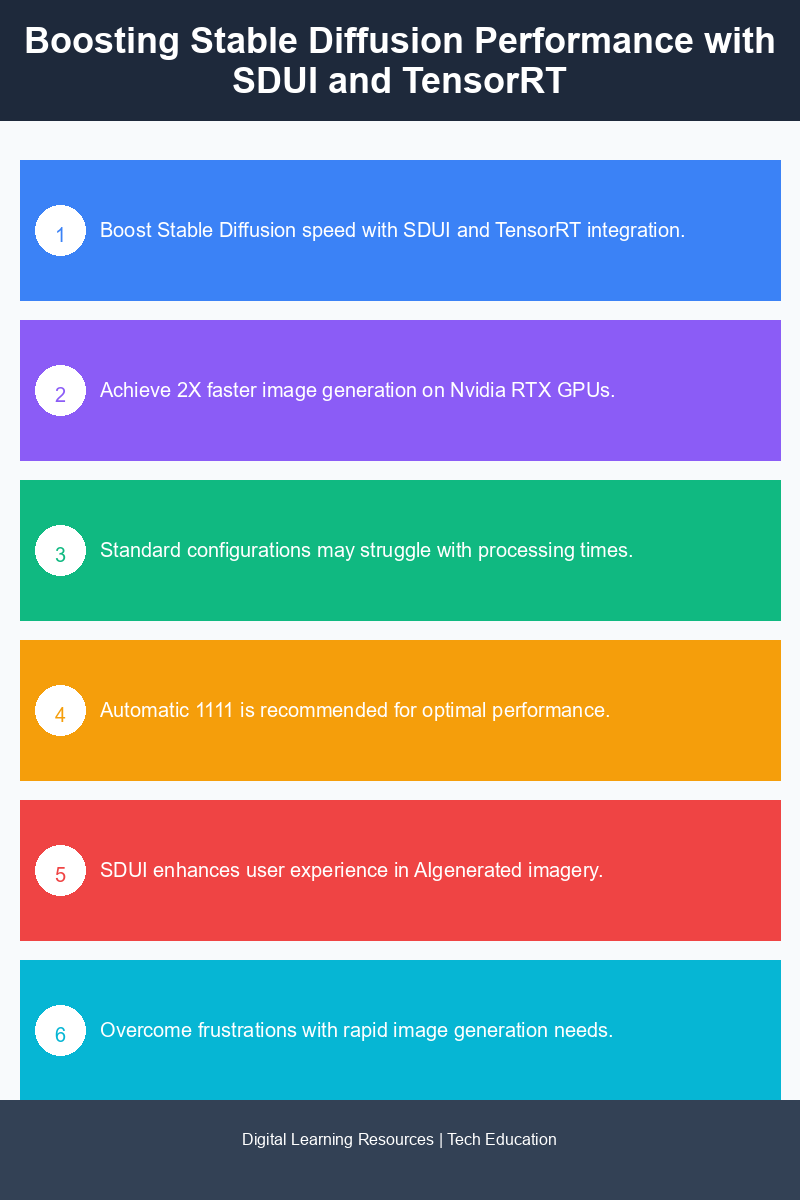
Stable Diffusion has become a cornerstone in the realm of AI-generated imagery, but users often face challenges related to performance and speed. Fortunately, with the integration of SDUI (Stable Diffusion User Interface) and TensorRT, users can significantly enhance their experience, especially those utilizing Nvidia RTX GPUs. This guide provides a full overview of the steps needed to achieve a twofold speed increase when running Stable Diffusion with Automatic 1111.
The Need for Speed in Stable Diffusion
Stable Diffusion is widely recognized for its capabilities in generating high-quality images from text prompts. However, as the demand for rapid image generation grows, users often find themselves frustrated with the processing times of standard configurations. Reports indicate that the normal operation of Stable Diffusion, even with optimizations like Xformers, may not meet the needs of users who require faster results. This is where the SDUI combined with TensorRT comes into play, promising to more than double the processing speed for users equipped with compatible Nvidia RTX GPUs.
Setting Up Stable Diffusion with SDUI
To harness the power of SDUI and TensorRT, users must first ensure they have the correct installation of Stable Diffusion Automatic 1111. While it’s unclear if this setup will work seamlessly with other versions like SD Next, Automatic 1111 is the recommended choice for optimal performance. Here are the steps to get started:
📚 Recommended Digital Learning Resources
Take your skills to the next level:
Nclex-RN Exam Prep Flashcards | 800 Cards | All 8 Content Areas | Anki Decks Normal & Cloze | 8 PDF Layouts | RN Licensing Exam
Nclex-RN Exam Prep Flashcards | 800 Cards | All 8 Content Areas | Anki Decks Normal & Cloze | 8 PDF Layouts | RN Licensing Exam
LSAT Flashcard Study System | 800 Cards | 8 Categories | Anki Decks Normal Cloze | 8 PDF Layouts Color Print
LSAT Flashcard Study System | 800 Cards | 8 Categories | Anki Decks Normal Cloze | 8 PDF Layouts Color Print
📊 Key Learning Points Infographic
Visual summary of key concepts
GMAT Flashcard Study System | 700 Cards | 8 Categories | Anki Decks Normal Cloze | 8 PDF Layouts Color Print | Offline Interactive HTML
GMAT Flashcard Study System | 700 Cards | 8 Categories | Anki Decks Normal Cloze | 8 PDF Layouts Color Print | Offline Interactive HTML
MCAT Flashcard Study System | 820 Cards | 9 Categories | Anki Decks Normal Cloze | 8 PDF Layouts Color Print | Instant Download
MCAT Flashcard Study System | 820 Cards | 9 Categories | Anki Decks Normal Cloze | 8 PDF Layouts Color Print | Instant Download
PSAT Flashcard Study System | 600 Cards | 9 Categories | Anki Decks Normal Cloze | 8 Pdf Layouts Color Print | PSAT NMSQT Exam Prep
PSAT Flashcard Study System | 600 Cards | 9 Categories | Anki Decks Normal Cloze | 8 Pdf Layouts Color Print | PSAT NMSQT Exam Prep
- Install Stable Diffusion Automatic 1111: Make sure you have the latest version installed on your system.
- Activate SDUI: Open the application and navigate to the settings tab.
- Modify Quick Settings: Scroll down in the settings tab and use Control + F to search for “quick settings.”
- Add SD Unit: Type “SD_unit” and hit enter. This will add the option to your quick settings.
- Apply Changes: After adding the SD unit, be sure to apply the new settings and restart the application to see the changes take effect.
By following these steps, users can easily integrate SDUI into their workflow, allowing for a highly responsive interface that supports faster image generation.
Maximizing Performance with TensorRT
For those using Nvidia RTX GPUs, incorporating TensorRT into the setup can yield significant performance improvements. TensorRT is a deep learning inference optimizer that enhances the speed of AI model execution, making it a critical addition for anyone looking to maximize the capabilities of Stable Diffusion. When combined with the SDUI, many users report experiencing speeds that exceed double the standard operation. This is particularly beneficial for developers and creatives who need rapid iterations on their projects.
Beyond the fundamental setup, users can further customize their experience through the user.bat file. Here are some noteworthy options:
- Auto Launch: This option enables the application to automatically open the web page upon startup.
- Update Check: Keeping the application up-to-date is essential for stability and performance. However, this feature can be disabled if you encounter issues.
- XFormers: Although already mentioned, enabling XFormers can provide an additional boost to performance, making this a valuable option for users looking to optimize their setups further.
What This Means for Users
The combination of SDUI and TensorRT not only addresses the speed issues faced by many Stable Diffusion users but also enhances the overall user experience. For developers and artists working with AI-generated images, the ability to process requests more than twice as fast can significantly cut down production time and allow for more creative exploration. With the clear steps outlined above, users can easily implement these changes and see the immediate benefits in their workflows.
MyFlashDecks.com
Need Custom Flashcards for Any Exam or Topic?
Get a complete flashcard study system tailored to your exact topic — 800+ cards, an interactive HTML app, 8 PDF layouts, and 2 Anki decks, all delivered to your email within 24 hours.
As AI technology continues to evolve, tools like Stable Diffusion are adapting to meet the demands of users. By leveraging the performance enhancements offered by SDUI and TensorRT, users can stay ahead in the rapidly changing landscape of digital creation.
Disclaimer: Information gathered from reputed public sources. Verify independently for specific implementations.
Ready to advance your skills? Explore our digital learning resources.
📑 About the author: I also build Digital Bizz Card — hosted digital business cards you can share with a QR code, no app required.