AI spoofing is rapidly emerging as a significant cybersecurity threat that undermines traditional security protocols. As cybercriminals increasingly leverage AI to bypass authentication systems, businesses and individuals alike must be aware of the potential ramifications. This post explores the intricacies of AI spoofing, its implications for financial and corporate integrity, and the strategies being developed to combat this evolving threat.
The Mechanics of AI Spoofing
AI spoofing involves the use of artificial intelligence technologies to mimic legitimate entities, creating a façade that can deceive security systems. Cybercriminals employ techniques such as deepfake technology—an application of AI that generates hyper-realistic audio and video content—to manipulate perceptions and bypass security measures. For instance, deepfake audio can convincingly imitate a CEO’s voice, leading employees to authorize fraudulent transactions without realizing the deception.
The sophistication of these tools allows attackers to exploit vulnerabilities in digital infrastructures. A significant example includes the manipulation of machine learning models through adversarial attacks. By subtly altering input data—such as changing pixels in an image—attackers can mislead AI systems, causing them to make incorrect decisions. This tactic can undermine facial recognition systems, leading to unauthorized access to sensitive areas and data breaches.
📚 Recommended Digital Learning Resources
Take your skills to the next level:
Nclex-RN Exam Prep Flashcards | 800 Cards | All 8 Content Areas | Anki Decks Normal & Cloze | 8 PDF Layouts | RN Licensing Exam
Nclex-RN Exam Prep Flashcards | 800 Cards | All 8 Content Areas | Anki Decks Normal & Cloze | 8 PDF Layouts | RN Licensing Exam
LSAT Flashcard Study System | 800 Cards | 8 Categories | Anki Decks Normal Cloze | 8 PDF Layouts Color Print
LSAT Flashcard Study System | 800 Cards | 8 Categories | Anki Decks Normal Cloze | 8 PDF Layouts Color Print
📊 Key Learning Points Infographic
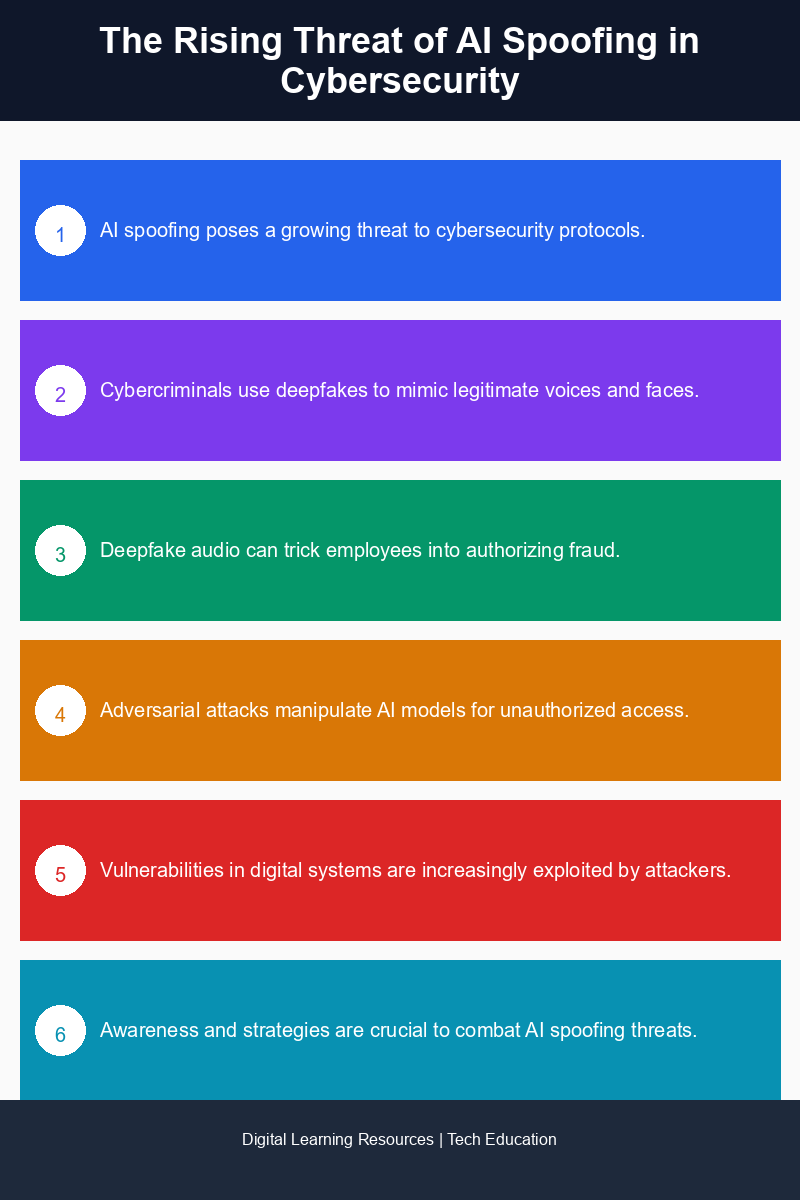
Visual summary of key concepts
GMAT Flashcard Study System | 700 Cards | 8 Categories | Anki Decks Normal Cloze | 8 PDF Layouts Color Print | Offline Interactive HTML
GMAT Flashcard Study System | 700 Cards | 8 Categories | Anki Decks Normal Cloze | 8 PDF Layouts Color Print | Offline Interactive HTML
MCAT Flashcard Study System | 820 Cards | 9 Categories | Anki Decks Normal Cloze | 8 PDF Layouts Color Print | Instant Download
MCAT Flashcard Study System | 820 Cards | 9 Categories | Anki Decks Normal Cloze | 8 PDF Layouts Color Print | Instant Download
PSAT Flashcard Study System | 600 Cards | 9 Categories | Anki Decks Normal Cloze | 8 Pdf Layouts Color Print | PSAT NMSQT Exam Prep
PSAT Flashcard Study System | 600 Cards | 9 Categories | Anki Decks Normal Cloze | 8 Pdf Layouts Color Print | PSAT NMSQT Exam Prep
The Financial and Corporate Implications
The implications of AI spoofing extend well beyond technical breaches; they pose substantial threats to financial stability and corporate reputations. In recent years, instances of AI-driven fraud have surged, with attackers using deepfake technology to manipulate stock prices and disseminate false information. For example, a deepfake video of a corporate leader making controversial statements can lead to plummeting stock prices, affecting not just individual companies but entire markets.
Furthermore, the ease with which AI-generated content can be produced makes it increasingly challenging for organizations to protect their reputations. As the technology becomes more accessible, the potential for corporate sabotage through misinformation grows. Companies must remain vigilant and prepared to respond to these threats swiftly to maintain trust with investors and consumers.
Combating AI Spoofing: Strategies and Solutions
To effectively combat AI spoofing, a multi-pronged approach is essential. Organizations must invest in AI detection tools that can identify and mitigate the effects of spoofed content. Solutions such as Microsoft’s Azure Cognitive Services and Google Cloud’s AutoML offer machine learning capabilities that can detect anomalies in data, providing an essential line of defense against adversarial attacks.
Robust security measures are also necessary. Implementing multi-factor authentication (MFA) and continuous monitoring of user behavior can help identify and respond to suspicious activities before significant damage occurs. Public awareness campaigns are crucial in educating employees about the dangers of AI spoofing and how to recognize potential threats.
Regulatory action may also play a vital role in addressing the challenges posed by AI spoofing. Governments and industry organizations must work together to establish clear guidelines for the ethical use of AI technologies, ensuring that organizations are held accountable for security breaches that result from inadequately addressing spoofing threats.
MyFlashDecks.com
Need Custom Flashcards for Any Exam or Topic?
Get a complete flashcard study system tailored to your exact topic — 800+ cards, an interactive HTML app, 8 PDF layouts, and 2 Anki decks, all delivered to your email within 24 hours.
Conclusion
AI spoofing represents a significant and evolving threat to cybersecurity, financial integrity, and public trust. As cybercriminals continue to refine their tactics, it is imperative for businesses and individuals to stay informed and proactive in their defensive strategies. By leveraging advanced AI detection tools, implementing strong security measures, and fostering public awareness, organizations can better protect themselves against the detrimental effects of AI spoofing.
Disclaimer: Information gathered from reputed public sources. Verify independently for specific implementations.
Ready to advance your skills? Explore our digital learning resources.
📑 About the author: I also build Digital Bizz Card — hosted digital business cards you can share with a QR code, no app required.