The introduction of Manifest V3 has sparked significant debate regarding web privacy, particularly how it affects ad blocking tools like uBlock Origin. As the landscape of online advertising evolves, users are becoming increasingly concerned about their privacy and the ethical implications of ad blocking. This article explores the tensions between privacy-conscious users, content creators, advertisers, and browser developers, with a focus on uBlock Origin and its lite version designed to comply with Manifest V3 requirements.
The Ethical Dilemma of Ad Blocking
Ad blockers have traditionally been viewed as a means of reclaiming user privacy in an ecosystem where ads are often intrusive and privacy-invading. Raymond Hill, the developer of uBlock Origin, argues that employing an ad blocker is an exercise of the “inalienable right to privacy,” rather than an act of theft from content creators. This perspective highlights an ongoing ethical debate: how do we balance user privacy with the sustainability of ad-supported content?
Many websites depend on advertising revenue to fund their operations. Consequently, the rise of ad blockers poses a threat to this model. However, as users become more aware of how their data is collected and utilized by advertisers, the demand for privacy tools will continue to grow. This has led to a complex conversation about the future of online content and the role of ads as a part of privacy-invading technologies.
📚 Recommended Digital Learning Resources
Take your skills to the next level:
Nclex-RN Exam Prep Flashcards | 800 Cards | All 8 Content Areas | Anki Decks Normal & Cloze | 8 PDF Layouts | RN Licensing Exam
Nclex-RN Exam Prep Flashcards | 800 Cards | All 8 Content Areas | Anki Decks Normal & Cloze | 8 PDF Layouts | RN Licensing Exam
LSAT Flashcard Study System | 800 Cards | 8 Categories | Anki Decks Normal Cloze | 8 PDF Layouts Color Print
LSAT Flashcard Study System | 800 Cards | 8 Categories | Anki Decks Normal Cloze | 8 PDF Layouts Color Print
📊 Key Learning Points Infographic
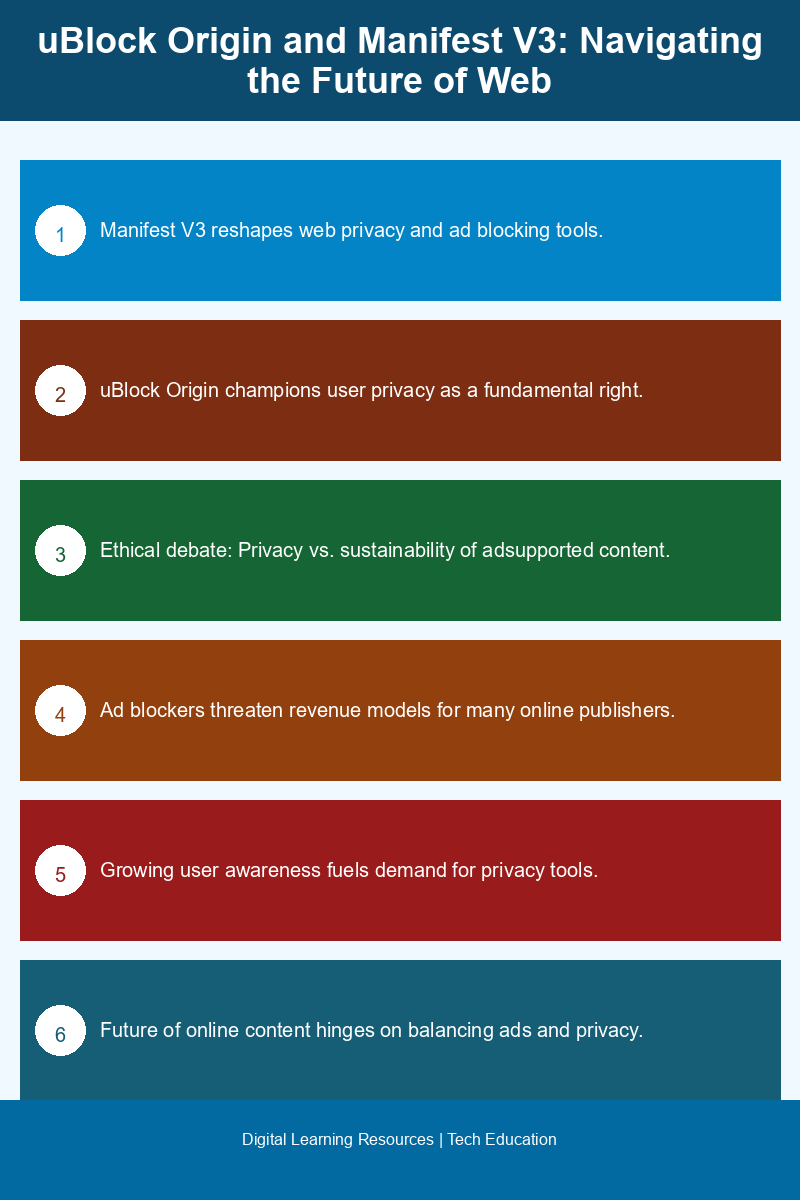
Visual summary of key concepts
GMAT Flashcard Study System | 700 Cards | 8 Categories | Anki Decks Normal Cloze | 8 PDF Layouts Color Print | Offline Interactive HTML
GMAT Flashcard Study System | 700 Cards | 8 Categories | Anki Decks Normal Cloze | 8 PDF Layouts Color Print | Offline Interactive HTML
MCAT Flashcard Study System | 820 Cards | 9 Categories | Anki Decks Normal Cloze | 8 PDF Layouts Color Print | Instant Download
MCAT Flashcard Study System | 820 Cards | 9 Categories | Anki Decks Normal Cloze | 8 PDF Layouts Color Print | Instant Download
PSAT Flashcard Study System | 600 Cards | 9 Categories | Anki Decks Normal Cloze | 8 Pdf Layouts Color Print | PSAT NMSQT Exam Prep
PSAT Flashcard Study System | 600 Cards | 9 Categories | Anki Decks Normal Cloze | 8 Pdf Layouts Color Print | PSAT NMSQT Exam Prep
Understanding Manifest V3 and Its Impact
Manifest V3 is a significant update to the Chrome Extensions platform, which aims to enhance security and performance but has raised concerns among developers of ad blockers. One of the most notable changes is the introduction of service workers, which limit the capabilities of extensions in terms of blocking requests and accessing web requests. This has resulted in the need for developers like Hill to adapt their tools to comply with the new specifications.
To address these changes, Hill created uBlock Origin Lite, a streamlined version of the original ad blocker. While uBlock Origin Lite aims to retain some of the functionality of its predecessor, it does come with limitations that may hinder its effectiveness. Users may notice a reduction in the number of ads and tracking scripts blocked, raising concerns about the overall efficacy of ad blocking under the new framework.
The Tension Between Stakeholders
The introduction of Manifest V3 has resulted in a dynamic tension among key stakeholders: users, content creators, advertisers, and browser developers. Users prioritize privacy and seek tools like uBlock Origin to shield themselves from invasive ads and tracking. In contrast, content creators and advertisers worry about their revenue streams and the potential decline of ad-supported content. Browser developers, meanwhile, must navigate the need for a secure browsing experience while accommodating the demands of users and advertisers alike.
This ongoing debate emphasizes the complexity of the digital ecosystem. Some argue that users should have unfettered access to tools that protect their privacy, while others contend that such tools threaten the very foundation of free content on the internet. As the conversation continues, it’s clear that a solution must address the needs of all parties involved.
The Future of Privacy and Ad Blocking
As web privacy concerns grow, the effectiveness of ad blockers like uBlock Origin will be continuously scrutinized. Users may need to adapt their expectations in light of changes brought by Manifest V3. While the introduction of uBlock Origin Lite may offer some level of protection, its limitations could prompt users to explore alternative privacy solutions that align with their needs.
MyFlashDecks.com
Need Custom Flashcards for Any Exam or Topic?
Get a complete flashcard study system tailored to your exact topic — 800+ cards, an interactive HTML app, 8 PDF layouts, and 2 Anki decks, all delivered to your email within 24 hours.
Ultimately, the future of web privacy will likely involve ongoing negotiations between user rights and the economic realities of content creation. Additionally, as developers refine their tools to comply with evolving standards, the tech community must remain alert to the changing dynamics between privacy and ad-supported content. The conversation surrounding ad blocking, user privacy, and sustainable content creation is not just a technical issue; it is an ethical dilemma that will shape the future of the web.
Disclaimer: Information gathered from reputed public sources. Verify independently for specific implementations.
Ready to advance your skills? Explore our digital learning resources.
📑 About the author: I also build Digital Bizz Card — hosted digital business cards you can share with a QR code, no app required.