AI systems do not retain previous conversations automatically; they rely on a memory layer that allows them to analyze and learn from interactions. This memory feature plays a crucial role in enhancing user experience by extracting relevant information for future conversations. Here’s how AI remembers what you discuss, and why it matters for developers and users alike.
The Mechanism Behind AI Memory
At its core, the memory function in AI systems is designed to enhance the interaction experience. Unlike human memory, which is continuous and often subconscious, AI memory is systematic and intentional. Self-learning AI systems incorporate a dedicated memory layer above the language model that stores and retrieves relevant information from user interactions.
After each conversation, the AI analyzes the dialogue to identify key pieces of information. This analysis can include user preferences, frequently asked questions, or specific details mentioned during the conversation. The memory layer then extracts this relevant information, ensuring that it can be referenced in future interactions.
For example, if a user frequently asks about a specific software tool, the AI can remember this preference and proactively offer updates or relevant information in future sessions. This capability makes the interaction more personalized and efficient, significantly enhancing user satisfaction.
The Role of Memory Layers in AI Development
The implementation of memory layers in AI systems has significant implications for developers. By understanding how these layers function, developers can create more sophisticated applications that meet user needs more effectively. Memory layers operate on a few fundamental principles:
- Data Extraction: During each interaction, the AI identifies and extracts pertinent information that may be useful in future conversations.
- Contextual Relevance: The AI prioritizes information based on context, thus ensuring that the most relevant data is recalled in subsequent interactions.
- Feedback Loop: The AI continuously learns from user feedback and modifies its memory storage to align with user preferences and behaviors.
In practical terms, when building AI applications, developers can utilize existing frameworks that support memory layers. For instance, platforms like TensorFlow or PyTorch can be integrated with memory capabilities to enhance the conversational quality of AI systems. By leveraging these tools, developers can create more responsive and intelligent applications that adapt to user interactions over time.
📊 Key Learning Points Infographic
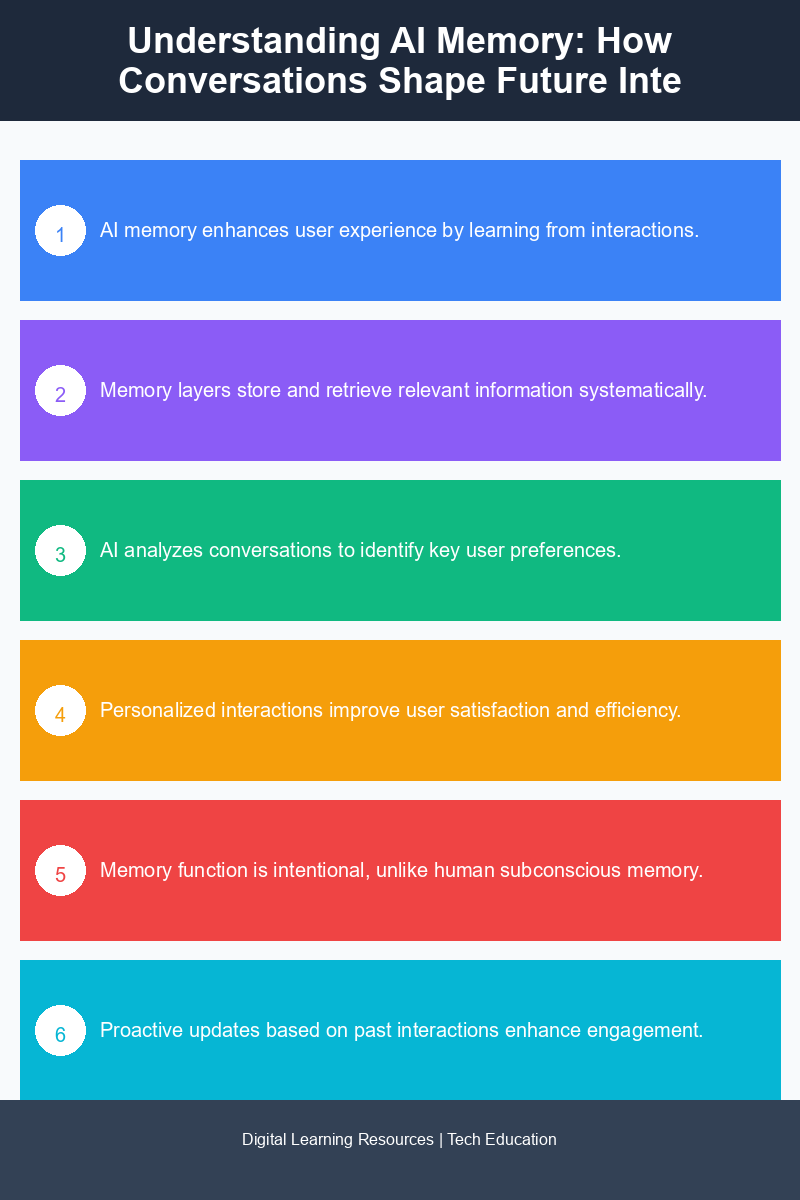
Visual summary of key concepts
Limitations of AI Memory and User Control
Despite the sophisticated memory capabilities of AI systems, there are inherent limitations. Most importantly, AI does not retain any conversation data unless it is manually inputted again by the user. This means that if a user switches devices or clears their conversation history, the AI will have no recollection of past interactions.
This design choice is crucial for privacy and security, as it prevents unauthorized access to personal information. However, it also places the onus on users to maintain continuity in their interactions with AI systems. Users must be aware that if they want to preserve specific details for future conversations, they need to reintroduce those details each time.
Developers should also consider this limitation when designing user interfaces. Providing users with clear options to save or recall previous interactions can help bridge the gap between the AI’s memory capabilities and user expectations. Features like conversation history logs or user profiles where preferences are stored can significantly enhance the user experience.
Practical Applications of AI Memory in Various Industries
The ability of AI to remember past conversations and extract relevant information has practical applications across many industries. Here are a few notable examples:
- Customer Service: AI chatbots can remember user queries and issues, allowing for quicker resolutions in follow-up conversations. For instance, a support bot can track the status of a customer’s complaint and provide updates based on previous interactions.
- Healthcare: AI systems can retain patient information, medication history, and treatment preferences, enabling healthcare providers to offer tailored advice and support during consultations.
- Education: In educational applications, AI can track students’ progress and learning preferences, allowing for customized learning experiences that cater to individual needs.
As AI technology continues to evolve, the integration of advanced memory systems will further enhance these applications, making them more intuitive and user-friendly. Developers must stay updated on these advancements to leverage AI memory effectively in their projects.
In summary, AI systems utilize a memory layer to analyze and remember key aspects of conversations for future interactions. While these systems provide significant advantages in personalization and user satisfaction, they also come with limitations regarding data retention and user control. Understanding these dynamics is essential for developers and users alike, as it shapes the future of AI-driven communication.
Frequently Asked Questions
How does AI remember things between conversations?
AI remembers things between conversations by utilizing memory layers that store user interactions, allowing it to recall previous information and preferences during future interactions. This capability enhances the personalization of the AI experience.
What is AI memory and how does it work?
AI memory refers to the system’s ability to retain and recall information from past interactions. It works by creating a structured database of user inputs and responses, which the AI can access to provide a more tailored and relevant experience.
Why is personalized AI important for user interactions?
Personalized AI is important for user interactions because it improves engagement and satisfaction by delivering responses that are relevant to the user’s history and preferences. This tailored approach fosters a deeper connection between the user and the AI.
Can AI forget information after a conversation?
Yes, AI can be programmed to forget information after a conversation if privacy settings or user preferences dictate so. This feature ensures that users have control over their data and can maintain their privacy.
Is it possible for AI to have long-term memory?
Yes, some AI systems are designed with long-term memory capabilities, allowing them to retain information over extended periods. This enables the AI to build a more comprehensive understanding of user preferences and behaviors.
Disclaimer: Information gathered from reputed public sources. Verify independently for specific implementations.
Ready to advance your skills? Explore our digital learning resources.
Related reading:
📑 About the author: I also build Digital Bizz Card — hosted digital business cards you can share with a QR code, no app required.