Humanoid robots are increasingly becoming a prominent feature in various fields, from healthcare to research. These machines, designed to mimic the human body in shape and function, present unique opportunities and challenges. This post explores the characteristics, design purposes, and applications of humanoid robots, highlighting their significance in modern technology.
What Defines a Humanoid Robot?
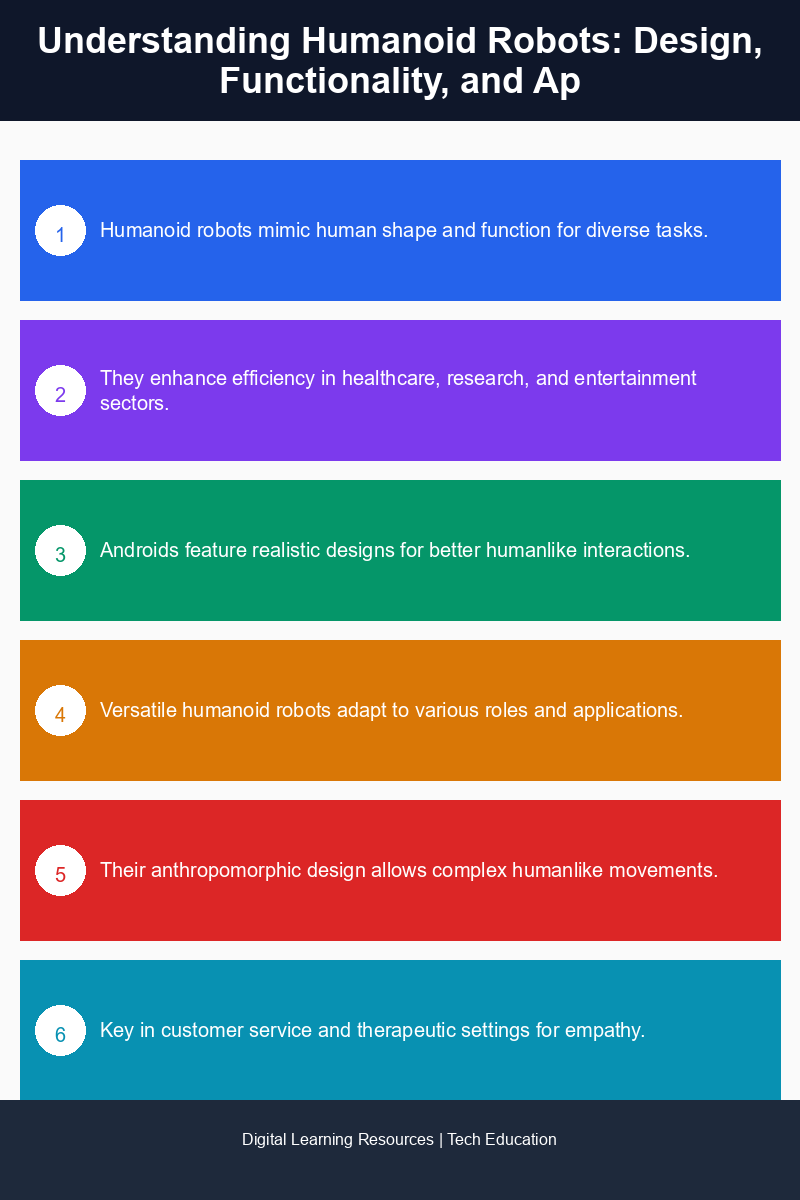
A humanoid robot typically possesses an anthropomorphic design, featuring a torso, head, two arms, and two legs. This structure allows them to perform tasks that are inherently human-like, from simple movements to complex interactions. Humanoid robots can serve multiple purposes, such as functional tasks in workplaces, experimental applications in research, or even entertainment. Their versatility means they can be adapted to fit various roles, which enhances their value across different sectors.
Within the realm of humanoid robots, there exists a specialized category known as androids. Androids are designed to closely resemble human physiology, often incorporating realistic skin, facial features, and movement patterns. This design focus is not merely aesthetic; it serves functional purposes as well, particularly in areas where human-like interaction is crucial. For example, androids might be deployed in customer service roles or therapeutic settings where empathy and understanding are essential.
📚 Recommended Digital Learning Resources
Take your skills to the next level:
Nclex-RN Exam Prep Flashcards | 800 Cards | All 8 Content Areas | Anki Decks Normal & Cloze | 8 PDF Layouts | RN Licensing Exam
Nclex-RN Exam Prep Flashcards | 800 Cards | All 8 Content Areas | Anki Decks Normal & Cloze | 8 PDF Layouts | RN Licensing Exam
LSAT Flashcard Study System | 800 Cards | 8 Categories | Anki Decks Normal Cloze | 8 PDF Layouts Color Print
LSAT Flashcard Study System | 800 Cards | 8 Categories | Anki Decks Normal Cloze | 8 PDF Layouts Color Print
📊 Key Learning Points Infographic
Visual summary of key concepts
GMAT Flashcard Study System | 700 Cards | 8 Categories | Anki Decks Normal Cloze | 8 PDF Layouts Color Print | Offline Interactive HTML
GMAT Flashcard Study System | 700 Cards | 8 Categories | Anki Decks Normal Cloze | 8 PDF Layouts Color Print | Offline Interactive HTML
MCAT Flashcard Study System | 820 Cards | 9 Categories | Anki Decks Normal Cloze | 8 PDF Layouts Color Print | Instant Download
MCAT Flashcard Study System | 820 Cards | 9 Categories | Anki Decks Normal Cloze | 8 PDF Layouts Color Print | Instant Download
PSAT Flashcard Study System | 600 Cards | 9 Categories | Anki Decks Normal Cloze | 8 Pdf Layouts Color Print | PSAT NMSQT Exam Prep
PSAT Flashcard Study System | 600 Cards | 9 Categories | Anki Decks Normal Cloze | 8 Pdf Layouts Color Print | PSAT NMSQT Exam Prep
Functional and Experimental Uses of Humanoid Robots
Humanoid robots are proving to be invaluable tools in various fields, particularly in medicine, biotechnology, biomechanics, and cognitive science research. For instance, the WABIAN-2 is a medical humanoid robot developed specifically to assist patients in lower limb rehabilitation. This robot can simulate human movements, providing patients with a realistic rehabilitation experience that promotes faster recovery. The integration of such technology into medical practices exemplifies how humanoid robots can enhance patient care and rehabilitation outcomes.
Moreover, humanoid robots are being utilized in research settings to explore cognitive functions, human-robot interaction, and social behaviors. Researchers can program these robots to execute specific tasks while gathering data on how humans respond to them. This capability is especially useful in cognitive science, where understanding human behavior is crucial for advancing theories about learning and interaction. By studying how humans interact with humanoid robots, scientists can gain insights into social dynamics and emotional responses.
Theoretical Capabilities and Software Integration
One of the most intriguing aspects of humanoid robots is their potential to perform any task a human can, provided they are equipped with the appropriate software. This adaptability is essential for developers looking to create robots that can integrate seamlessly into various environments. For instance, programming humanoid robots to complete complex tasks requires not only advanced algorithms but also machine learning techniques that allow these robots to learn from their experiences and improve over time.
Incorporating artificial intelligence into humanoid robots enhances their functionality significantly. Machine learning algorithms enable these robots to recognize patterns, understand commands, and even engage in natural language processing. For example, a humanoid robot integrated with AI can interact with users through voice commands, process requests, and execute tasks accordingly. This level of sophistication opens up new avenues for applications in education, healthcare, and customer service, where understanding and responding to human needs is crucial.
MyFlashDecks.com
Need Custom Flashcards for Any Exam or Topic?
Get a complete flashcard study system tailored to your exact topic — 800+ cards, an interactive HTML app, 8 PDF layouts, and 2 Anki decks, all delivered to your email within 24 hours.
Conclusion
Humanoid robots represent a fascinating intersection of technology, design, and functionality. Their anthropomorphic design allows them to perform tasks traditionally associated with humans, making them valuable in various fields such as medicine and research. As developers continue to innovate with AI and machine learning, the capabilities of humanoid robots are expected to expand further, leading to more sophisticated applications in everyday life. Understanding the design, purpose, and potential of humanoid robots is essential for anyone interested in the future of technology and its impact on human interaction.
Disclaimer: Information gathered from reputed public sources. Verify independently for specific implementations.
Ready to advance your skills? Explore our digital learning resources.
📑 About the author: I also build Digital Bizz Card — hosted digital business cards you can share with a QR code, no app required.