
In the rapidly evolving world of technology and manufacturing, rare earth elements (REEs) play a crucial role in the production of high-tech devices, renewable energy solutions, and advanced materials. This blog post will delve into the essential technical concepts, educational opportunities, industry trends, and practical applications surrounding rare earth element processing. Our aim is to equip developers, IT professionals, and tech learners with the knowledge they need to navigate this specialized field and enhance their career prospects.
Key Takeaways
- Understanding rare earth separation methods and their importance in the tech industry.
- Identifying pathways for education and certification in chemical engineering and quality control.
- Exploring current industry trends and their implications for job roles and skill development.
- Implementing best practices for effective waste management and environmental compliance.
Technical Background and Context
Rare earth elements are a group of 17 chemically similar elements critical for various high-tech applications, including electronics, renewable energy, and defense technologies. The extraction and purification of these elements involve complex processes that require chemical engineering expertise. Proprietary solvent extraction methods have emerged as a leading technique for separating REEs from ores, relying on controlled adjustments of pH, temperature regulation, and specific solvent chemistry.
Furthermore, integrated waste management systems are essential in manufacturing processes to minimize environmental impact and adhere to regulatory standards. Understanding these technical concepts is vital for professionals looking to excel in the field of rare earth processing.
📚 Recommended Digital Learning Resources
Take your skills to the next level with these curated digital products:
Academic Calculators Bundle: GPA, Scientific, Fraction & More
Academic Calculators Bundle: GPA, Scientific, Fraction & More
ACT Test (American College Testing) Prep Flashcards Bundle: Vocabulary, Math, Grammar, and Science
Java Essentials: 100 Powerful Topics for Fast-Track Learning | PDF Download
📊 Key Learning Points Infographic
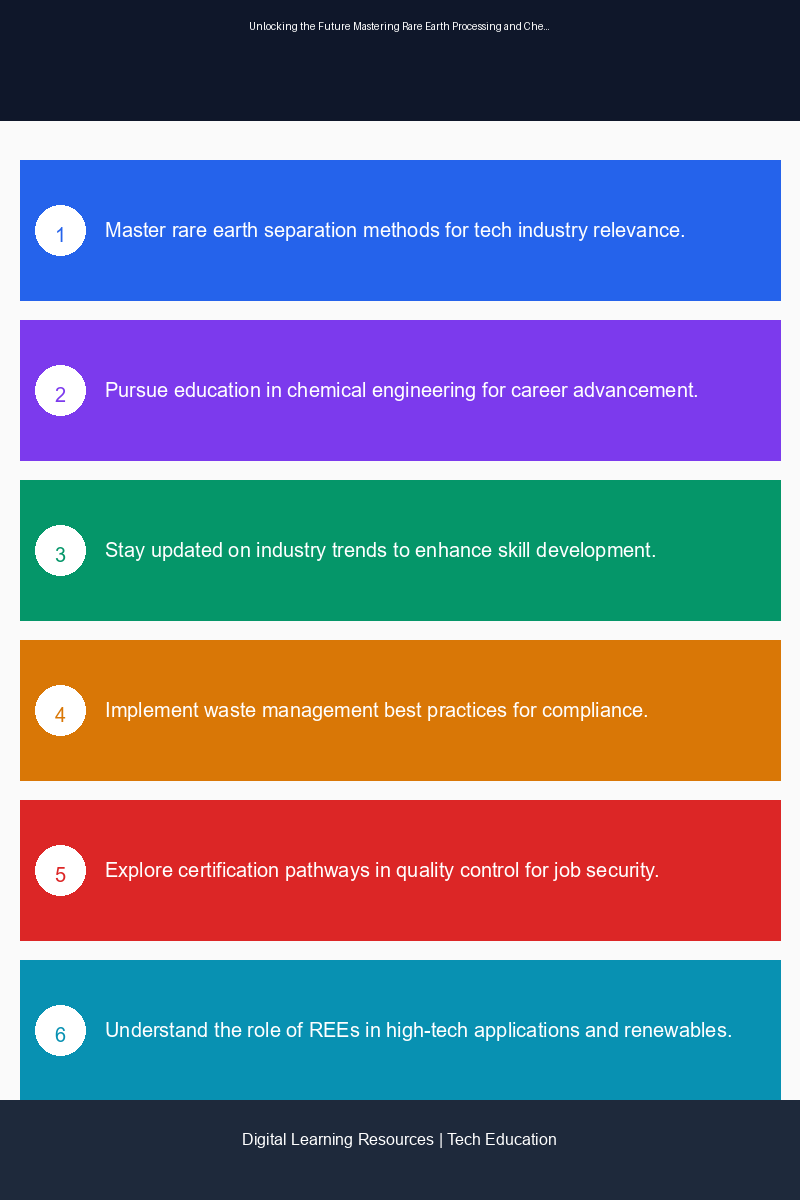
Visual summary of key concepts and actionable insights
Leonardo.Ai API Mastery: Python Automation Guide (PDF + Code + HTML
Leonardo.Ai API Mastery: Python Automation Guide (PDF + Code + HTML
100 Python Projects eBook: Learn Coding (PDF Download)
JavaScript for Web Development eBook | Learn to Build Interactive Websites
HSPT Vocabulary Flashcards: 1300+ Printable Study Cards + ANKI (PDF)
HSPT Vocabulary Flashcards: 1300+ Printable Study Cards + ANKI (PDF)
Practical Applications and Use Cases
The use of rare earth elements spans a multitude of industries, making expertise in their processing highly sought after. Some practical applications include:
- Electronics Manufacturing: REEs are integral in producing high-performance magnets, phosphors, and batteries.
- Renewable Energy: Wind turbines and electric vehicle batteries heavily rely on rare earth materials.
- Defense Technologies: Specialized applications in military equipment and communication devices require rare earth elements for improved performance.
In each of these areas, professionals with a solid background in chemical engineering and processing methodologies are invaluable assets.
Learning Path Recommendations
To succeed in the rare earth processing sector, consider the following educational pathways:
- Degree Programs: Enroll in a chemical engineering or materials science program, with a focus on metallurgical processes and solvent extraction techniques.
- Certification Courses: Pursue certifications in quality control and environmental management specific to chemical processing.
- Workforce Development Training: Participate in training programs that emphasize operational skills in rare earth processing environments.
These educational opportunities will provide you with a comprehensive understanding of the field and prepare you for various roles in the industry.
Industry Impact and Career Implications
The rare earth industry is undergoing significant changes, particularly in light of China’s dominance in the market. As countries seek to diversify their supply chains, there is a growing demand for skilled professionals who can navigate the complexities of rare earth processing. This shift presents numerous career opportunities, including roles in:
- Research and Development
- Quality Assurance and Control
- Process Engineering
- Environmental Compliance and Sustainability
By building expertise in these areas, you can position yourself as a leader in the emerging landscape of rare earth processing.
Implementation Tips and Best Practices
To excel in rare earth processing, consider the following best practices:
- Emphasize Safety: Always adhere to safety protocols when handling chemicals and operating specialized equipment.
- Stay Informed: Regularly update yourself on industry developments, including new extraction technologies and environmental regulations.
- Collaborate with Peers: Engage with professionals in the field through networking events, workshops, or online forums to share knowledge and experiences.
- Implement Quality Control Measures: Utilize quality control laboratories equipped for trace element analysis to ensure product integrity.
These practices will not only enhance your skills but also contribute to the overall success of your organization.
Future Trends and Skill Requirements
Looking ahead, several trends are shaping the future of the rare earth industry:
- Technological Advancements: Innovations in extraction and purification technologies will continue to evolve, requiring ongoing education and adaptability.
- Environmental Sustainability: There will be increasing emphasis on developing eco-friendly processing methods and responsible waste management practices.
- Diversification of Supply Chains: As countries invest in their mining operations, skills in supply chain coordination will become increasingly valuable.
As these trends unfold, professionals should focus on continuous learning and skill enhancement to remain competitive in the job market.
Conclusion with Actionable Next Steps
In conclusion, the field of rare earth processing presents exciting opportunities for tech professionals and learners. By mastering the technical concepts, pursuing relevant educational pathways, and staying abreast of industry trends, you can enhance your career prospects and contribute to a vital sector of the economy. Here are your actionable next steps:
- Research and enroll in relevant degree or certification programs.
- Connect with industry professionals through networking events and online platforms.
- Stay informed about the latest trends and technological advancements in rare earth processing.
- Apply safety and quality control best practices in your work environment.
By taking these steps, you will be well on your way to becoming a leader in the rare earth processing industry, equipped with the knowledge and skills needed to thrive in this dynamic field.
Disclaimer: The information in this article has been gathered from various reputed sources in the public domain. While we strive for accuracy, readers are advised to verify information independently and consult with professionals for specific technical implementations.
Ready to advance your tech career? Explore our digital learning resources including programming guides, certification prep materials, and productivity tools designed by industry experts.