Key Takeaways:
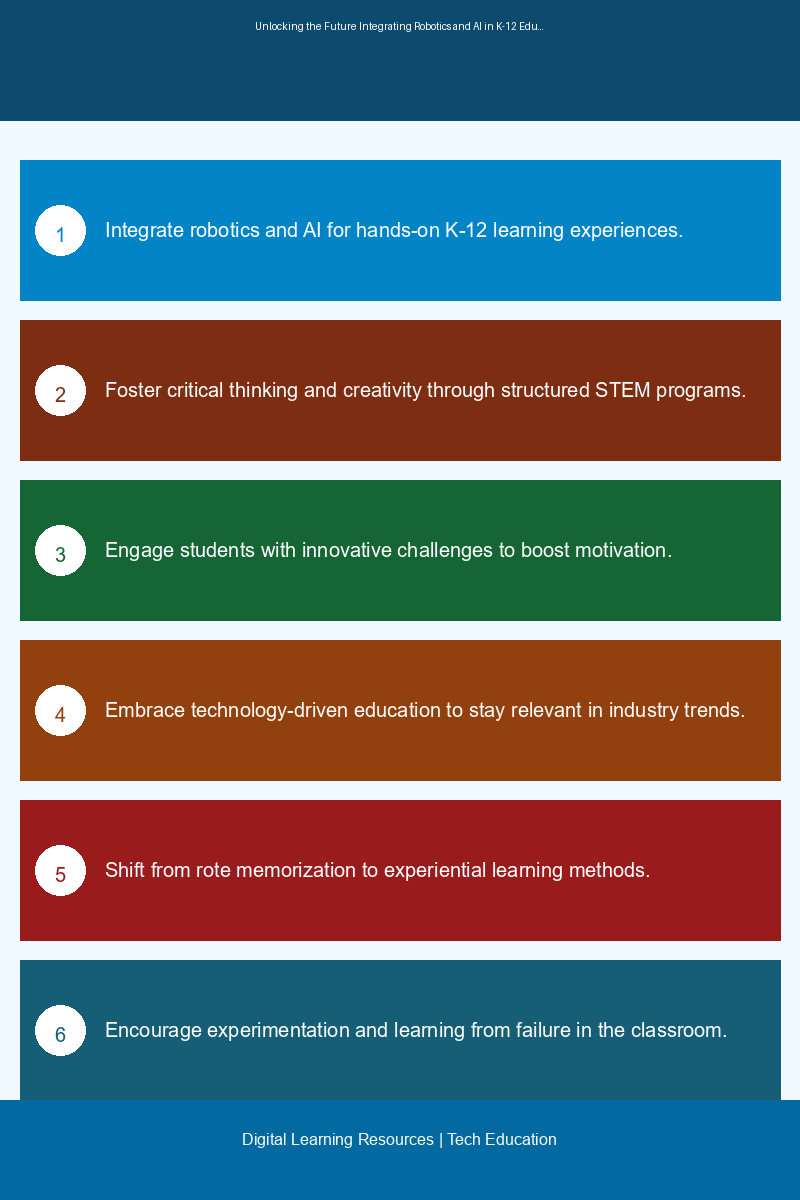
- Integrating robotics and AI enriches experiential learning in K-12 education.
- Structured STEM programs enhance critical thinking, creativity, and problem-solving skills.
- Engagement through innovation showcases and challenges is crucial for student motivation.
- Industry trends indicate an increasing reliance on technology-driven education.
Introduction
As technology continues to evolve at an unprecedented pace, the integration of robotics and artificial intelligence (AI) in K-12 education has become not just beneficial, but essential. This shift from traditional rote memorization to experiential learning methods is transforming how students engage with knowledge. In this blog post, we will explore the technical concepts and methods driving this change, the educational opportunities available, and the implications for industry trends and career development.
Technical Background and Context
The educational landscape is experiencing a fundamental shift as schools adopt structured STEM (Science, Technology, Engineering, and Mathematics) programs that incorporate coding, robotics, and AI projects. This integration not only enhances students’ technical skills but also fosters critical thinking, creativity, and logical reasoning. The traditional curriculum, often focused on memorization, is being replaced by a hands-on approach where students can experiment, fail, and learn in a supportive environment. This transformation is critical as we prepare the next generation for a technology-driven world.
📚 Recommended Digital Learning Resources
Take your skills to the next level with these curated digital products:
Academic Calculators Bundle: GPA, Scientific, Fraction & More
Academic Calculators Bundle: GPA, Scientific, Fraction & More
ACT Test (American College Testing) Prep Flashcards Bundle: Vocabulary, Math, Grammar, and Science
ACT Test (American College Testing) Prep Flashcards Bundle: Vocabulary, Math, Grammar, and Science
Leonardo.Ai API Mastery: Python Automation Guide (PDF + Code + HTML
Leonardo.Ai API Mastery: Python Automation Guide (PDF + Code + HTML
100 Python Projects eBook: Learn Coding (PDF Download)
100 Python Projects eBook: Learn Coding (PDF Download)
HSPT Vocabulary Flashcards: 1300+ Printable Study Cards + ANKI (PDF)
HSPT Vocabulary Flashcards: 1300+ Printable Study Cards + ANKI (PDF)
Practical Applications and Use Cases
The application of robotics and AI in education presents numerous practical use cases:
- Project-Based Learning: Students can engage in real-world projects that require them to apply coding and robotics to solve complex problems. For instance, creating a robotic prototype that addresses a community issue.
- Interactive Learning Environments: Utilizing platforms like LEGO Mindstorms or VEX Robotics, educators can create dynamic learning experiences where students build and program robots, enhancing their technical skills.
- AI-Enhanced Learning Tools: Tools like Google’s Teachable Machine allow students to train AI models to recognize images or sounds, offering a hands-on introduction to machine learning concepts.
Learning Path Recommendations
For educators and tech professionals looking to integrate these concepts into their curricula or professional development, consider the following learning paths:
- STEM Certification Programs: Enroll in certification courses that focus on teaching robotics and coding in a classroom setting. Many online platforms offer comprehensive training.
- Workshops and Seminars: Attend workshops that focus on hands-on projects related to robotics and AI, providing educators with practical tools and methodologies they can implement.
- Collaboration with Tech Companies: Partner with local tech companies to expose students to real-world applications of AI and robotics, facilitating innovation showcases and challenges.
Industry Impact and Career Implications
The integration of robotics and AI in education is not just a passing trend; it reflects the growing demand for tech-savvy professionals in the workforce. By equipping students with skills in coding, robotics, and AI, we are preparing them for careers in fields that are increasingly reliant on these technologies. According to industry reports, jobs related to AI and robotics are projected to grow exponentially, making these skills invaluable for future job seekers.
Implementation Tips and Best Practices
For educators and tech professionals looking to implement robotics and AI in education effectively, consider the following best practices:
- Start Small: Begin with simple projects and gradually increase complexity as students become more comfortable with the concepts.
- Create a Safe Learning Environment: Encourage experimentation and accept failure as a natural part of the learning process to foster ingenuity and resilience.
- Utilize Pre-Configured STEM Labs: Invest in ready-made STEM labs that provide all necessary tools and resources, streamlining the setup process and allowing educators to focus on teaching.
Future Trends and Skill Requirements
The future of K-12 education lies in the continuous adoption of technology, particularly robotics and AI. As education systems evolve, we anticipate the following trends:
- Increased Focus on Digital Literacy: Curriculum will increasingly prioritize digital skills, preparing students for a workforce that demands proficiency in technology.
- Personalized Learning Experiences: AI tools will enable customized learning journeys, adapting to each student’s pace and learning style.
- Collaboration with EdTech Companies: Schools will continue to partner with technology companies to develop cutting-edge learning tools and resources.
Conclusion: Actionable Next Steps
As we stand on the brink of a technological revolution in education, it is crucial for tech professionals, educators, and learners to embrace the integration of robotics and AI into K-12 curricula. Here are actionable next steps:
- Explore available online courses and certifications focused on robotics and AI.
- Engage with local schools to advocate for the adoption of structured STEM programs.
- Stay updated on industry trends and emerging technologies that can enhance educational practices.
By taking these steps, we can ensure that the future generation is not only prepared for the challenges of a tech-driven world but also equipped to innovate and lead in it.
Disclaimer: The information in this article has been gathered from various reputed sources in the public domain. While we strive for accuracy, readers are advised to verify information independently and consult with professionals for specific technical implementations.
Ready to advance your tech career? Explore our digital learning resources including programming guides, certification prep materials, and productivity tools designed by industry experts.