Key Takeaways: In this post, we’ll dive into High-Bandwidth Memory (HBM) and High-Bandwidth Flash (HBF) technologies, explore their practical applications, and provide learning opportunities for developers and IT professionals. Understanding these advancements is crucial for anyone looking to excel in hardware optimization for AI and other demanding applications.
Introduction
The rapid evolution of technology has significantly transformed the landscape of computing, particularly in the realms of artificial intelligence (AI) and machine learning. As the demand for performance increases, memory technologies such as High-Bandwidth Memory (HBM) and High-Bandwidth Flash (HBF) have emerged as critical components in enhancing the capabilities of GPUs and other systems. This article will explore these technologies, their implications on industry practices, and the necessary skills and training required for professionals looking to thrive in this dynamic field.
Technical Background and Context
Understanding HBM and HBF begins with recognizing the limitations inherent in traditional memory architectures. In AI applications, memory bottlenecks often prevent GPUs from achieving their full potential, resulting in the computation time of GPUs only accounting for 20-30% of total task time. This discrepancy highlights the urgent need for innovative memory solutions.
📚 Recommended Digital Learning Resources
Take your skills to the next level with these curated digital products:
Academic Calculators Bundle: GPA, Scientific, Fraction & More
Academic Calculators Bundle: GPA, Scientific, Fraction & More
ACT Test (American College Testing) Prep Flashcards Bundle: Vocabulary, Math, Grammar, and Science
Java Essentials: 100 Powerful Topics for Fast-Track Learning | PDF Download
📊 Key Learning Points Infographic
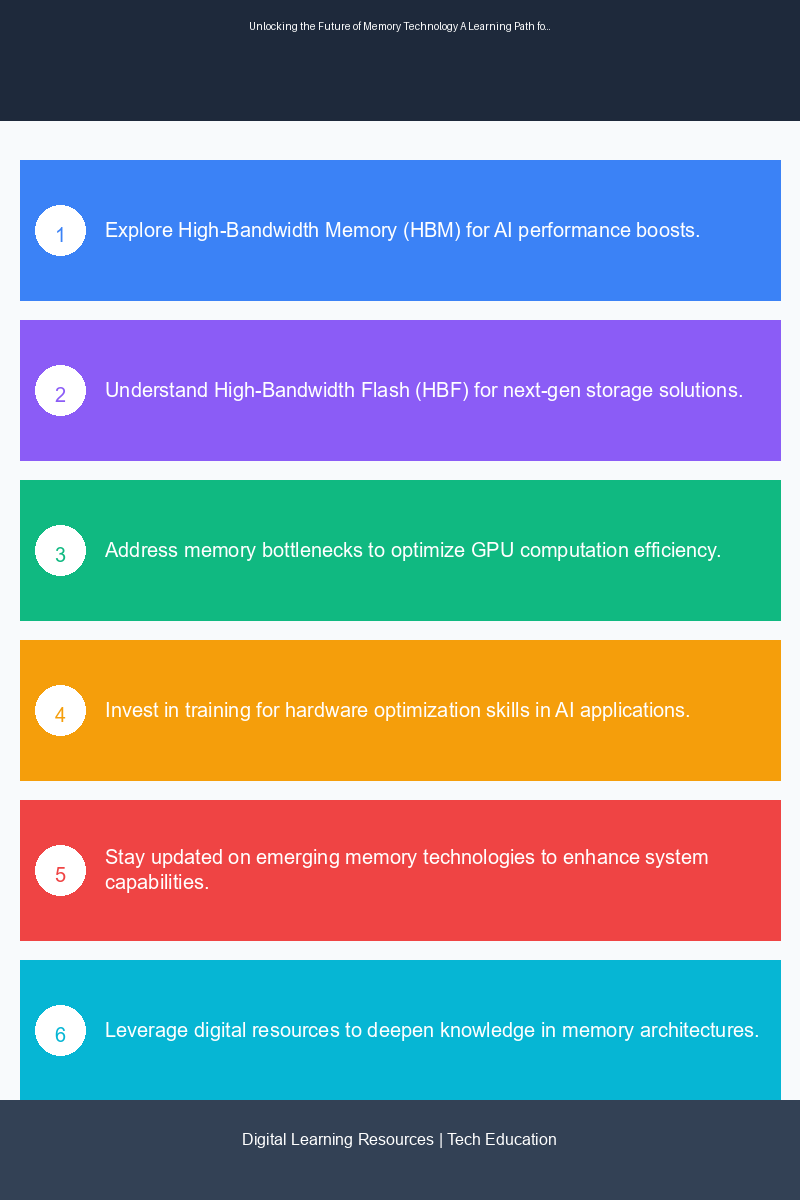
Visual summary of key concepts and actionable insights
Leonardo.Ai API Mastery: Python Automation Guide (PDF + Code + HTML
Leonardo.Ai API Mastery: Python Automation Guide (PDF + Code + HTML
100 Python Projects eBook: Learn Coding (PDF Download)
JavaScript for Web Development eBook | Learn to Build Interactive Websites
HSPT Vocabulary Flashcards: 1300+ Printable Study Cards + ANKI (PDF)
HSPT Vocabulary Flashcards: 1300+ Printable Study Cards + ANKI (PDF)
- High-Bandwidth Memory (HBM): A cutting-edge memory technology designed to maximize GPU performance by enabling rapid data transfers between the memory and the processing unit.
- High-Bandwidth Flash (HBF): A next-generation memory concept that vertically stacks NAND Flash memory in three dimensions, improving both capacity and performance.
- Three-Dimensional Stacking: This method enhances data transfer efficiency and is utilized in both HBM and HBF, allowing for faster access to larger pools of data.
Practical Applications and Use Cases
As industries increasingly rely on AI and machine learning, the application of HBM and HBF technologies becomes more pronounced:
- AI Training and Inference: The increased bandwidth provided by these memory technologies allows for quicker data processing, which is essential for training sophisticated AI models.
- Gaming and Graphics: High-performance gaming and graphics rendering benefit from HBM’s high-speed capabilities, enabling more realistic graphics and faster frame rates.
- Data Centers: Organizations operating data centers can utilize HBF to address storage needs while maintaining high-speed access to large datasets.
Learning Path Recommendations
For tech professionals interested in specializing in memory technology and semiconductor advancements, several educational opportunities and learning paths are available:
- Courses in Semiconductor Technology: Enroll in programs that cover the principles of semiconductor design, fabrication, and memory architecture.
- AI and Machine Learning Programs: Focus on hardware optimization within AI systems to understand how memory technology impacts performance metrics.
- Research Collaborations: Partner with institutions like KAIST to engage in cutting-edge research in electrical engineering and computer science.
Industry Impact and Career Implications
The collaboration between companies like SK hynix and SanDisk to establish HBF standards underscores the industry’s commitment to advancing memory technology. As these technologies evolve, professionals with expertise in memory architecture will be in high demand. Here are some key implications for career development:
- High Demand for Specialized Skills: As memory technology becomes more complex, the need for professionals skilled in memory architecture design and optimization will grow.
- Increased Opportunities in AI: Professionals with knowledge of AI performance metrics and hardware-software integration will find themselves in favorable positions within tech firms.
- Understanding Manufacturing Processes: A grasp of semiconductor manufacturing processes will be beneficial for those looking to work with HBM and HBF technologies.
Implementation Tips and Best Practices
To effectively leverage HBM and HBF technologies in professional settings, consider the following best practices:
- Stay Updated with Industry Trends: Regularly follow industry news and developments to keep abreast of advancements in memory technology.
- Practice Hands-On Experience: Engage in projects that involve GPU programming and memory optimization to solidify your understanding of practical applications.
- Network with Professionals: Join industry groups or forums to connect with experts and discuss the latest trends and challenges in memory technology.
Future Trends and Skill Requirements
The future of memory technology looks promising, with rapid advancements expected in HBF due to its shared foundational technologies with HBM. Here are some trends to watch and skills to develop:
- Emerging Standards: Keep an eye on the establishment of new standards for HBF and other memory technologies, which will shape market dynamics.
- Interdisciplinary Skills: Develop skills that blend knowledge of software and hardware, as the integration of AI and memory technologies becomes increasingly important.
- Sustainability in Manufacturing: Understanding the environmental impact of semiconductor manufacturing processes will become critical as industries strive for sustainability.
Conclusion with Actionable Next Steps
In summary, High-Bandwidth Memory and High-Bandwidth Flash technologies represent significant advancements in the field of memory architecture, directly impacting the performance of AI and computing systems. For tech professionals looking to capitalize on these trends, the following actionable steps are recommended:
- Enroll in relevant courses: Start your journey by seeking educational programs that focus on memory technology and AI hardware optimization.
- Gain hands-on experience: Participate in projects that allow you to work with GPUs and memory technologies directly.
- Network and collaborate: Engage with peers and professionals in the field to share insights and foster opportunities for growth.
By investing in your education and skills in these areas, you can position yourself at the forefront of the evolving tech landscape, ready to tackle the challenges and opportunities that lie ahead.
Disclaimer: The information in this article has been gathered from various reputed sources in the public domain. While we strive for accuracy, readers are advised to verify information independently and consult with professionals for specific technical implementations.
Ready to advance your tech career? Explore our digital learning resources including programming guides, certification prep materials, and productivity tools designed by industry experts.
📑 About the author: I also build Digital Bizz Card — hosted digital business cards you can share with a QR code, no app required.