Key Takeaways:
In this post, you’ll explore the various types of AI processors, their specialized functions, and how you can develop valuable skills in chip design and AI applications. You’ll also discover the latest industry trends, practical applications, and actionable learning paths to advance your career in tech.
Introduction
The rapid growth of artificial intelligence (AI) has catalyzed a significant shift in how we process and analyze data. At the heart of this revolution are AI processors—specialized chips designed to handle complex AI workloads such as machine learning and deep neural networks. Understanding the diverse types of AI processors and their applications is crucial for developers and IT professionals looking to harness the power of AI effectively. This blog post delves into the technical aspects of AI processors, practical applications, and educational opportunities to help you stay ahead in this dynamic field.
Technical Background and Context
AI processors encompass a range of architectures, including:
📚 Recommended Digital Learning Resources
Take your skills to the next level with these curated digital products:
Academic Calculators Bundle: GPA, Scientific, Fraction & More
Academic Calculators Bundle: GPA, Scientific, Fraction & More
ACT Test (American College Testing) Prep Flashcards Bundle: Vocabulary, Math, Grammar, and Science
Java Essentials: 100 Powerful Topics for Fast-Track Learning | PDF Download
Leonardo.Ai API Mastery: Python Automation Guide (PDF + Code + HTML
Leonardo.Ai API Mastery: Python Automation Guide (PDF + Code + HTML
100 Python Projects eBook: Learn Coding (PDF Download)
JavaScript for Web Development eBook | Learn to Build Interactive Websites
HSPT Vocabulary Flashcards: 1300+ Printable Study Cards + ANKI (PDF)
HSPT Vocabulary Flashcards: 1300+ Printable Study Cards + ANKI (PDF)
- CPU (Central Processing Unit): General-purpose processors capable of handling a variety of tasks but not optimized for AI workloads.
- GPU (Graphics Processing Unit): Highly parallel structures that excel in processing large datasets, making them ideal for training machine learning models.
- FPGA (Field-Programmable Gate Array): Reconfigurable chips that can be tailored for specific applications, providing flexibility in AI implementations.
- ASIC (Application-Specific Integrated Circuit): Custom chips designed for specific tasks, offering high efficiency for particular AI functions.
- NPU (Neural Processing Unit) & TPU (Tensor Processing Unit): Specialized chips designed explicitly for neural network computations, optimizing performance for AI tasks.
Emerging chip architectures, like neuromorphic and heterogeneous structures, are revolutionizing the way we process information by mimicking human brain functions, leading to better performance and efficiency. Advanced fabrication technologies, such as 3nm and 5nm processes, are enhancing chip capabilities while reducing power consumption. The rise of chiplet-based modular architectures and specialized chip accelerators for AI and quantum processing further exemplifies the innovative trends in this sector.
Practical Applications and Use Cases
AI processors are being deployed across various industries, demonstrating their versatility and importance:
- Automotive: AI chips are integral to autonomous driving technologies, enabling real-time data processing from sensors and cameras.
- Healthcare: AI processors assist in medical imaging and diagnostics, helping healthcare professionals in patient assessment and treatment planning.
- Consumer Electronics: Devices like smartphones and smart home systems leverage AI processors for enhanced functionality, including voice recognition and image processing.
As the demand for AI technologies increases, understanding the practical applications of these processors will be essential for tech professionals aiming to contribute meaningfully to their respective fields.
Learning Path Recommendations
To effectively navigate the evolving landscape of AI processors, consider the following learning paths:
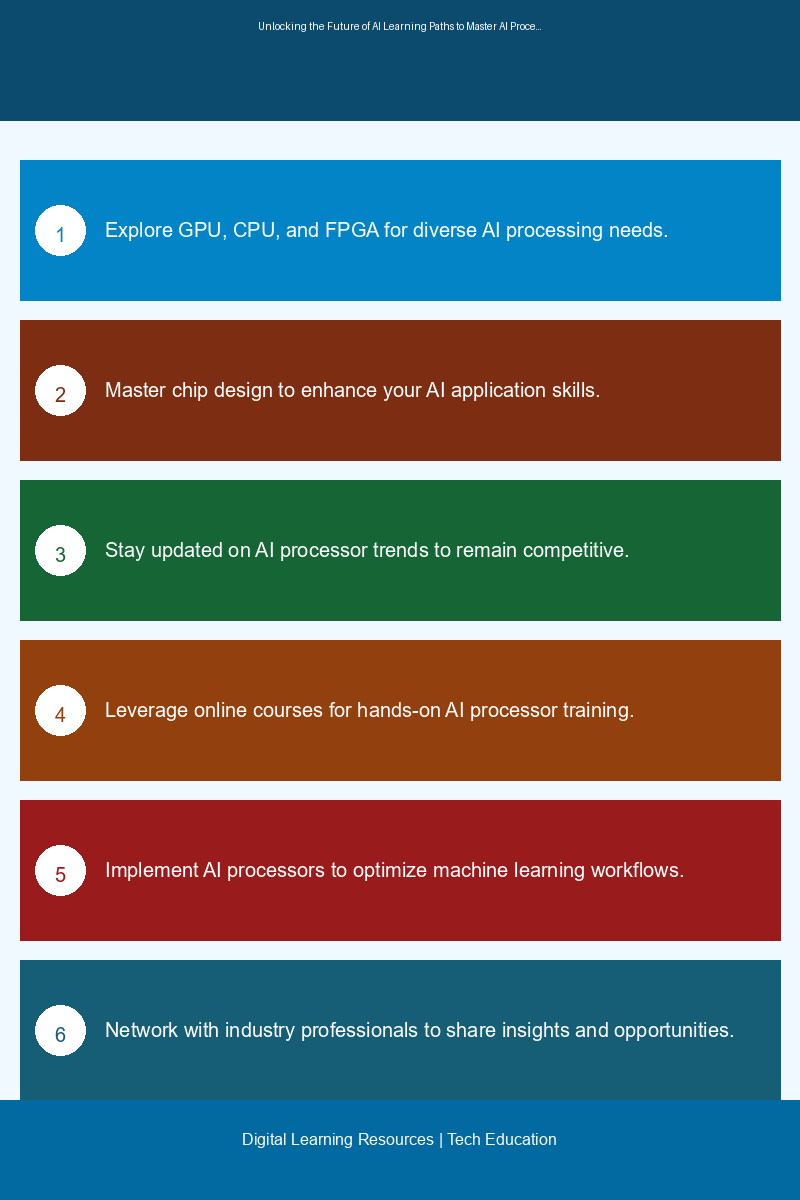
- AI Processor Fundamentals: Start with online courses that cover the basics of AI processors, including their types and functions.
- Chip Architecture Design: Enroll in programs focusing on chip design and development, particularly for AI workloads. Look for hands-on projects to solidify your understanding.
- Edge Computing: Gain expertise in edge computing and its implications for AI applications, focusing on how to deploy AI models on local devices.
Many platforms offer courses from industry leaders, ensuring you receive the latest information and insights.
Industry Impact and Career Implications
The AI processor market is projected to reach approximately USD 467.09 billion by 2034, indicating a robust demand for skilled professionals in this area. As industries increasingly adopt AI technologies, the need for high-performance processors will continue to rise.
By developing skills in AI and machine learning algorithm development, chip design, and understanding of cloud and edge computing technologies, you position yourself as a valuable asset in the tech workforce. Certifications in these areas can further enhance your credibility and open doors to advanced career opportunities.
Implementation Tips and Best Practices
As you embark on your learning journey and start implementing AI solutions, consider the following best practices:
- Stay Updated: The field of AI and chip technology is rapidly evolving. Regularly read research papers, follow industry news, and participate in relevant forums to stay informed.
- Hands-On Experience: Engage in projects that allow you to apply your knowledge practically. Building prototypes using AI processors can provide invaluable insights.
- Collaborate: Work with peers or join online communities to exchange ideas, troubleshoot challenges, and collaborate on projects.
Implementing these practices will solidify your understanding and enhance your practical skills in real-world applications.
Future Trends and Skill Requirements
As we look ahead, several trends are likely to shape the future of AI processors:
- Increased Adoption of Edge Computing: As devices become smarter, there will be a greater shift toward processing data locally, necessitating specialized AI processors.
- Continued Innovation in Chip Design: Advances in chip architecture and fabrication technologies will drive the development of more efficient and powerful AI processors.
- Integration of Quantum Computing: As quantum processing matures, understanding its implications for AI will become increasingly important for tech professionals.
Developing the skills to navigate these trends will be crucial for anyone looking to thrive in the tech industry.
Conclusion with Actionable Next Steps
The landscape of AI processors is vast and filled with opportunities for those willing to invest in their learning and skill development. Start by exploring online courses related to AI processors and chip architecture, and consider obtaining relevant certifications. Engage with the tech community to exchange knowledge and stay updated on industry trends.
By taking proactive steps to enhance your skills and understanding of AI processors, you can position yourself as a leader in this transformative field. The future of technology is bright—embrace the opportunity to be at the forefront of innovation!
Disclaimer: The information in this article has been gathered from various reputed sources in the public domain. While we strive for accuracy, readers are advised to verify information independently and consult with professionals for specific technical implementations.
Ready to advance your tech career? Explore our digital learning resources including programming guides, certification prep materials, and productivity tools designed by industry experts.