Key Takeaways: In this post, we will explore the technical concepts of intelligent power management systems, edge AI applications, and semiconductor design. We will also provide insights into learning opportunities, industry trends, and implementation strategies for professionals looking to advance their careers in this rapidly evolving field.
Introduction
The semiconductor industry is at the forefront of technological advancements, driving innovations in various sectors such as smart utilities, industrial automation, and edge computing. With the increasing demand for energy-efficient technologies and the integration of artificial intelligence (AI) at the edge, professionals in this field must stay informed and equipped with the necessary skills. This blog post aims to provide a comprehensive overview of intelligent power platforms, multi-core custom computing, and related educational pathways, ultimately helping you shape your career in this dynamic landscape.
Technical Background and Context
As the world moves towards smarter cities and advanced industrial solutions, the role of semiconductors has never been more critical. Here are some of the essential technical concepts and methods shaping the industry:
📚 Recommended Digital Learning Resources
Take your skills to the next level with these curated digital products:
Academic Calculators Bundle: GPA, Scientific, Fraction & More
Academic Calculators Bundle: GPA, Scientific, Fraction & More
ACT Test (American College Testing) Prep Flashcards Bundle: Vocabulary, Math, Grammar, and Science
Java Essentials: 100 Powerful Topics for Fast-Track Learning | PDF Download
📊 Key Learning Points Infographic
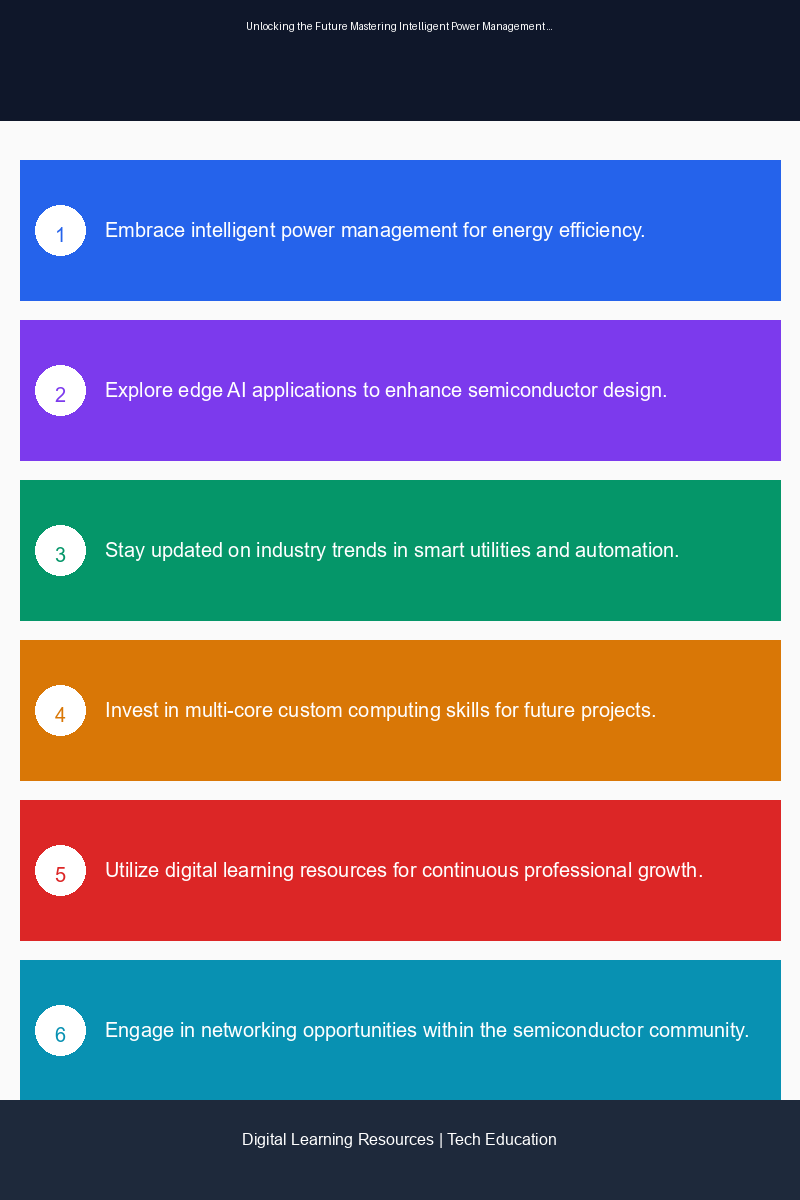
Visual summary of key concepts and actionable insights
Leonardo.Ai API Mastery: Python Automation Guide (PDF + Code + HTML
Leonardo.Ai API Mastery: Python Automation Guide (PDF + Code + HTML
100 Python Projects eBook: Learn Coding (PDF Download)
JavaScript for Web Development eBook | Learn to Build Interactive Websites
HSPT Vocabulary Flashcards: 1300+ Printable Study Cards + ANKI (PDF)
HSPT Vocabulary Flashcards: 1300+ Printable Study Cards + ANKI (PDF)
- Intelligent Power Platform-on-a-Chip Design: This technology integrates power management and computing capabilities into a single chip, enabling efficient energy use and compact designs.
- Integration of Multi-Core Custom Computing: Multi-core architectures allow for parallel processing, improving performance for applications requiring high computational power.
- Advanced Analog Sensing Technology: This technology allows for precise measurements and controls, essential for applications in automation and smart utilities.
- Intelligent Power Management Systems: These systems optimize energy consumption, reducing costs and environmental impact while ensuring reliable performance.
- Edge AI Applications: AI algorithms run on edge devices for real-time data processing, which is crucial for applications requiring low latency and high efficiency.
Practical Applications and Use Cases
The integration of these technologies has led to numerous practical applications. Here are some noteworthy examples:
- Smart Utilities: Intelligent power management systems ensure optimal energy distribution and consumption, enhancing efficiency in smart grids.
- Industrial Automation: Multi-core custom computing enhances data processing capabilities for robotics and automated systems, improving productivity.
- Healthcare Monitoring: Advanced analog sensors are used to monitor patient vitals in real time, enabling proactive healthcare solutions.
- Smart Home Devices: Edge AI applications allow home automation systems to learn user preferences and optimize energy use based on real-time data.
Learning Path Recommendations
To thrive in this evolving landscape, consider pursuing the following educational opportunities:
- Semiconductor Design and Manufacturing Education: Courses that cover the principles of semiconductor physics and design methodologies will provide a solid foundation.
- Edge Computing and AI Integration Courses: Programs focusing on the implementation of AI at the edge will be essential as industries increasingly adopt these technologies.
- Energy-Efficient Chip Design Training: Specialized training will equip you with the skills necessary to design chips that prioritize energy efficiency.
- Smart Utilities and Industrial Automation Programs: Courses focusing on the application of semiconductor technologies in smart environments will enhance your marketability.
Industry Impact and Career Implications
The semiconductor industry is experiencing significant growth, particularly in regions such as India, where design capabilities are expanding. Initiatives like the India Semiconductor Mission emphasize the importance of domestic value chains, creating ample career opportunities for professionals skilled in semiconductor technologies. As demand for energy-efficient solutions rises, expertise in intelligent power management systems and edge AI will be highly sought after.
Implementation Tips and Best Practices
For tech professionals looking to implement these technologies effectively, consider the following best practices:
- Stay Updated: Regularly follow industry news and trends to keep abreast of new technologies and methodologies.
- Hands-On Experience: Engage in projects or internships that provide practical experience with semiconductor design and edge computing.
- Collaborate with Peers: Networking with professionals in the field can lead to valuable insights and opportunities for collaboration.
- Continuous Learning: Invest in certifications and training programs to enhance your skills and demonstrate your expertise in semiconductor technologies.
Future Trends and Skill Requirements
As we look to the future, several trends are likely to shape the semiconductor landscape:
- Increased Focus on Energy Efficiency: Technologies that reduce energy consumption will continue to be at the forefront, driven by global sustainability initiatives.
- Advancements in AI and Machine Learning: As AI integration becomes more widespread, skills in machine learning for edge devices will be essential.
- Enhanced Collaboration: Partnerships between companies, such as the collaboration between Cyient Semiconductors and Azimuth AI, will drive innovation and market growth.
Professionals in the field will need to develop skills in semiconductor technology, AI applications, and power management systems to remain competitive.
Conclusion with Actionable Next Steps
In conclusion, the semiconductor industry presents a wealth of opportunities for those willing to invest in their education and skill development. To get started:
- Identify relevant courses or certifications in semiconductor design, edge computing, and AI integration.
- Engage with industry professionals through networking events or online communities.
- Consider hands-on projects or internships to gain practical experience.
- Stay informed about industry trends and advancements to continuously adapt and grow in your career.
By taking these steps, you will position yourself as a leader in the semiconductor field, equipped to contribute to the future of technology.
Disclaimer: The information in this article has been gathered from various reputed sources in the public domain. While we strive for accuracy, readers are advised to verify information independently and consult with professionals for specific technical implementations.
Ready to advance your tech career? Explore our digital learning resources including programming guides, certification prep materials, and productivity tools designed by industry experts.