As the realms of quantum and classical computing converge, understanding how to leverage these technologies presents immense opportunities for tech professionals. This blog post explores the technical concepts underpinning quantum advantage, practical applications, and educational paths to equip you with the skills needed to thrive in this evolving landscape.
Introduction with Key Takeaways
Quantum computing is not just a futuristic concept; it is rapidly becoming a vital area for innovation in technology. Here are the key takeaways from this post:
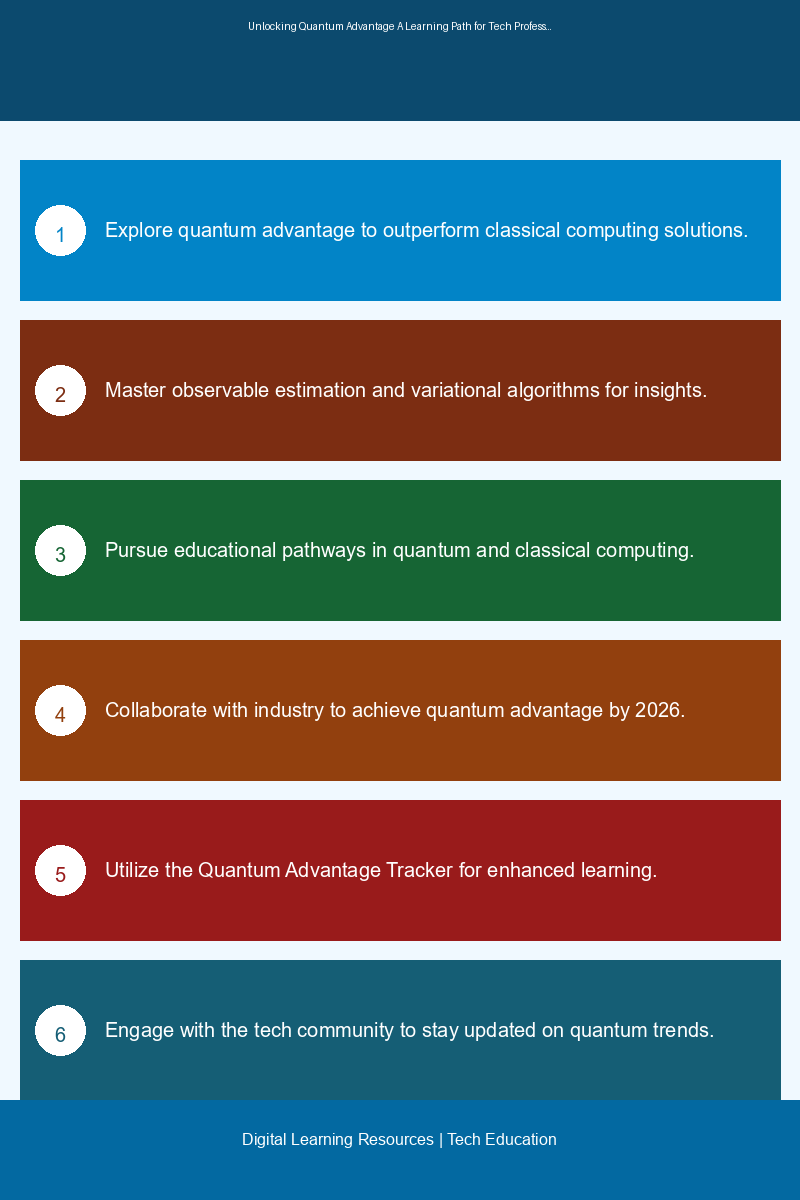
- Quantum advantage combines quantum and classical methods to outperform classical-only solutions.
- Observable estimation and variational algorithms are pivotal in gauging quantum advantage.
- There are numerous educational pathways for learning about quantum computing and its intersection with classical computing.
- Industry collaborations are increasingly focused on achieving quantum advantage by 2026.
- Engaging with the community and utilizing tools like the Quantum Advantage Tracker can enhance your learning experience.
Technical Background and Context
Quantum advantage refers to the capacity of quantum computing algorithms to solve problems more efficiently than classical algorithms. This concept hinges on several methods, including:
📚 Recommended Digital Learning Resources
Take your skills to the next level with these curated digital products:
Academic Calculators Bundle: GPA, Scientific, Fraction & More
Academic Calculators Bundle: GPA, Scientific, Fraction & More
ACT Test (American College Testing) Prep Flashcards Bundle: Vocabulary, Math, Grammar, and Science
Java Essentials: 100 Powerful Topics for Fast-Track Learning | PDF Download
Leonardo.Ai API Mastery: Python Automation Guide (PDF + Code + HTML
Leonardo.Ai API Mastery: Python Automation Guide (PDF + Code + HTML
100 Python Projects eBook: Learn Coding (PDF Download)
JavaScript for Web Development eBook | Learn to Build Interactive Websites
HSPT Vocabulary Flashcards: 1300+ Printable Study Cards + ANKI (PDF)
HSPT Vocabulary Flashcards: 1300+ Printable Study Cards + ANKI (PDF)
- Observable Estimation: A technique to estimate quantum states, providing insights into quantum computations.
- Variational Algorithms: These algorithms leverage both quantum and classical resources to optimize certain functions, showcasing potential quantum advantages.
- Efficient Classical Verification: The challenge of verifying quantum computations with classical methods is central to establishing quantum advantage.
To rigorously gauge entry into the quantum advantage era, researchers are developing frameworks that validate quantum circuits against classical counterparts. This validation process is crucial for proving that quantum methods can indeed outperform classical solutions.
Practical Applications and Use Cases
Understanding the practical applications of quantum advantage is essential for tech professionals. Some notable use cases include:
- Optimization Problems: Quantum algorithms can solve complex optimization problems in logistics and finance more efficiently than classical algorithms.
- Drug Discovery: Quantum computing can simulate molecular interactions, significantly speeding up the drug discovery process.
- Cryptography: Quantum algorithms have the potential to break existing cryptographic codes, prompting the need for new quantum-resistant encryption methods.
By grasping these applications, developers can position themselves as innovators in fields that will be transformed by quantum technologies.
Learning Path Recommendations
To navigate the intricacies of quantum and classical computing, consider the following learning path:
- Foundational Knowledge: Start with courses on classical computing principles to build a solid base.
- Quantum Circuit Implementations: Engage with resources that delve into quantum circuits and their validation processes, such as IBM’s Quantum Experience.
- Community Engagement: Join forums and online communities focused on quantum computing, such as the Quantum Advantage Tracker, to stay updated on candidate experiments for quantum advantage.
- Hands-On Projects: Implement small-scale quantum algorithms using platforms like Qiskit or Cirq to gain practical experience.
Industry Impact and Career Implications
The impact of quantum computing on various industries is profound, and as such, it opens up numerous career opportunities:
- Emerging Enterprises: Companies are developing quantum-powered solutions to outperform traditional methods, creating job roles focused on quantum algorithm development.
- Collaboration with HPC: The convergence of quantum and high-performance computing (HPC) will necessitate professionals skilled in both areas, particularly as organizations aim for quantum advantage by 2026.
- Research and Development: There is growing interest in rigorous proofs of quantum advantage, leading to opportunities in academic and industrial research settings.
By investing in your education and building skills in quantum computing, you position yourself at the forefront of this technological evolution.
Implementation Tips and Best Practices
To effectively implement quantum computing skills in your career, consider the following best practices:
- Stay Informed: Regularly read industry publications and research papers to keep up-to-date with the latest advancements in quantum computing.
- Network with Experts: Attend conferences, webinars, and workshops to connect with leaders in the field and learn from their experiences.
- Engage in Collaborative Projects: Participate in hackathons or collaborative research projects to apply your knowledge in real-world scenarios.
- Document Your Learning: Keep a portfolio of your projects and experiments with quantum algorithms to showcase your skills to potential employers.
Future Trends and Skill Requirements
Looking ahead, several trends and skill requirements will shape the future landscape of quantum computing:
- Growth of Quantum Software: As quantum hardware becomes more accessible, there will be an increased demand for software developers skilled in quantum programming languages.
- Interdisciplinary Knowledge: Professionals with a blend of skills in quantum mechanics, computer science, and mathematics will be highly sought after.
- Focus on Validation Techniques: Understanding how to validate quantum circuits against classical methods will be essential as the industry matures.
Conclusion with Actionable Next Steps
As quantum computing continues to evolve, the intersection of quantum and classical methods presents exciting opportunities for tech professionals. To seize these opportunities, take the following actionable steps:
- Enroll in online courses focused on quantum computing fundamentals and algorithms.
- Join community forums and engage with tools like the Quantum Advantage Tracker.
- Work on projects that involve quantum algorithms and validation techniques to build your portfolio.
- Network with professionals in the quantum computing space to gain insights and mentorship.
By committing to continuous learning and adaptation, you can position yourself at the forefront of the quantum computing revolution, ready to tackle the challenges and seize the opportunities of this transformative technology.
Disclaimer: The information in this article has been gathered from various reputed sources in the public domain. While we strive for accuracy, readers are advised to verify information independently and consult with professionals for specific technical implementations.
Ready to advance your tech career? Explore our digital learning resources including programming guides, certification prep materials, and productivity tools designed by industry experts.