In the rapidly evolving landscape of artificial intelligence and data science, the choice of database can significantly impact the performance of applications, particularly those involving vector similarity searches. As AI models become increasingly sophisticated, the need for efficient data retrieval methods grows. This article will provide a detailed comparison of three popular vector databases: Pinecone, Weaviate, and Chroma. Each of these databases offers unique features and capabilities, making them suitable for different use cases. Understanding their differences will help you select the right tool for your project.
Pinecone: Operational Simplicity and Speed
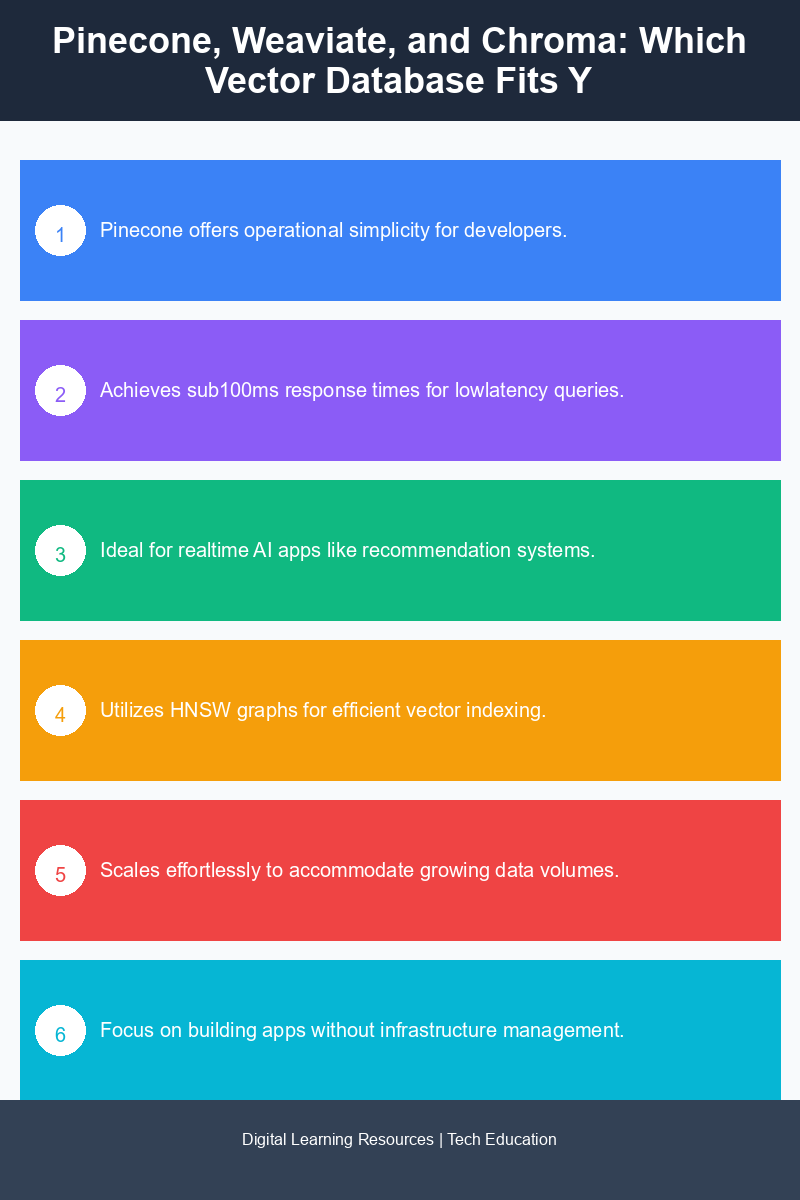
Pinecone is a fully managed cloud service that emphasizes operational simplicity. It allows developers to focus on building applications without the burden of managing infrastructure. One of Pinecone’s standout features is its consistent low-latency queries, often achieving sub-100ms response times. This makes it particularly suitable for real-time AI applications, such as recommendation systems and personalized content delivery.
Pinecone uses specialized vector indexing methods, notably Hierarchical Navigable Small World (HNSW) graphs. This indexing technique enhances query performance, enabling rapid retrieval of similar vectors even in large datasets. Pinecone’s architecture is designed to scale effortlessly, accommodating growing data volumes without sacrificing performance. For developers looking for a straightforward and efficient solution for vector searches, Pinecone stands out as a top choice.
Weaviate: Flexibility and Hybrid Deployment
Weaviate distinguishes itself with its flexible schema architecture and support for hybrid deployment options, allowing users to choose between cloud-based and on-premises installations. This adaptability is crucial for organizations that require data to reside within specific environments for compliance or security reasons.
While Weaviate offers competitive query latency, its performance can vary based on the chosen infrastructure and configuration settings. This variability means that developers may need to invest time in fine-tuning their setups to achieve optimal results. Weaviate’s architecture also enables the incorporation of various data types, making it suitable for diverse applications, from knowledge graphs to semantic search engines.
One of the key features of Weaviate is its ability to handle both vector and scalar data, fostering hybrid queries that leverage rich contextual information. This capability is advantageous for projects that require nuanced understanding and retrieval of information based on multiple dimensions.
📊 Key Learning Points Infographic
Visual summary of key concepts
Chroma: Open-Source Customizability
Chroma is an open-source vector database optimized for real-time data processing. Its open-source nature allows developers to customize and adapt the solution according to specific project needs. This flexibility is particularly appealing for teams that want to integrate custom workflows or experiment with unique embedding strategies.
One of Chroma’s primary advantages is its support for various embedding models and workflows, enabling users to tailor the data processing pipeline to their requirements. This adaptability can lead to significant improvements in retrieval efficiency and relevance, especially in niche applications.
Chroma’s open-source model also fosters a vibrant community, where developers can contribute to the project and share knowledge. This collaborative spirit can accelerate innovation, making it an attractive option for organizations looking to leverage community-driven enhancements and support.
Choosing the Right Vector Database
When selecting between Pinecone, Weaviate, and Chroma, several factors should guide your decision-making process:
- Latency Requirements: If your application demands extremely low-latency queries, Pinecone is hard to beat with its sub-100ms performance.
- Deployment Flexibility: For organizations that need the option to deploy on-premises or in the cloud, Weaviate is the clear choice.
- Customizability: If you need a highly customizable solution, Chroma’s open-source nature allows for significant adaptation.
- Scalability: Pinecone excels in scalability, making it suitable for applications that expect rapid growth in data volume.
In summary, the choice among Pinecone, Weaviate, and Chroma should be driven by the specific needs of your project regarding latency, scalability, and cost. Pinecone offers simplicity and scale, Weaviate provides flexibility in deployment, and Chroma stands out for its customizability and open-source adaptability. Understanding these differences will empower you to make an informed decision that aligns with your project goals. If you’d rather not wire these pieces together yourself, tools like RAGFlow bundle retrieval, indexing, and agent orchestration into a single open-source engine.
Disclaimer: Information gathered from reputed public sources.
Verify independently for specific implementations.
Ready to advance your skills?
Explore our digital learning resources.
📑 About the author: I also build Digital Bizz Card — hosted digital business cards you can share with a QR code, no app required.