Recent advancements in artificial intelligence have shown that large language models (LLMs) can perform translation tasks effectively, even without being explicitly trained as translators. This capability stems from their ability to learn from massive datasets and develop an understanding of language structures and meanings across different languages.
The Mechanisms Behind LLM Translation
Large language models utilize two primary methods to acquire their translation abilities:
- Studying Matched Sentences: LLMs analyze pairs of sentences in two languages that convey the same meaning. This method enables the models to learn direct correlations between words and phrases across languages.
- Reading Large Text Collections: By consuming vast amounts of text in each language separately, LLMs build an understanding of grammar, context, and usage patterns. This extensive reading allows them to grasp the nuances of different languages.
Over time, these methods help models draw connections between languages, enabling them to translate effectively. For example, a model trained on English and Spanish text will learn to associate specific phrases in both languages, allowing it to generate accurate translations even without specialized training as a translator.
Interlingua: The Concept of Meaning in Translation
One significant concept in machine translation is Interlingua, which focuses on capturing the underlying meaning of phrases and sentences rather than performing direct, word-for-word translations. This approach emphasizes understanding the context and semantics of the original message.
When LLMs encode meaning in a language-neutral form, they can then express that meaning in any target language without losing the essence of the original message. This capability is particularly valuable in complex translations where context plays a crucial role. For instance, idiomatic expressions or culturally specific references can be better translated when the model understands the intent behind the words rather than just translating them literally.
The Creation of a Multilingual Corpus
To enhance translation accuracy, a multilingual corpus was developed, aligning translations of a specific text in multiple languages—Japanese, Chinese, Russian, German, French, Brazilian Portuguese, and Hindi—with the original English text. This corpus was created with permission from the relevant organizations, allowing researchers to train and evaluate LLMs effectively.
📊 Key Learning Points Infographic
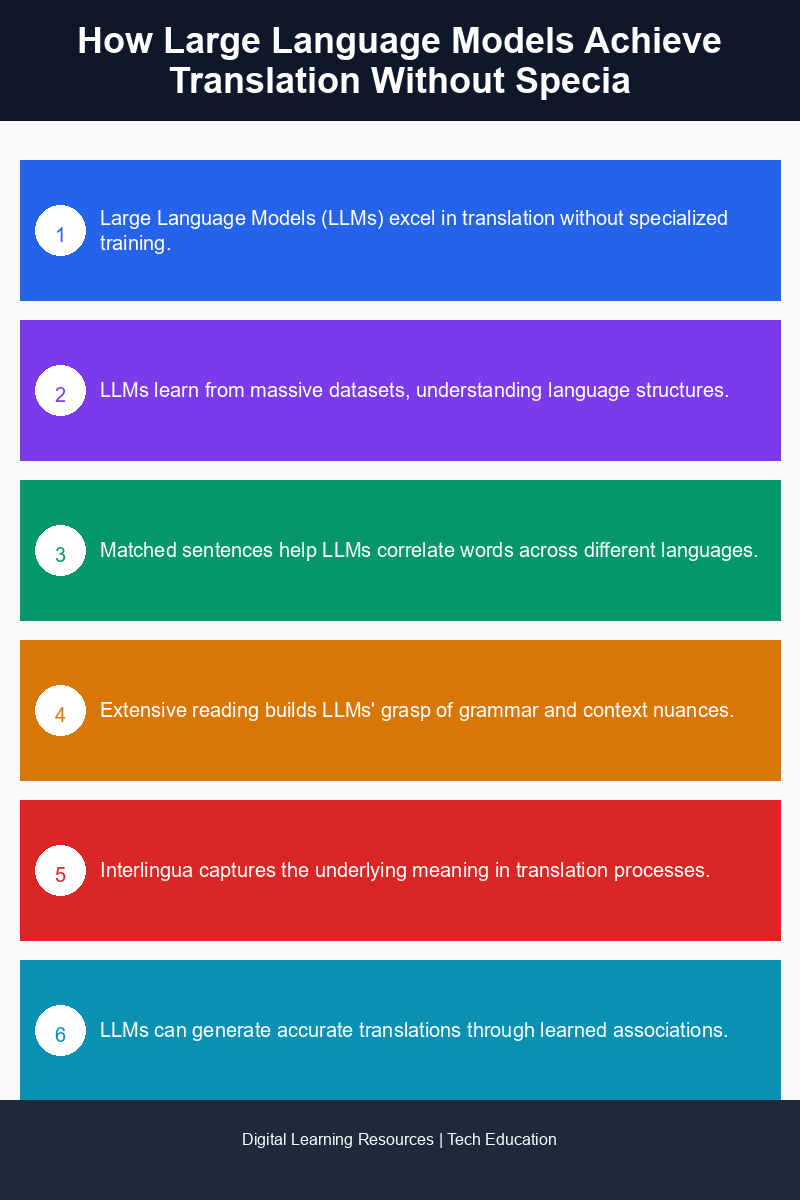
Visual summary of key concepts
The alignment of sentences in this corpus enables LLMs to learn from diverse linguistic structures and idiomatic expressions, further refining their translation capabilities. For example, a model can learn that the English phrase “kick the bucket” (meaning to die) translates differently in various cultures, ensuring that the translation is not only accurate but also culturally appropriate.
Practical Implications for Developers and Learners
The implications of these advancements in translation technology are significant for developers and learners in the field of AI and machine learning. Understanding how LLMs can achieve translation without specialized training opens up new possibilities for application development and language learning tools.
Developers can leverage LLMs to create more sophisticated translation applications that adapt to user inputs and context. For instance, integrating LLMs into chatbots or customer service applications can enhance user experience by providing accurate translations in real-time.
Moreover, learners can benefit from these advancements by utilizing AI language models in language learning platforms. By interacting with LLMs, learners can practice their language skills through conversational exercises, receive instant feedback, and engage with diverse linguistic content that enhances their understanding of different languages.
Conclusion
Large language models have demonstrated a remarkable ability to perform translation tasks without explicit training as translators. By studying matched sentences and consuming large text collections, these models build a deep understanding of language and meaning. The incorporation of concepts like Interlingua further enhances their capability to translate accurately and contextually. As researchers continue to refine these technologies, the potential applications for developers and learners alike are vast, paving the way for more intuitive and effective language translation solutions.
Frequently Asked Questions
How does AI translate languages without being specifically trained as a translator?
What is Interlingua and how does it relate to AI translation?
Interlingua is a constructed international auxiliary language designed to facilitate communication between speakers of different languages. In AI translation, it can serve as a neutral intermediary language, helping large language models to generate translations more effectively.
Can large language models improve machine translation accuracy?
Yes, large language models enhance machine translation accuracy by leveraging deep learning techniques to better understand nuances in language, idiomatic expressions, and contextual meanings.
Why is AI translation becoming more popular in recent years?
AI translation has gained popularity due to advancements in natural language processing, increased access to multilingual data, and the ability to provide real-time translations, making communication across languages easier and more efficient.
Does AI translation replace human translators?
While AI translation can handle many basic translation tasks quickly and efficiently, it does not fully replace human translators, especially for nuanced texts that require cultural understanding and emotional context.
Disclaimer: Information gathered from reputed public sources. Verify independently for specific implementations.
Ready to advance your skills? Explore our digital learning resources.
Related reading:
📑 About the author: I also build Digital Bizz Card — hosted digital business cards you can share with a QR code, no app required.