Tokens are the fundamental units of text processed by OpenAI’s models, and understanding them is crucial for effectively utilizing these AI technologies. Each token can represent anything from a single character to a complete word, impacting how text inputs and outputs are measured. In this article, we will explore the definition of tokens, the components that contribute to their count, and how to accurately estimate token usage for various applications.
What Are Tokens?
In the context of OpenAI’s models, tokens serve as the basic building blocks for text processing. They encompass a wide range of text elements, including letters, punctuation, spaces, and even partial words. The variability in token length means that a single word may be represented by multiple tokens, while some tokens may consist of just a few characters, depending on the input text’s complexity.
For example, the phrase “AI is fascinating!” includes several tokens: “AI,” “is,” “fascinating,” and the punctuation mark “!”. This highlights how both words and symbols are integral to the total token count. Understanding this concept is essential for developers and users working with OpenAI’s API, as token counts influence pricing and processing limits.
Components Contributing to Token Count
The calculation of token counts is not straightforward, as various components contribute to the total. Here are the key elements to consider:
- Spaces: Each space between words is treated as a separate token. For instance, the sentence “Hello World!” consists of three tokens: “Hello,” “World,” and “!”.
- Punctuation: Every punctuation mark, such as commas, periods, and exclamation points, counts as an individual token.
- Partial Words: When a word is segmented, such as in compound words or certain languages, it may be counted as multiple tokens.
The total count of tokens is influenced by these components, making it essential to be mindful of how input text is structured when interacting with the OpenAI API.
Token Estimation for English Texts
Estimating the number of tokens in a given piece of text can significantly affect how users interact with OpenAI’s models, especially in terms of costs and limits. Here are some general guidelines for estimating token counts in English:
📊 Key Learning Points Infographic
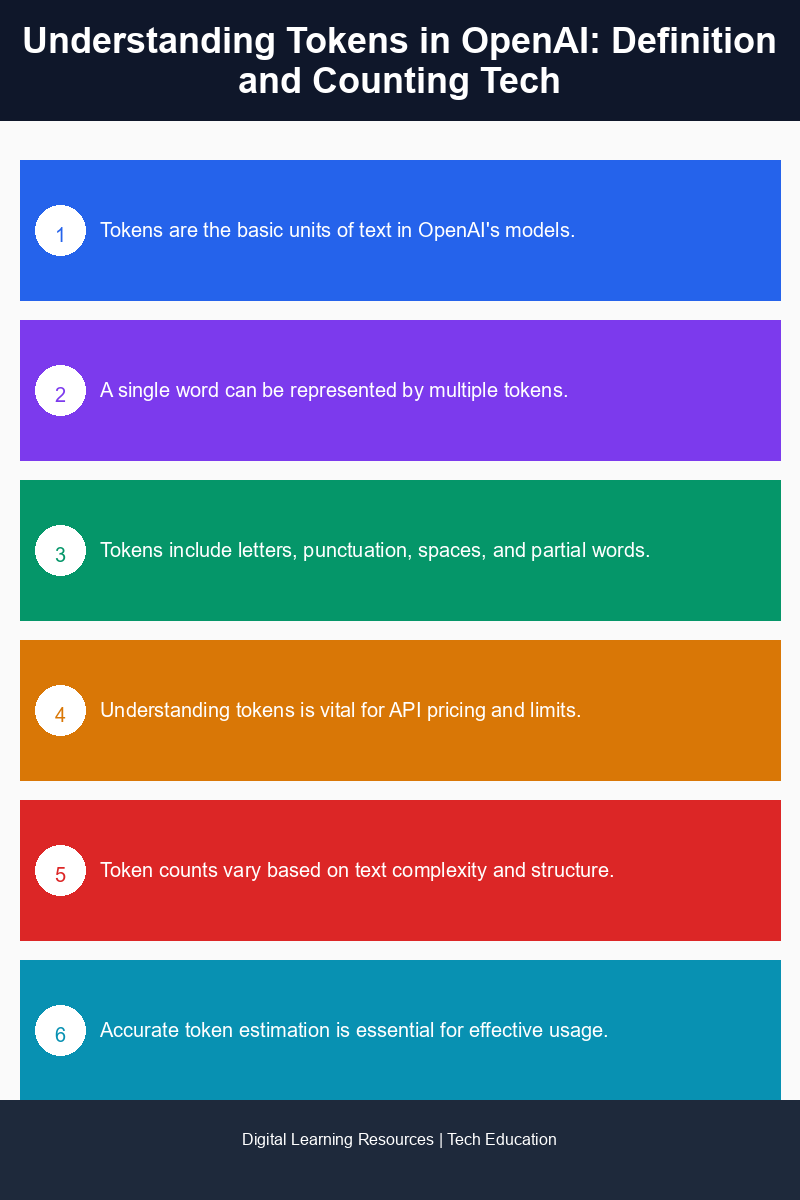
Visual summary of key concepts
- Approximately 1 token is equivalent to 4 characters.
- One token typically corresponds to about three-quarters of a word.
For instance, the Declaration of Independence contains approximately 1,695 tokens, demonstrating how even historical texts can be analyzed for token usage. Understanding these approximations aids developers in budgeting their use of the API based on expected token consumption.
Calculating Token Counts for API Interaction
When you send a text to OpenAI’s API, the model goes through a specific token count calculation process:
- Tokenization: The input text is split into tokens based on a set of rules that determine how to parse the text.
- Processing: The model processes these tokens to generate a response based on the input.
- Response Generation: The output is then created as a sequence of tokens before being converted back into human-readable text.
This process ensures that both input and output tokens are accounted for, which is vital for tracking usage and understanding the associated costs.
Categories of Token Usage
When working with OpenAI’s API, it’s essential to differentiate between the various categories of token usage, as they can significantly impact both functionality and billing:
- Input Tokens: These are the tokens present in the user’s request, forming the basis of the interaction with the AI.
- Output Tokens: Tokens generated in the model’s response, which also contribute to the total token count.
- Cached Tokens: Tokens that are reused from conversation history, often billed at a reduced rate, allowing for more efficient interactions.
- Reasoning Tokens: Additional tokens utilized for internal processing in advanced models, necessary for generating complex responses.
Understanding these categories helps users manage their API calls more effectively, optimizing both interaction quality and cost efficiency.
Token Counts and API Metadata
Lastly, token counts are included in the API response metadata, providing essential information for billing and usage tracking. This metadata allows developers to monitor their token usage closely, ensuring they stay within budget and effectively manage their API interactions.
By analyzing token counts and understanding their implications, developers can make informed decisions regarding how to structure their queries and responses, ultimately enhancing their overall experience with OpenAI’s models.
In summary, grasping the concept of tokens is crucial for anyone looking to leverage OpenAI’s API effectively. From understanding the basic definition and components of tokens to calculating their counts and utilizing them efficiently, knowledge of tokens can significantly impact your interaction with AI models. Whether you’re a developer or a tech enthusiast, being token-aware will enhance your ability to work with these powerful tools.
Frequently Asked Questions
What are OpenAI tokens?
OpenAI tokens are units of text that the model processes, where each token can represent a word, part of a word, or punctuation. The number of tokens in a text input affects how the model interprets and generates responses.
How do I count tokens in my text input?
You can count tokens by using OpenAI’s tokenization tools or libraries, which break down your text into tokens and provide a count. Additionally, many programming languages have libraries that can help you with this process.
Why is counting tokens important for using OpenAI?
Counting tokens is crucial because it helps you understand the limits of your text input and output, ensuring that you stay within the model’s constraints for optimal performance and cost management.
Can I reduce the number of tokens in my text input?
Yes, you can reduce the number of tokens by simplifying your language, removing unnecessary words, or summarizing longer texts, which can help you stay within token limits and improve response efficiency.
Does the length of my text input affect the number of tokens?
Yes, the length of your text input directly affects the number of tokens, as longer inputs typically contain more tokens. Each word and punctuation mark contributes to the total token count.
Disclaimer: Information gathered from reputed public sources. Verify independently for specific implementations.
Ready to advance your skills? Explore our digital learning resources.
Related reading:
📑 About the author: I also build Digital Bizz Card — hosted digital business cards you can share with a QR code, no app required.