
Key Takeaways:
- Understanding prompt engineering is essential for maximizing the effectiveness of AI outputs.
- Hands-on experience and creativity are vital to becoming a successful prompt engineer.
- The demand for prompt engineering skills is on the rise in various industries.
Introduction
As artificial intelligence (AI) continues to evolve, the field of prompt engineering emerges as a crucial component in harnessing the full potential of AI models, particularly large language models (LLMs) and generative AI. This discipline involves the art and science of crafting prompts that guide AI systems to produce relevant, accurate, and creative outputs. In this guide, we will explore the technical background, practical applications, learning paths, and career implications of prompt engineering, equipping you with the knowledge needed to thrive in this dynamic field.
Technical Background and Context
Prompt engineering is rooted in the understanding of AI model capabilities, particularly in how LLMs interpret and respond to input. The quality of the prompts significantly impacts the results generated by these models. A well-designed prompt can elicit insightful, contextually relevant responses, while a poorly constructed one may lead to irrelevant or nonsensical outputs.
📚 Recommended Digital Learning Resources
Take your skills to the next level with these curated digital products:
Academic Calculators Bundle: GPA, Scientific, Fraction & More
Academic Calculators Bundle: GPA, Scientific, Fraction & More
ACT Test (American College Testing) Prep Flashcards Bundle: Vocabulary, Math, Grammar, and Science
Java Essentials: 100 Powerful Topics for Fast-Track Learning | PDF Download
Leonardo.Ai API Mastery: Python Automation Guide (PDF + Code + HTML
Leonardo.Ai API Mastery: Python Automation Guide (PDF + Code + HTML
100 Python Projects eBook: Learn Coding (PDF Download)
JavaScript for Web Development eBook | Learn to Build Interactive Websites
HSPT Vocabulary Flashcards: 1300+ Printable Study Cards + ANKI (PDF)
HSPT Vocabulary Flashcards: 1300+ Printable Study Cards + ANKI (PDF)
At its core, prompt engineering requires a blend of technical knowledge, creativity, and strategic thinking. Professionals in this field must understand not only the capabilities of the AI models they are working with but also how to frame questions and prompts that align with desired outcomes. As AI continues to be integrated into various business operations—from customer support chatbots to content generation—prompt engineering is becoming increasingly important.
Practical Applications and Use Cases
The applications of prompt engineering are diverse and expanding. Here are some notable use cases:
- Content Creation: Journalists and marketers can use prompt engineering to generate articles, marketing copy, and social media posts that resonate with their target audiences.
- Customer Support: Businesses can implement AI-driven chatbots that effectively respond to customer inquiries, enhancing user experience and operational efficiency.
- Data Analysis: Analysts can leverage LLMs to summarize large datasets and generate insights, making data interpretation faster and more accurate.
- Creative Writing: Authors and screenwriters can experiment with prompts to inspire new narratives and characters, pushing the boundaries of creative storytelling.
Learning Path Recommendations
To become proficient in prompt engineering, consider the following educational opportunities:
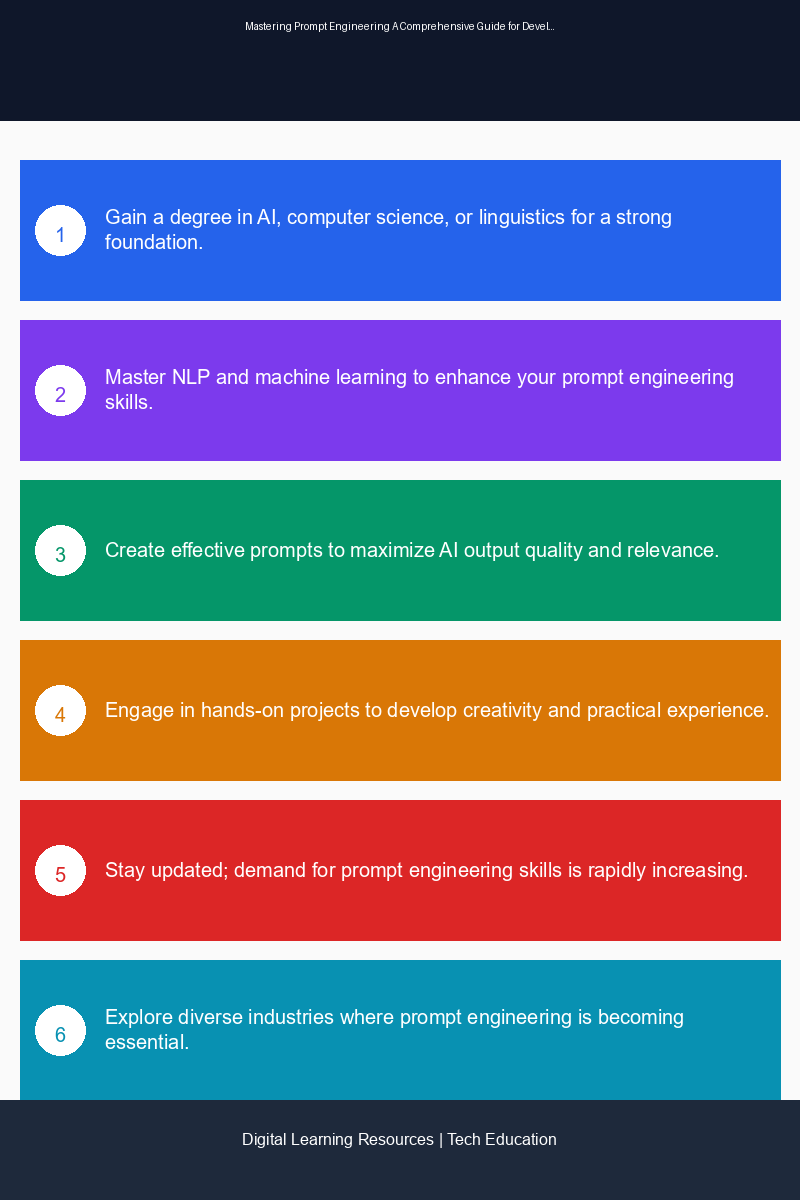
- Formal Education: Pursuing coursework in artificial intelligence and natural language processing (NLP) provides a strong foundation. Look for degrees or certifications that cover AI principles, machine learning, and NLP techniques.
- Online Courses: Platforms like Coursera, Udacity, and edX offer specialized courses in AI and prompt engineering. These courses often include hands-on projects to apply learning practically.
- Workshops and Bootcamps: Intensive workshops can provide immersive experiences, often led by industry professionals, to help you quickly build skills in prompt engineering.
- Self-Directed Learning: Engage with online communities, forums, and resources. Experiment with various LLMs and generative AI tools to gain practical experience in crafting prompts.
Industry Impact and Career Implications
The rise of prompt engineering reflects a significant shift in how businesses approach AI integration. As more companies adopt AI solutions, the need for skilled professionals who can optimize AI outputs through effective prompting is growing. This trend presents exciting career opportunities:
- AI Prompt Engineer: Focus on designing and optimizing prompts to improve AI-generated content across various applications.
- AI Product Manager: Oversee the development of AI-driven products, ensuring they meet market needs and leverage prompt engineering effectively.
- Data Scientist: Use prompt engineering as part of a broader skill set to analyze and interpret data using AI methodologies.
Implementation Tips and Best Practices
To excel in prompt engineering, consider these actionable tips:
- Start Simple: Begin with straightforward prompts to understand how the AI model responds. Gradually increase complexity as you gain experience.
- Iterate and Refine: Don’t hesitate to revise prompts based on the outputs received. Experimentation is key to discovering what works best.
- Use Contextual Cues: Providing context or examples in your prompts can significantly enhance the relevance of the generated outputs.
- Analyze Outputs: Develop critical thinking skills to assess the quality of AI-generated content. Understanding what makes a good output will help you craft better prompts.
Future Trends and Skill Requirements
The future of prompt engineering is bright, with continuous advancements in AI technologies and increasing recognition of its importance across sectors. To stay ahead, focus on the following skills:
- Technical Skills: Familiarity with programming languages such as Python, as well as frameworks like TensorFlow or PyTorch, can enhance your ability to work with AI models.
- Analytical Skills: Be adept at analyzing AI outputs to determine effectiveness and relevance.
- Creativity: Cultivating creative thinking will allow you to craft innovative prompts that yield unique and valuable results.
- Continuous Learning: Stay updated on the latest developments in AI and prompt engineering by engaging with online communities, attending conferences, and reading industry publications.
Conclusion with Actionable Next Steps
In summary, mastering prompt engineering is a valuable skill that holds immense potential for developers, IT professionals, and tech learners. By understanding the technical concepts, exploring practical applications, and pursuing continuous learning, you can position yourself for success in this rapidly evolving field.
Actionable Next Steps:
- Enroll in a relevant online course or workshop today to kickstart your learning journey.
- Join forums or social media groups focused on AI and prompt engineering to connect with peers and share insights.
- Begin experimenting with different AI models and prompts to build your portfolio of work.
Embrace the opportunity to innovate and shape the future of AI through effective prompt engineering!
Disclaimer: The information in this article has been gathered from various reputed sources in the public domain. While we strive for accuracy, readers are advised to verify information independently and consult with professionals for specific technical implementations.
Ready to advance your tech career? Explore our digital learning resources including programming guides, certification prep materials, and productivity tools designed by industry experts.