As energy demands increase and the push for sustainability becomes more urgent, traditional energy systems struggle to keep pace. The rise of Everything-to-Grid (E2G) energy technology presents a solution that allows various entities—such as electric vehicles (EVs), buildings, factories, and data centers—to seamlessly connect and interact with the energy grid. This article explores the functionality of E2G energy, its impact on energy management, and the entities involved in this transformative approach.
What is Everything-to-Grid Energy?
Everything-to-Grid energy is a grid technology designed to facilitate energy exchange and management between multiple entities and the electrical grid. Unlike conventional energy systems, which typically operate on a one-way flow of electricity from utility to consumer, E2G enables a dynamic interaction where energy can flow in multiple directions. This technology is crucial for integrating renewable energy sources, optimizing grid performance, and enhancing energy resilience.
The Role of Key Entities in E2G Energy
The effectiveness of Everything-to-Grid energy hinges on the participation and integration of various entities. Each plays a unique role in enhancing energy efficiency and sustainability:
📚 Recommended Digital Learning Resources
Take your skills to the next level:
Nclex-RN Exam Prep Flashcards | 800 Cards | All 8 Content Areas | Anki Decks Normal & Cloze | 8 PDF Layouts | RN Licensing Exam
Nclex-RN Exam Prep Flashcards | 800 Cards | All 8 Content Areas | Anki Decks Normal & Cloze | 8 PDF Layouts | RN Licensing Exam
LSAT Flashcard Study System | 800 Cards | 8 Categories | Anki Decks Normal Cloze | 8 PDF Layouts Color Print
LSAT Flashcard Study System | 800 Cards | 8 Categories | Anki Decks Normal Cloze | 8 PDF Layouts Color Print
📊 Key Learning Points Infographic
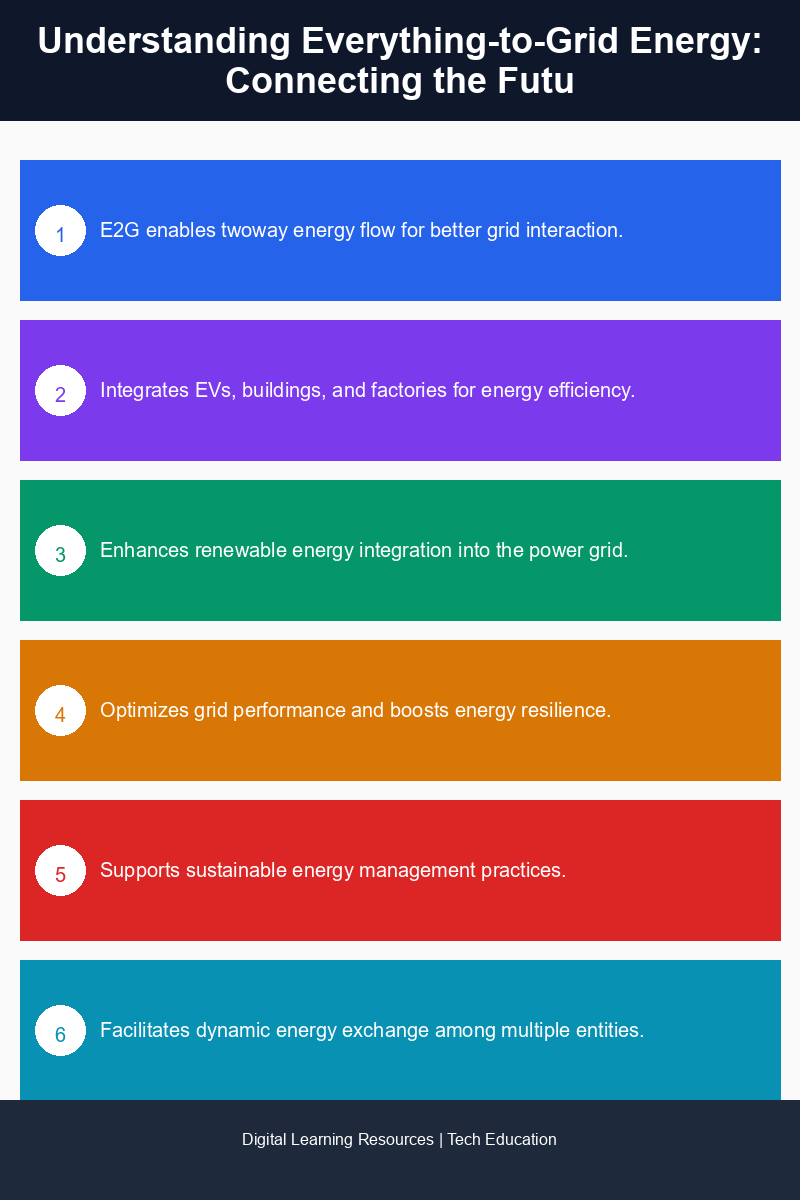
Visual summary of key concepts
GMAT Flashcard Study System | 700 Cards | 8 Categories | Anki Decks Normal Cloze | 8 PDF Layouts Color Print | Offline Interactive HTML
GMAT Flashcard Study System | 700 Cards | 8 Categories | Anki Decks Normal Cloze | 8 PDF Layouts Color Print | Offline Interactive HTML
MCAT Flashcard Study System | 820 Cards | 9 Categories | Anki Decks Normal Cloze | 8 PDF Layouts Color Print | Instant Download
MCAT Flashcard Study System | 820 Cards | 9 Categories | Anki Decks Normal Cloze | 8 PDF Layouts Color Print | Instant Download
PSAT Flashcard Study System | 600 Cards | 9 Categories | Anki Decks Normal Cloze | 8 Pdf Layouts Color Print | PSAT NMSQT Exam Prep
PSAT Flashcard Study System | 600 Cards | 9 Categories | Anki Decks Normal Cloze | 8 Pdf Layouts Color Print | PSAT NMSQT Exam Prep
- Electric Vehicles (EVs): EVs can act as mobile energy storage units. When connected to the grid, they can either draw power for charging or return stored energy back to the grid during peak demand, thus contributing to grid stability.
- Buildings: Smart buildings equipped with energy management systems can optimize their energy usage. By adjusting consumption based on grid conditions, buildings can reduce costs and minimize their carbon footprint.
- Factories: Industrial facilities can implement demand response strategies, shifting energy use to off-peak times or utilizing on-site renewable energy generation to minimize reliance on the grid.
- Data Centers: As major consumers of energy, data centers can leverage E2G technology to balance load and utilize renewable energy sources, thus reducing operational costs and environmental impact.
How Everything-to-Grid Energy Works
The functionality of E2G energy is underpinned by advanced communication and control systems that allow entities to share data with the grid, enabling real-time energy management. Here are some key components of how E2G energy operates:
- Smart Meters: These devices measure energy consumption and generation in real-time, providing data that helps both consumers and grid operators make informed decisions about energy usage.
- Distributed Energy Resources (DER): This includes solar panels, wind turbines, and battery storage systems that can generate or store energy locally, contributing to the overall energy mix.
- Energy Management Systems (EMS): EMS software analyzes data from smart meters and other inputs to optimize energy usage across the connected entities. For example, an EMS can direct a factory to ramp down production during peak hours when energy prices are high.
Additionally, software platforms like Solar-Log and EnergyHub provide tools for monitoring and managing energy flow. These platforms enable users to track their energy generation and consumption patterns, allowing for more strategic energy management decisions.
Benefits of Everything-to-Grid Energy
As the energy landscape evolves, the benefits of adopting Everything-to-Grid energy become increasingly evident:
MyFlashDecks.com
Need Custom Flashcards for Any Exam or Topic?
Get a complete flashcard study system tailored to your exact topic — 800+ cards, an interactive HTML app, 8 PDF layouts, and 2 Anki decks, all delivered to your email within 24 hours.
- Increased Energy Efficiency: By enabling entities to communicate with the grid, E2G energy optimizes energy consumption and reduces waste.
- Enhanced Reliability: Distributed generation and storage capabilities reduce reliance on centralized power plants, making the grid more resilient to failures and disruptions.
- Cost Savings: Entities can take advantage of lower energy prices during off-peak hours and sell excess energy back to the grid, creating new revenue streams.
- Sustainability: E2G energy promotes the integration of renewable resources, helping to reduce greenhouse gas emissions and combat climate change.
The transition to an Everything-to-Grid energy model is not just a technological shift; it represents a fundamental change in how we think about energy consumption and management. By embracing this approach, we can create a more sustainable, resilient, and efficient energy future.
Disclaimer: Information gathered from reputed public sources. Verify independently for specific implementations.
Ready to advance your skills? Explore our digital learning resources.
📑 About the author: I also build Digital Bizz Card — hosted digital business cards you can share with a QR code, no app required.