
Key Takeaways:
In this blog post, we will explore the burgeoning field of AI chip development, focusing on the rise of homegrown Chinese technology companies, the educational opportunities available, and the skills required to thrive in this dynamic industry.
Introduction
The semiconductor industry is undergoing a seismic shift as homegrown Chinese tech companies intensify their efforts to develop advanced AI chips, posing a challenge to established players like Nvidia. As the competition heats up, the demand for skilled professionals in semiconductor design and AI chip development is skyrocketing. This blog post will delve into the technical background of AI chip architecture, practical applications, and the educational pathways available for tech professionals eager to capitalize on this trend.
Technical Background and Context
AI chips are specialized hardware designed to enhance the performance of artificial intelligence applications. Unlike traditional processors, AI chips handle large data sets and complex algorithms more efficiently, making them ideal for machine learning and deep learning tasks. Recently, Chinese tech firms have made significant strides in this arena, developing AI chips that rival those produced by Nvidia. This competition is driven by a desire to reduce reliance on foreign technology and foster domestic innovation.
📚 Recommended Digital Learning Resources
Take your skills to the next level with these curated digital products:
Academic Calculators Bundle: GPA, Scientific, Fraction & More
Academic Calculators Bundle: GPA, Scientific, Fraction & More
ACT Test (American College Testing) Prep Flashcards Bundle: Vocabulary, Math, Grammar, and Science
Java Essentials: 100 Powerful Topics for Fast-Track Learning | PDF Download
Leonardo.Ai API Mastery: Python Automation Guide (PDF + Code + HTML
Leonardo.Ai API Mastery: Python Automation Guide (PDF + Code + HTML
100 Python Projects eBook: Learn Coding (PDF Download)
JavaScript for Web Development eBook | Learn to Build Interactive Websites
HSPT Vocabulary Flashcards: 1300+ Printable Study Cards + ANKI (PDF)
HSPT Vocabulary Flashcards: 1300+ Printable Study Cards + ANKI (PDF)
The performance comparison between Nvidia’s chips and emerging alternatives is crucial. Nvidia has long dominated the market with its powerful GPUs, which excel in parallel processing tasks. However, emerging Chinese alternatives are beginning to show promise, with innovations in chip design and architecture that could potentially offer competitive performance at lower costs.
Practical Applications and Use Cases
The applications of AI chips are vast and varied. Industries such as healthcare, automotive, and finance are increasingly leveraging AI chips for tasks such as:
- Healthcare: AI chips enable faster data processing for diagnosing diseases and personalizing treatment plans.
- Automotive: Autonomous vehicles rely on AI chips for real-time data analysis from sensors and cameras, enhancing safety and navigation.
- Finance: AI chips facilitate high-frequency trading and fraud detection by processing vast amounts of transaction data in real-time.
As these industries continue to adopt AI technologies, the demand for professionals skilled in semiconductor design and AI chip development will only grow.
Learning Path Recommendations
For tech professionals interested in pursuing a career in AI chip development and semiconductor design, several educational pathways can be explored:
- Semiconductor Design Courses: Look for programs that cover chip architecture, fabrication processes, and design tools. Institutions and online platforms are increasingly offering specialized courses.
- AI and Machine Learning Training: Courses focused on AI algorithms, machine learning frameworks, and hardware optimization techniques are essential for understanding how to leverage AI chips effectively.
- Certification Programs: As the industry evolves, certifications in semiconductor technology, chip design, and AI will become valuable assets. Research reputable certifying bodies and their offerings.
Consider platforms like Coursera, edX, and Udacity for relevant courses, and keep an eye on local universities for specialized programs.
Industry Impact and Career Implications
The increasing competition in the AI chip market has profound implications for the tech industry. As Chinese companies ramp up their efforts, a shift is occurring from established players like Nvidia to emerging domestic manufacturers. This trend is likely to lead to:
- Job Creation: With new companies entering the market, there will be an influx of job opportunities for professionals in semiconductor engineering, AI research, and hardware optimization.
- Innovation Acceleration: The competition will drive innovation, leading to faster advancements in chip technology and new applications that can benefit various sectors.
- Global Collaboration: As companies strive to stay competitive, there may be increased collaboration between international and domestic firms, further enriching the tech landscape.
Implementation Tips and Best Practices
If you’re looking to break into the AI chip development field or enhance your existing skills, consider the following best practices:
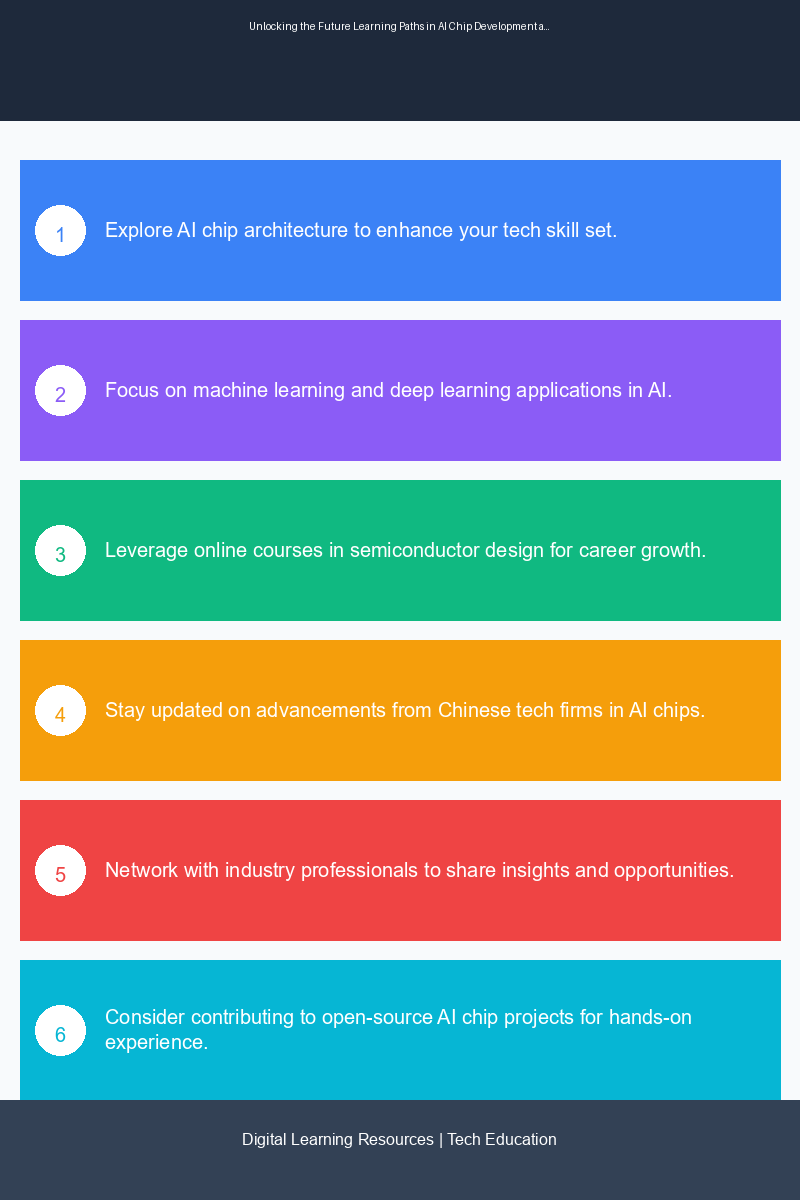
- Stay Updated: Follow industry news, research papers, and tech blogs to keep track of the latest developments in AI chip technology and trends.
- Network: Engage with professionals in the field through online forums, local meetups, and conferences. Building a strong network can open doors to job opportunities and collaborations.
- Hands-On Experience: Look for internships or projects that allow you to apply your knowledge in real-world settings. Practical experience is invaluable in this rapidly evolving field.
Future Trends and Skill Requirements
The future of AI chip development is bright, with several trends expected to shape the industry:
- Increased Customization: As companies seek to differentiate themselves, customization of AI chips for specific applications will become more common.
- Integration with Edge Computing: The rise of IoT devices will drive demand for AI chips that can process data at the edge, reducing latency and bandwidth usage.
- Focus on Energy Efficiency: Developing chips that consume less power while maintaining performance will be a critical area of innovation, especially in mobile and embedded systems.
To thrive in this landscape, professionals should focus on acquiring skills related to AI algorithms, semiconductor design, and machine learning frameworks. Certifications in these areas will also enhance job prospects.
Conclusion with Actionable Next Steps
The AI chip market is at a pivotal moment, presenting significant opportunities for tech professionals willing to adapt and learn. To take advantage of this trend:
- Explore educational programs in semiconductor design and AI chip development.
- Engage in networking opportunities within the tech community.
- Stay informed about industry developments and emerging technologies.
By actively pursuing knowledge and skills in this area, you can position yourself at the forefront of a rapidly evolving field, ensuring that your career remains robust and relevant in the years to come.
Disclaimer: The information in this article has been gathered from various reputed sources in the public domain. While we strive for accuracy, readers are advised to verify information independently and consult with professionals for specific technical implementations.
Ready to advance your tech career? Explore our digital learning resources including programming guides, certification prep materials, and productivity tools designed by industry experts.