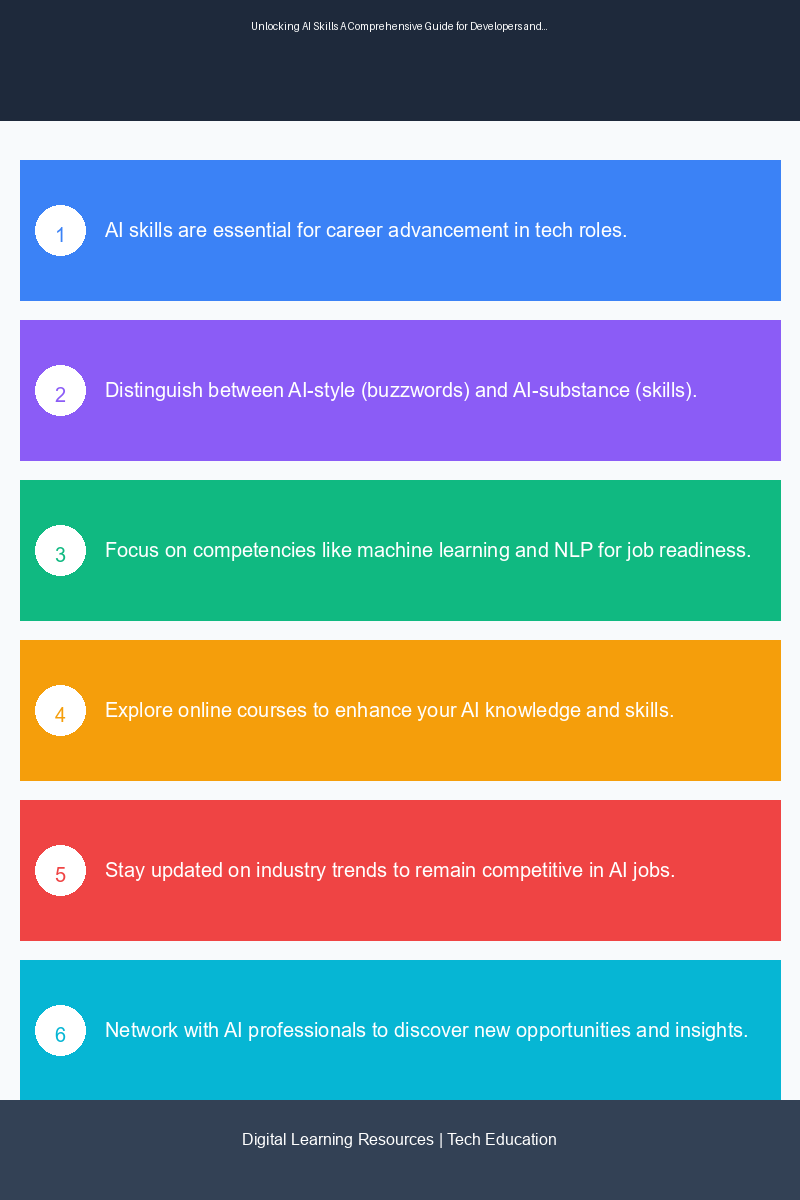
Key Takeaways: In the rapidly evolving tech landscape, AI skills are becoming crucial for career advancement. This guide explores the distinction between general AI knowledge and specific AI applications, outlines educational opportunities, and provides actionable steps for skill development in AI-related roles.
Introduction
Artificial Intelligence (AI) is no longer a buzzword; it has become an integral part of the tech industry. As organizations increasingly leverage AI technologies, the demand for skilled professionals who can develop, implement, and manage AI solutions is on the rise. This blog post delves into the technical concepts surrounding AI, highlights the educational pathways available, examines industry trends, and provides practical advice for enhancing your career in this domain.
Technical Background and Context
To navigate the AI landscape effectively, it’s essential to understand the distinction between AI-style and AI-substance. AI-style refers to general mentions of AI without specific skills or applications, while AI-substance focuses on concrete competencies necessary for job roles. For instance, knowledge of machine learning algorithms, natural language processing, and neural networks falls under AI-substance.
📚 Recommended Digital Learning Resources
Take your skills to the next level with these curated digital products:
Academic Calculators Bundle: GPA, Scientific, Fraction & More
Academic Calculators Bundle: GPA, Scientific, Fraction & More
ACT Test (American College Testing) Prep Flashcards Bundle: Vocabulary, Math, Grammar, and Science
ACT Test (American College Testing) Prep Flashcards Bundle: Vocabulary, Math, Grammar, and Science
Leonardo.Ai API Mastery: Python Automation Guide (PDF + Code + HTML
Leonardo.Ai API Mastery: Python Automation Guide (PDF + Code + HTML
100 Python Projects eBook: Learn Coding (PDF Download)
100 Python Projects eBook: Learn Coding (PDF Download)
HSPT Vocabulary Flashcards: 1300+ Printable Study Cards + ANKI (PDF)
HSPT Vocabulary Flashcards: 1300+ Printable Study Cards + ANKI (PDF)
Recent analyses of job postings using platforms like Indeed indicate a growing emphasis on specific AI skills. A modern AI tool can analyze job descriptions to highlight the most sought-after competencies, revealing insights into the evolving demands of the industry.
Practical Applications and Use Cases
Understanding how AI is applied in various job roles is critical for tech professionals looking to advance their careers. Here are some practical applications:
- AI Development: Involves creating algorithms and models that enable machines to perform tasks such as image recognition, sentiment analysis, and predictive analytics.
- AI Prompting: Crafting effective prompts for AI tools to ensure optimal responses and outcomes, which is particularly relevant for roles in content creation and customer service.
- AI in Business: Applying AI solutions to improve operational efficiency, enhance customer experiences, and drive data-driven decision-making.
Learning Path Recommendations
To stay competitive in the AI job market, it’s essential to focus on specific skills rather than general knowledge. Here’s a recommended learning path:
- Foundational Knowledge: Start with online courses that cover the basics of AI, machine learning, and data science.
- Specialized Skills: Dive deeper into specific areas such as natural language processing, deep learning, or AI ethics through advanced courses and certifications.
- Hands-on Projects: Engage in projects that allow you to apply your skills, such as developing a chatbot, creating a recommendation system, or working on open-source AI initiatives.
- Networking and Community Involvement: Join AI-focused groups, attend meetups, and participate in hackathons to connect with industry professionals and enhance your learning experience.
Industry Impact and Career Implications
The rise of AI is transforming industries, creating new job roles and altering existing ones. Job postings increasingly feature AI-related keywords, highlighting the need for professionals who can bridge the gap between traditional tech roles and AI applications. Understanding the skills that are underrepresented in job postings can give you a competitive edge.
Professionals with certifications in AI development and application not only enhance their employability but also signal their commitment to staying current in a fast-paced industry. Employers are looking for candidates who demonstrate both technical proficiency and practical experience.
Implementation Tips and Best Practices
To effectively integrate AI skills into your career development, consider the following best practices:
- Stay Curious: Continuously seek new knowledge and stay updated on the latest AI trends and technologies through blogs, podcasts, and webinars.
- Build a Portfolio: Showcase your projects and skills through an online portfolio or GitHub repository to attract potential employers.
- Seek Mentorship: Connect with experienced professionals in the AI field who can provide guidance, insights, and support as you navigate your career journey.
- Focus on Real-World Applications: Always aim to tie your learning back to tangible business outcomes, as this will make your skills more applicable and valuable to employers.
Future Trends and Skill Requirements
The landscape of AI is continually evolving, and staying ahead requires adaptability. Key trends to watch include:
- Increased Automation: As AI tools become more sophisticated, there will be a greater need for professionals who can manage and optimize these tools in various business contexts.
- Integration of AI with Other Technologies: Skills in integrating AI with IoT, blockchain, and big data will become increasingly valuable.
- Ethical AI Development: Understanding the ethical implications of AI and developing responsible AI solutions will be crucial as organizations prioritize ethical considerations.
Conclusion with Actionable Next Steps
To thrive in the AI-driven tech landscape, it’s essential to prioritize the development of specific skills that align with industry demands. Start by assessing your current skill set and identifying gaps in your knowledge. Then, choose relevant courses and certifications that focus on practical AI applications.
Engage with the tech community, work on real-world projects, and continuously seek to expand your knowledge. By taking these steps, you will not only enhance your employability but also position yourself as a valuable asset in the rapidly growing field of AI.
Take action today: Explore our collection of programming guides, certification materials, and tech resources tailored to help you succeed in your AI journey!
Disclaimer: The information in this article has been gathered from various reputed sources in the public domain. While we strive for accuracy, readers are advised to verify information independently and consult with professionals for specific technical implementations.
Ready to advance your tech career? Explore our digital learning resources including programming guides, certification prep materials, and productivity tools designed by industry experts.