Key Takeaways: This blog post explores advanced AI server manufacturing, high-performance CPU and GPU production, and the growing demand for AI-ready technologies. We will discuss practical applications in the industry, recommend learning paths and skill development opportunities, and provide insights into future trends that can guide your career in tech.
Introduction
The rapid evolution of technology has set the stage for groundbreaking advancements in artificial intelligence (AI) and semiconductor engineering. As we witness the rise of AI-driven applications and the increasing demand for high-performance computing, it is crucial for developers, IT professionals, and tech learners to position themselves strategically in this dynamic landscape. In this post, we will delve into technical concepts, practical applications, and educational opportunities that can help you thrive in the AI and semiconductor ecosystem.
Technical Background and Context
The intersection of AI and semiconductor technology is reshaping industries worldwide. Here are some of the key concepts and methods driving this transformation:
📚 Recommended Digital Learning Resources
Take your skills to the next level with these curated digital products:
Academic Calculators Bundle: GPA, Scientific, Fraction & More
Academic Calculators Bundle: GPA, Scientific, Fraction & More
ACT Test (American College Testing) Prep Flashcards Bundle: Vocabulary, Math, Grammar, and Science
Java Essentials: 100 Powerful Topics for Fast-Track Learning | PDF Download
📊 Key Learning Points Infographic
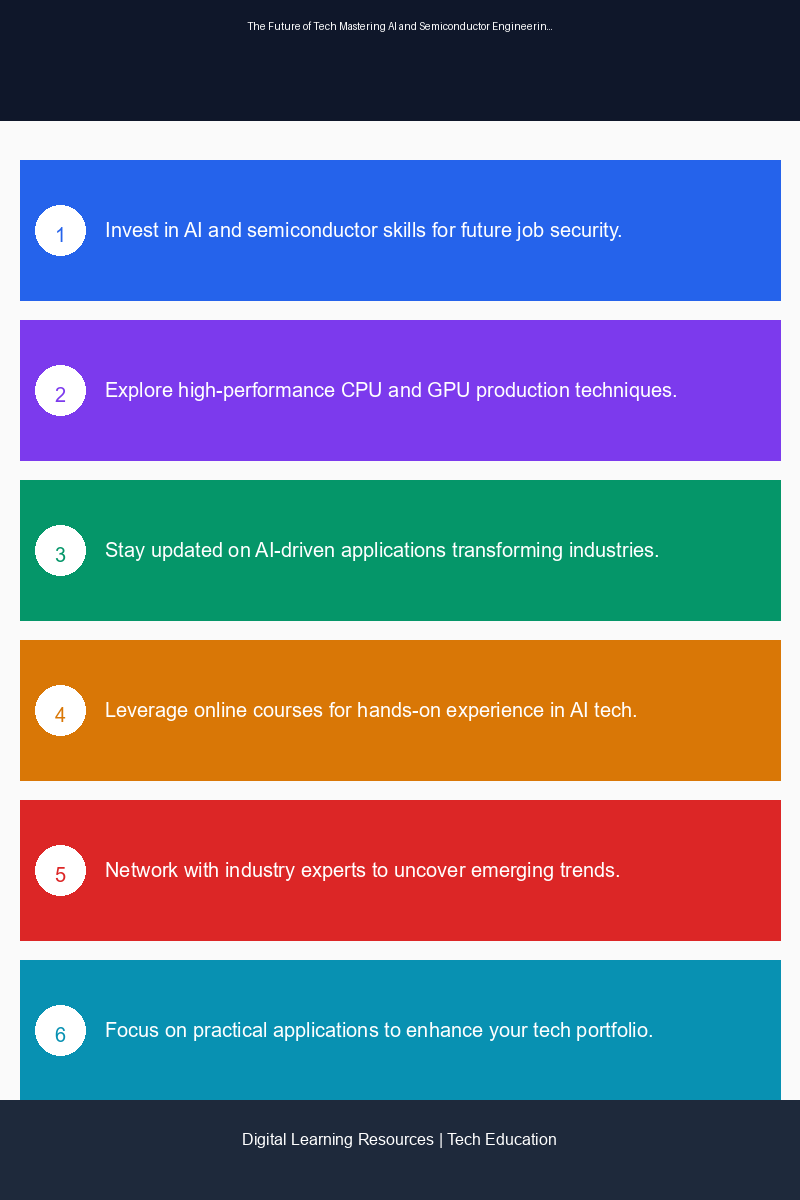
Visual summary of key concepts and actionable insights
Leonardo.Ai API Mastery: Python Automation Guide (PDF + Code + HTML
Leonardo.Ai API Mastery: Python Automation Guide (PDF + Code + HTML
100 Python Projects eBook: Learn Coding (PDF Download)
JavaScript for Web Development eBook | Learn to Build Interactive Websites
HSPT Vocabulary Flashcards: 1300+ Printable Study Cards + ANKI (PDF)
HSPT Vocabulary Flashcards: 1300+ Printable Study Cards + ANKI (PDF)
- Advanced AI Server Manufacturing: Manufacturing facilities for AI servers are being designed with cutting-edge technologies to support the unique demands of AI workloads. This includes optimizing server architectures for parallel processing, energy efficiency, and cooling solutions.
- High-Performance CPUs and GPUs Production: The production of CPUs and GPUs is critical in meeting the computational needs of AI applications. These chips are engineered to handle vast amounts of data and complex algorithms efficiently.
- AI-Ready Network Switches: As AI applications require rapid data transfer and reduced latency, network switches designed specifically for AI workloads are becoming essential, enabling seamless communication between devices.
- Design and Testing Technologies: Innovations in design and testing methodologies focus on enhancing efficiency, scalability, and sustainability, ensuring that products meet market demands while minimizing environmental impact.
Practical Applications and Use Cases
The practical applications of AI and semiconductor engineering are vast and varied. Here are some real-world use cases:
- Cloud Computing: The demand for compute infrastructure among cloud providers has skyrocketed. AI servers equipped with high-performance GPUs are now essential for processing large datasets and providing insights in real-time.
- Data Centers: Data centers are evolving to adopt AI technologies for resource management, predictive maintenance, and automated scaling. This shift enhances operational efficiency and reduces costs.
- AI Startups: Emerging AI startups are leveraging advanced semiconductor technologies to develop innovative solutions in fields like healthcare, finance, and logistics, creating a wealth of opportunities for tech professionals.
Learning Path Recommendations
To capitalize on the growth of AI and semiconductor engineering, tech professionals should consider the following learning paths:
- Skill Development Programs: Enroll in specialized programs focused on AI engineering and semiconductor design. These programs often cover essential topics such as machine learning algorithms, chip architecture, and network design.
- Collaboration with Educational Institutions: Partner with local academic institutions and technology training centers to gain hands-on experience and access to industry-standard tools and methodologies.
- Online Courses and Certifications: Explore online platforms offering courses and certifications in AI and semiconductor engineering. Certifications can enhance your resume and signal your expertise to potential employers.
Industry Impact and Career Implications
The AI and semiconductor ecosystem in India is witnessing robust growth, driven by a shift towards domestic manufacturing to reduce dependency on imports. This trend presents significant career opportunities:
- AI Engineering Skills: Proficiency in AI engineering is increasingly sought after as organizations look to integrate AI solutions. Skills in machine learning, deep learning, and neural networks will be invaluable.
- Semiconductor Engineering Skills: As the demand for high-performance computing increases, skills in semiconductor design, fabrication, and testing will be crucial for tech professionals aiming to enter this field.
Implementation Tips and Best Practices
As you embark on your journey to master AI and semiconductor engineering, consider the following tips:
- Stay Updated: Keep abreast of the latest trends and technologies in AI and semiconductor engineering. Follow industry news, join professional organizations, and participate in relevant conferences.
- Hands-On Experience: Seek internships or project opportunities to gain practical experience. Hands-on work is essential for mastering complex concepts and developing problem-solving skills.
- Networking: Build a network of professionals in your field. Networking can open doors to job opportunities, collaborations, and mentorship.
Future Trends and Skill Requirements
As we look to the future, several trends will shape the landscape of AI and semiconductor engineering:
- Increased Demand for AI-Ready Infrastructure: The need for robust compute infrastructure will continue to grow as AI applications become more prevalent in various sectors.
- Focus on Sustainability: There will be a greater emphasis on sustainable manufacturing practices, with companies seeking to minimize their environmental impact while meeting performance benchmarks.
- Emergence of New Technologies: Emerging technologies such as quantum computing may disrupt traditional semiconductor manufacturing, requiring professionals to adapt and learn new skills.
Conclusion with Actionable Next Steps
The convergence of AI and semiconductor technology presents exciting opportunities for tech professionals. To navigate this evolving landscape successfully, focus on developing relevant skills, seek out educational opportunities, and stay engaged with industry trends. Here are your actionable next steps:
- Explore online courses and certifications in AI and semiconductor engineering.
- Connect with local academic institutions and tech training centers for skill development programs.
- Stay informed about industry trends and advancements by following technology news and participating in professional networks.
By investing in your education and skills today, you can position yourself at the forefront of the AI and semiconductor revolution and enjoy a rewarding career in technology.
Disclaimer: The information in this article has been gathered from various reputed sources in the public domain. While we strive for accuracy, readers are advised to verify information independently and consult with professionals for specific technical implementations.
Ready to advance your tech career? Explore our digital learning resources including programming guides, certification prep materials, and productivity tools designed by industry experts.