In an ever-evolving tech landscape, the tools you choose can significantly impact your productivity and career trajectory. This article delves into the world of Integrated Development Environments (IDEs) and code editors, highlighting essential features, practical applications, and learning pathways to enhance your programming skills. Whether you’re a budding developer or an experienced IT professional, mastering these tools is key to unlocking new opportunities in your career.
Key Takeaways
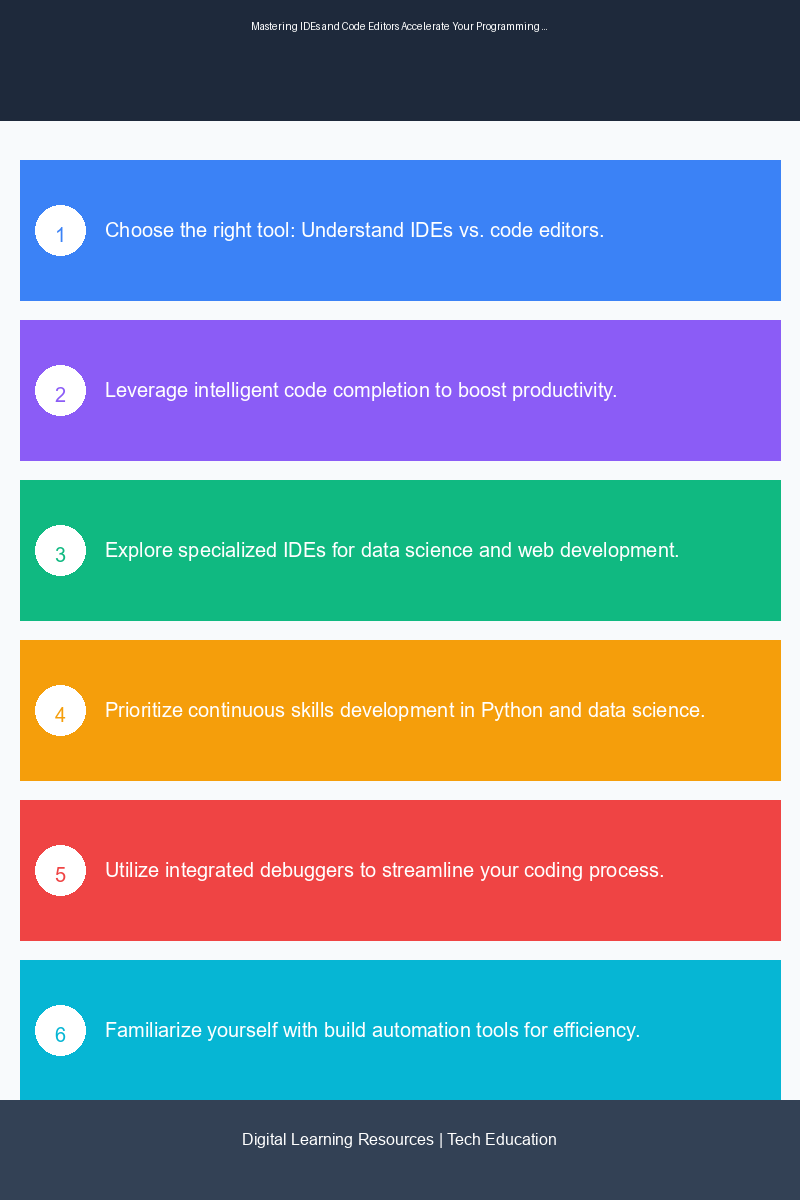
- Understanding the differences between IDEs and code editors is crucial for choosing the right tool for your needs.
- Intelligent code completion and debugging functionalities can streamline your coding process.
- Specialized IDEs exist for various domains like data science and web development.
- Continuous skills development, particularly in Python and data science, is in high demand.
Technical Background and Context
At the core of software development lies the Integrated Development Environment (IDE), a robust application offering a variety of tools for coding, debugging, and project management. IDEs typically feature a source code editor, build automation tools, and an integrated debugger, streamlining the development process. On the other hand, code editors provide a more lightweight solution, focusing primarily on code writing and editing without the additional features found in IDEs.
Modern IDEs often come equipped with intelligent code completion, a functionality that anticipates what you are typing and suggests potential code completions. This feature is especially beneficial for beginners and can significantly improve coding efficiency.
📚 Recommended Digital Learning Resources
Take your skills to the next level with these curated digital products:
Academic Calculators Bundle: GPA, Scientific, Fraction & More
Academic Calculators Bundle: GPA, Scientific, Fraction & More
ACT Test (American College Testing) Prep Flashcards Bundle: Vocabulary, Math, Grammar, and Science
Java Essentials: 100 Powerful Topics for Fast-Track Learning | PDF Download
Leonardo.Ai API Mastery: Python Automation Guide (PDF + Code + HTML
Leonardo.Ai API Mastery: Python Automation Guide (PDF + Code + HTML
100 Python Projects eBook: Learn Coding (PDF Download)
JavaScript for Web Development eBook | Learn to Build Interactive Websites
HSPT Vocabulary Flashcards: 1300+ Printable Study Cards + ANKI (PDF)
HSPT Vocabulary Flashcards: 1300+ Printable Study Cards + ANKI (PDF)
Practical Applications and Use Cases
When it comes to choosing an IDE for Python development, several options stand out:
- PyCharm: Known for its robust features and excellent support for web frameworks.
- Visual Studio Code: A versatile editor that supports multiple programming languages with a rich ecosystem of extensions.
- Sublime Text 3: Lightweight with a focus on speed and efficiency, ideal for quick edits.
- Jupyter: Tailored for data science, Jupyter notebooks allow for interactive code execution.
- Spyder: Specifically designed for scientific programming in Python, making it ideal for data analysis.
- Thonny: A beginner-friendly IDE that simplifies the learning process for new programmers.
- Wing: Focused on professional developers, offering advanced debugging and code analysis features.
Each of these tools has unique strengths, making them suitable for different programming tasks, whether that be web development, data analysis, or simple scripting.
Learning Path Recommendations
To further enhance your coding capabilities, consider enrolling in specialized programs. For instance:
- Data Scientist Master’s Program: This comprehensive program covers essential data science skills, including machine learning and data analysis.
- Web Scraping and Django courses: Focus on practical applications in web development and data manipulation.
These courses not only build your programming skills but also prepare you for industry-recognized certifications that can boost your career prospects.
Industry Impact and Career Implications
The tech industry is currently witnessing a surge in demand for skills in data science and web development. Companies are actively seeking professionals who can leverage these technologies to drive business insights and enhance user experiences. By mastering IDEs and code editors, you position yourself as a valuable asset in this competitive landscape.
Data science roles, in particular, offer lucrative salaries and growth opportunities. By investing in your skills through targeted learning and hands-on projects, you can significantly increase your earning potential and job satisfaction.
Implementation Tips and Best Practices
To maximize your effectiveness with IDEs and code editors, consider the following best practices:
- Choose the Right Tool: Assess your project requirements and personal workflow to select an IDE or code editor that aligns with your needs.
- Leverage Intelligent Features: Utilize intelligent code completion and debugging tools to reduce errors and streamline your coding process.
- Customize Your Environment: Take advantage of customizable themes and extensions to create a comfortable coding environment that boosts productivity.
- Practice Regularly: Continuous coding practice is essential for honing your skills and staying updated on industry trends.
Future Trends and Skill Requirements
As technology continues to evolve, proficiency in tools that support cross-platform functionality and web development will be increasingly important. IDEs are integrating more features that cater to collaborative coding and cloud-based development environments. Staying abreast of these trends will ensure you remain relevant and competitive in the job market.
Moreover, as industries pivot towards data-driven decision-making, skills in machine learning and data analysis will become vital. Engaging in continuous learning through courses and certifications is essential for career advancement.
Conclusion with Actionable Next Steps
In conclusion, mastering IDEs and code editors is a critical step in your programming journey. By understanding the tools available and the skills required, you can position yourself for success in the tech industry. Here are some actionable next steps:
- Explore different IDEs and code editors to find the one that suits your workflow best.
- Enroll in a focused learning program or certification course to deepen your knowledge and skills.
- Join coding communities and forums to share insights, ask questions, and learn from others.
- Commit to regular coding practice to apply what you learn and stay sharp.
By taking these steps, you will not only enhance your coding capabilities but also unlock new opportunities for career advancement in the tech industry.
Disclaimer: The information in this article has been gathered from various reputed sources in the public domain. While we strive for accuracy, readers are advised to verify information independently and consult with professionals for specific technical implementations.
Ready to advance your tech career? Explore our digital learning resources including programming guides, certification prep materials, and productivity tools designed by industry experts.