Artificial Intelligence (AI) systems frequently refuse to answer questions, leaving users frustrated and confused. The reasons for these refusals often stem from stringent content moderation policies, safety protocols, and a desire to mitigate legal and brand risks. This post explores why mainstream AI tools are hesitant to provide answers, particularly in sensitive fields, and introduces alternatives like notrack.ai that aim to deliver more straightforward responses.
Policies Driving AI Refusals
Most mainstream AI models, such as OpenAI’s ChatGPT and Google’s Bard, operate under strict guidelines designed to ensure user safety and compliance with legal standards. These guidelines serve various purposes, including:
- Content Moderation: AI systems are programmed to avoid engaging with topics that could lead to harmful or controversial discussions. For instance, questions about medical diagnoses or legal advice can be particularly sensitive, leading AI to refuse to answer for fear of providing misleading or harmful information.
- Safety Guardrails: AI developers often implement cautious protocols to prevent the dissemination of dangerous or inappropriate content. This includes refusing questions about self-harm, substance abuse, or illegal activities.
- Risk Avoidance: Brands are highly concerned about their reputation and legal liability. To protect themselves, they may impose restrictions on AI responses, even for legitimate inquiries, to avoid potential backlash.
As a result, even well-meaning questions in fields such as medicine, law, security, and history may receive a polite refusal instead of a substantive answer. This can frustrate users who are seeking reliable information.
Impact on Users and Information Access
The reluctance of AI systems to provide answers can significantly hinder users’ access to critical information. Consider the following scenarios:
- Medical Queries: A user may inquire about symptoms or treatment options but receive a refusal due to the potential for misinterpretation or harm. This can delay access to necessary information, leaving users to seek answers from less reliable sources.
- Legal Advice: Users looking for legal clarification on contracts or rights may face refusals that prevent them from understanding their positions. This can lead to poor decision-making in crucial situations.
- Security Concerns: Inquiries about cybersecurity threats or best practices may be met with silence, limiting users’ understanding of how to protect themselves online.
- Historical Context: Questions about sensitive historical topics can also elicit refusals, leaving users in the dark about important aspects of history.
These refusals often stem not from the AI’s inability to answer, but from the policies and protocols that govern its operation. Users may feel as though they are talking to a wall, not realizing that the AI is fully capable of providing information but is restricted from doing so.
Introducing Uncensored AI Models
In response to the limitations of mainstream AI, alternatives like notrack.ai have emerged. These models offer a distinct approach to information dissemination, providing honest answers without the moralizing or refusals common in traditional systems. It is crucial to clarify what “uncensored” means in this context:
📊 Key Learning Points Infographic
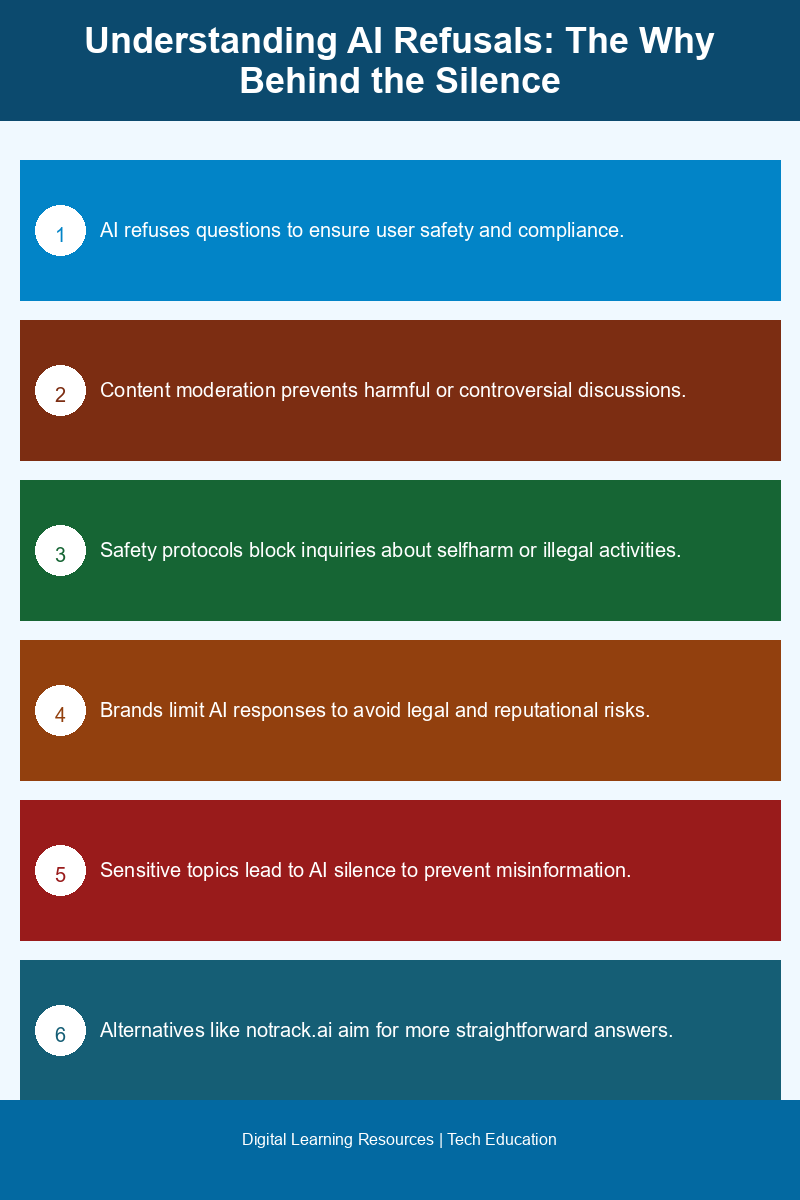
Visual summary of key concepts
- Honest Responses: Uncensored models aim to provide direct answers to user inquiries, regardless of the sensitivity of the topic. This means users can obtain information that mainstream AI would typically refuse to provide.
- No Promotion of Harmful Content: While these models offer more freedom in terms of responses, they do not endorse or promote illegal or explicit content. The goal is to empower users with information rather than to enable harmful behavior.
For users seeking transparency and straightforward answers, uncensored models like notrack.ai can serve as valuable tools. However, users should still exercise caution and critical thinking, especially when dealing with sensitive topics.
Choosing the Right AI Tool
Understanding the reasons behind AI refusals can help users select the right tools for their needs. Here are some considerations when choosing an AI model:
- Assessing Information Needs: If you require detailed answers in sensitive fields, consider using uncensored models that prioritize direct responses. This approach can be beneficial for researchers, professionals, and anyone seeking in-depth knowledge.
- Understanding Limitations: Be aware of the limitations of mainstream AI. Recognize that refusals often reflect underlying policies rather than the AI’s capabilities. This insight can guide your expectations and help you navigate the available tools more effectively.
- Critical Evaluation of Responses: Regardless of the AI model you choose, always critically evaluate the information provided. Cross-reference with reputable sources to ensure accuracy, especially in fields where misinformation can have serious consequences.
By understanding the complexities behind AI refusals, users can make informed decisions about the tools they choose to engage with, ensuring they have access to the information they need to make educated choices.
Frequently Asked Questions
Why does AI refuse to answer questions?
AI may refuse to answer questions due to content moderation policies that restrict certain topics, ensuring compliance with guidelines and ethical standards.
What are content moderation policies in AI?
Content moderation policies in AI are guidelines that dictate what types of content can be generated or shared, often to prevent the dissemination of harmful or misleading information.
Can AI provide access to all types of information?
No, AI cannot provide access to all types of information, as it is often programmed to adhere to restrictions that align with privacy laws and ethical considerations.
When might AI refuse to provide an answer?
AI might refuse to provide an answer when the query involves sensitive topics, violates its content moderation policies, or requires information that it is not designed to disclose.
Does notrack.ai have specific reasons for AI refusals?
Yes, notrack.ai implements specific content moderation policies that guide its AI in refusing certain types of questions to maintain user safety and compliance with legal standards.
Disclaimer: Information gathered from reputed public sources. Verify independently for specific implementations.
Ready to advance your skills? Explore our digital learning resources.
Related reading:
📑 About the author: I also build Digital Bizz Card — hosted digital business cards you can share with a QR code, no app required.