Artificial Intelligence (AI) is increasingly being mistaken for a search engine, but the reality is that AI functions more like a sophisticated reading machine. Unlike traditional search engines such as Google and Bing that index and retrieve information based on user queries, AI models rapidly analyze and synthesize information from multiple sources, delivering coherent answers almost instantly. This transformation in how we interact with information has significant implications for developers, researchers, and industries across the board.
The Mechanics of AI: Reading vs. Searching
At its core, AI does not “search the internet” in the way humans do. Instead, AI models, like GPT-4, rely on vast datasets that have been preprocessed during training and can also leverage external sources via search engines. When a user inputs a question, the AI quickly scans through its training data and may utilize search engines to fetch relevant information. This process allows the AI to provide synthesized responses rather than mere links to web pages.
This capability transforms the user experience. For instance, if a researcher wants to understand the effects of climate change on agriculture, they could spend hours searching through articles and reports. With AI, they can input their query and receive a concise summary that combines insights from various studies in seconds. The AI acts as a reading machine, processing large amounts of text to extract pertinent information, rather than simply retrieving documents one by one.
📚 Recommended Digital Learning Resources
Take your skills to the next level:
Expert Collaboration: Enhancing AI’s Reading Capabilities
The efficacy of AI models is significantly enhanced through collaboration with subject matter experts (SMEs) and prompt engineers. SMEs, such as agronomists or data scientists, provide essential context and insights that inform how AI should interpret and respond to complex queries. By working together, experts can help capture critical thought processes and analytical frameworks that enhance the AI’s ability to deal with specialized knowledge areas.
For instance, when evaluating food security, agronomists consider a multitude of factors including historical weather patterns, demographics, and infrastructure. This comprehensive understanding is crucial for AI to deliver precise and contextually relevant recommendations. Prompt engineers play a vital role in formulating the queries that guide AI models, ensuring that the input reflects the nuanced understanding of these experts. This collaborative approach leads to better-informed AI outputs, turning raw data into actionable insights.
📊 Key Learning Points Infographic
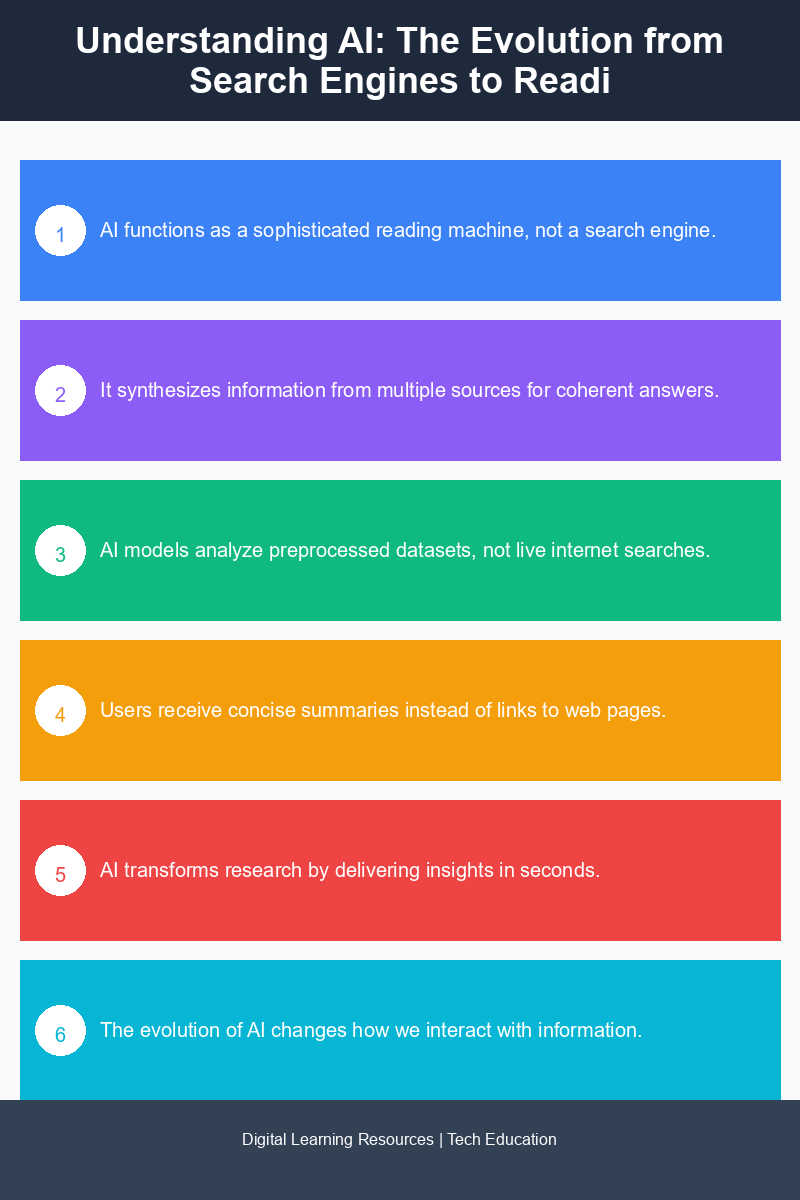
Visual summary of key concepts
Specialized Knowledge and Retrieval Augmented Generation
In fields that require specialized knowledge, AI’s reliance on general training data may not suffice. For example, when addressing complex issues such as medical diagnoses or legal interpretations, AI may need access to specific documents or databases. This is where concepts like Retrieval Augmented Generation (RAG) come into play.
RAG combines the strengths of traditional search engines with generative AI. It allows the AI to retrieve relevant information from dedicated databases or documents before generating a response. This method is particularly beneficial in scenarios where accuracy and specificity are paramount. For example, in legal tech, an AI model tasked with interpreting case law can pull from a repository of legal documents to ensure its analysis is grounded in the most current and relevant information.
Services such as OpenAI’s API offer tools that can facilitate RAG, allowing developers to integrate this functionality into their applications. By leveraging RAG, businesses can enhance their AI systems’ ability to provide accurate and contextually aware answers, transforming how industries approach problem-solving.
The Practical Implications for Developers and Industries
Understanding the distinction between AI as a reading machine and traditional search engines has practical implications for developers and industries. As AI continues to evolve, professionals in software development should consider how they can leverage these capabilities to build more intelligent applications. For instance, integrating AI with RAG can enhance customer support systems, allowing businesses to provide faster and more accurate responses to client inquiries.
Moreover, sectors such as healthcare, finance, and education can benefit significantly from AI’s reading capabilities. In healthcare, AI can analyze patient histories and medical literature to assist doctors in making informed decisions. In finance, algorithms can process vast amounts of market data to identify trends and inform investment strategies. In education, AI can tailor learning experiences by quickly assessing student performance and recommending targeted resources.
Developers need to keep abreast of the latest advancements in AI technology, including tools that facilitate collaboration with SMEs and methods for implementing RAG. By doing so, they can create applications that not only meet user needs but also harness the full potential of AI’s reading capabilities.
In conclusion, recognizing AI’s role as a reading machine rather than a search engine is essential for leveraging its full potential. By understanding how AI processes information and the importance of expert collaboration, developers and industries can harness these advancements to create smarter, more effective solutions that address complex challenges across various domains.
Frequently Asked Questions
How is AI different from a search engine?
AI is designed to process and understand information, functioning as a reading machine that synthesizes data, while a search engine primarily retrieves and displays links to content based on keywords.
What are the benefits of using AI in research?
AI enhances research by quickly analyzing vast amounts of data, identifying patterns, and providing insights that would take humans significantly longer to uncover.
Why should I consider AI as a reading machine?
AI as a reading machine can interpret and summarize complex information, making it easier for users to digest and utilize knowledge effectively.
Can AI improve information retrieval processes?
Yes, AI can significantly improve information retrieval by employing advanced algorithms that understand context and relevance, resulting in more accurate and meaningful search results.
Is AI a better tool than traditional search engines for finding information?
While traditional search engines excel at locating documents, AI offers deeper analysis and comprehension of content, making it a powerful complement for users seeking in-depth understanding.
Disclaimer: Information gathered from reputed public sources. Verify independently for specific implementations.
Ready to advance your skills? Explore our digital learning resources.
Related reading:
📑 About the author: I also build Digital Bizz Card — hosted digital business cards you can share with a QR code, no app required.