
Key Takeaways: This blog post delves into the development of autonomous AI systems, highlights educational opportunities through a specialized program, examines industry trends, and outlines practical applications to equip tech professionals for a future dominated by AI-driven solutions.
Introduction
In the rapidly evolving landscape of artificial intelligence, the demand for skilled professionals who can design, build, secure, and operate intelligent systems is at an all-time high. The development of autonomous AI systems, which can perform tasks independently, is revolutionizing industries across the globe. This blog will explore the technical concepts behind these systems, practical applications, learning pathways, and the skillsets required to thrive in this field.
Technical Background and Context
The emergence of autonomous AI systems is rooted in several advanced technical concepts:
📚 Recommended Digital Learning Resources
Take your skills to the next level with these curated digital products:
Academic Calculators Bundle: GPA, Scientific, Fraction & More
Academic Calculators Bundle: GPA, Scientific, Fraction & More
ACT Test (American College Testing) Prep Flashcards Bundle: Vocabulary, Math, Grammar, and Science
Java Essentials: 100 Powerful Topics for Fast-Track Learning | PDF Download
Leonardo.Ai API Mastery: Python Automation Guide (PDF + Code + HTML
Leonardo.Ai API Mastery: Python Automation Guide (PDF + Code + HTML
100 Python Projects eBook: Learn Coding (PDF Download)
JavaScript for Web Development eBook | Learn to Build Interactive Websites
HSPT Vocabulary Flashcards: 1300+ Printable Study Cards + ANKI (PDF)
HSPT Vocabulary Flashcards: 1300+ Printable Study Cards + ANKI (PDF)
- Goal-Driven AI Agents: These agents are designed to achieve specific objectives through autonomous decision-making processes.
- Intelligent Conversational Agents: Utilizing RAG (Retrieval-Augmented Generation) systems, these agents enhance user interactions by retrieving relevant information to improve response accuracy.
- Autonomous Multi-Agent Workflows: These systems involve multiple agents communicating and collaborating to complete complex tasks or processes.
As AI continues to integrate into various sectors, understanding these concepts becomes vital for tech professionals looking to stay ahead.
Practical Applications and Use Cases
The applications of autonomous AI systems are vast and growing. Here are some practical use cases:
- Customer Support: Intelligent conversational agents can handle customer inquiries, providing immediate assistance and freeing human agents for more complex issues.
- Healthcare Automation: AI agents can analyze patient data and assist in diagnosing conditions, which helps in streamlining workflow in healthcare settings.
- Supply Chain Management: Autonomous multi-agent systems can optimize logistics by predicting demand, managing inventory, and coordinating deliveries.
These examples illustrate how the integration of autonomous AI systems can enhance efficiency and effectiveness in various domains.
Learning Path Recommendations
For tech professionals eager to delve into the world of autonomous AI, we recommend the 25-week specialization program titled “Building Agentic AI Systems.” This program is tailored for engineers proficient in programming languages such as Python, Java, JavaScript, or .NET (C#) and emphasizes hands-on learning.
Key components of the curriculum include:
- 60% hands-on assignments and projects to reinforce theoretical knowledge.
- In-depth exploration of tools and technologies like LangChain, LlamaIndex, and Azure AI Foundry.
- Focus on responsible design practices for developing AI systems.
By completing this program, participants will gain technical fluency in AI development and prepare themselves for emerging roles in this field.
Industry Impact and Career Implications
The AI industry is witnessing rapid growth, with significant implications for job roles and skill requirements. Companies are increasingly looking for professionals who can:
- Integrate AI solutions into existing systems.
- Govern and manage AI technologies responsibly.
- Develop autonomous systems for enterprise automation.
As organizations transition to these advanced technologies, professionals with skills in AI development and governance will be in high demand, leading to new career opportunities and pathways.
Implementation Tips and Best Practices
When embarking on the journey to develop autonomous AI systems, consider the following best practices:
- Start Small: Begin with smaller projects to build confidence and understanding before tackling complex systems.
- Focus on Data Quality: Ensure the data used to train AI models is high-quality, relevant, and bias-free to enhance system performance.
- Iterate and Improve: Use feedback loops to continuously improve AI systems based on user interactions and outcomes.
- Adhere to Ethical Standards: Implement responsible design and governance practices to address ethical considerations in AI development.
By following these tips, tech professionals can navigate the complexities of AI development more effectively.
Future Trends and Skill Requirements
Looking ahead, several trends are shaping the future landscape of AI:
- Increased Automation: The shift towards greater automation will continue, with more businesses adopting autonomous systems.
- AI Governance: The need for professionals skilled in AI integration and governance will grow as organizations seek to ensure ethical use of AI technologies.
- Interdisciplinary Skills: Combining AI development skills with knowledge in areas such as cybersecurity, data analysis, and user experience will become essential.
To stay competitive, tech professionals should focus on building a diverse skill set that encompasses both technical and soft skills.
Conclusion with Actionable Next Steps
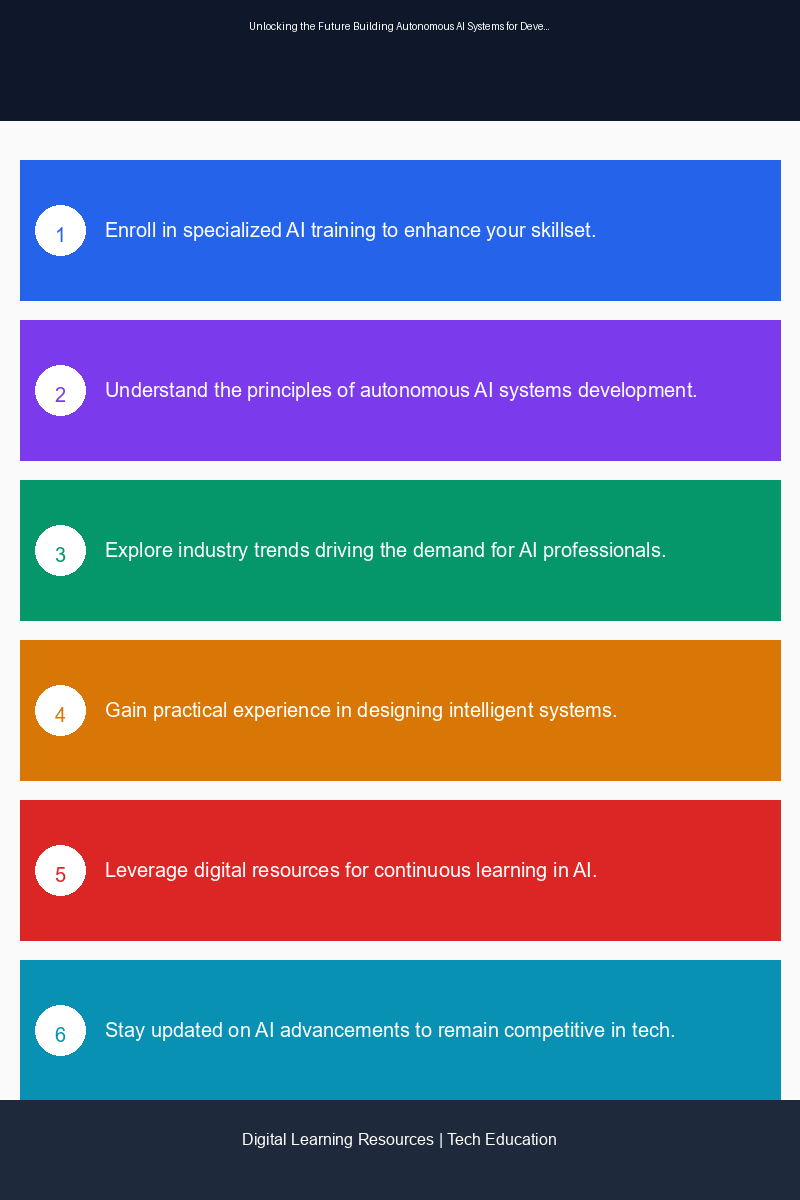
The future of autonomous AI systems is bright, offering immense opportunities for tech professionals and learners. To embark on this journey:
- Consider enrolling in the “Building Agentic AI Systems” specialization program to gain hands-on experience.
- Explore tools like LangChain, LlamaIndex, and Azure AI Foundry to deepen your understanding of AI development.
- Network with industry professionals and participate in AI-related forums and meetups to stay updated on trends.
By taking these actionable steps, you can position yourself at the forefront of the AI revolution and contribute to the development of innovative solutions that will shape the future.
Disclaimer: The information in this article has been gathered from various reputed sources in the public domain. While we strive for accuracy, readers are advised to verify information independently and consult with professionals for specific technical implementations.
Ready to advance your tech career? Explore our digital learning resources including programming guides, certification prep materials, and productivity tools designed by industry experts.