
In today’s rapidly evolving tech landscape, professionals are constantly seeking ways to enhance their skills and streamline processes. Low-code technology and AI-driven automation have emerged as transformative forces in application development and workflow management. This blog post will explore these trends, the educational opportunities they present, and actionable steps you can take to stay ahead in your career.
Key Takeaways
- Low-code platforms allow for rapid application development without extensive coding knowledge.
- AI-driven automation is revolutionizing task tracking and workflow management.
- Staying abreast of industry trends can enhance your career prospects and skill set.
- Continuous learning and certification in relevant technologies are essential for career growth.
Technical Background and Context
Low-code technology is a game-changer for developers and IT professionals alike. It enables users to create applications through graphical interfaces and configuration instead of traditional hand-coding. This approach democratizes app development, allowing individuals without deep technical expertise to participate in creating solutions that meet specific business needs.
Alongside low-code development, AI-driven automation enhances productivity and efficiency. Organizations can leverage AI to streamline workflows, manage tasks, and gain insights from data, ultimately improving decision-making processes. The combination of these technologies is driving significant digital transformation across industries.
📚 Recommended Digital Learning Resources
Take your skills to the next level with these curated digital products:
Academic Calculators Bundle: GPA, Scientific, Fraction & More
Academic Calculators Bundle: GPA, Scientific, Fraction & More
ACT Test (American College Testing) Prep Flashcards Bundle: Vocabulary, Math, Grammar, and Science
ACT Test (American College Testing) Prep Flashcards Bundle: Vocabulary, Math, Grammar, and Science
📊 Key Learning Points Infographic
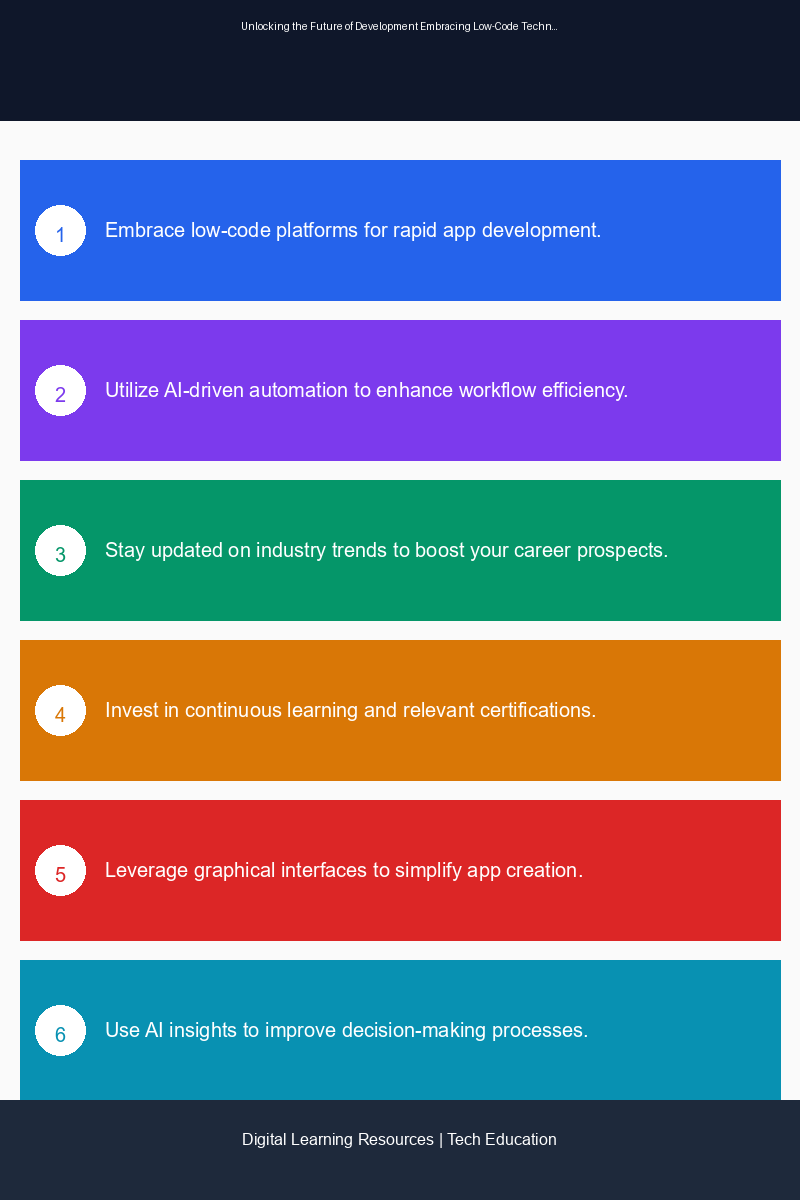
Visual summary of key concepts and actionable insights
Leonardo.Ai API Mastery: Python Automation Guide (PDF + Code + HTML
Leonardo.Ai API Mastery: Python Automation Guide (PDF + Code + HTML
100 Python Projects eBook: Learn Coding (PDF Download)
100 Python Projects eBook: Learn Coding (PDF Download)
HSPT Vocabulary Flashcards: 1300+ Printable Study Cards + ANKI (PDF)
HSPT Vocabulary Flashcards: 1300+ Printable Study Cards + ANKI (PDF)
Practical Applications and Use Cases
The practical applications of low-code and AI-driven automation are vast and varied. Here are some real-world use cases:
- Rapid Prototyping: Businesses can quickly prototype applications to test ideas and gather feedback, significantly reducing time-to-market.
- Task Management: AI-driven task tracking tools can analyze employee workloads, prioritize tasks, and automate routine processes, allowing teams to focus on higher-value activities.
- Custom Solutions: Companies can build tailored applications using low-code platforms that address their unique operational challenges without the need for extensive programming resources.
- Integration of Systems: Low-code platforms can integrate with existing systems, creating seamless workflows and data exchanges that enhance overall business efficiency.
Learning Path Recommendations
As the demand for low-code solutions and AI automation grows, so does the need for professionals who are well-versed in these areas. Here are some learning paths to consider:
- Low-Code Development: Familiarize yourself with popular low-code platforms like Lowcode Labs, Microsoft Power Apps, and Mendix. Start with beginner tutorials and gradually progress to more complex projects.
- AI in Business: Take courses that cover the fundamentals of AI, focusing on its application in business processes. Understanding how to integrate AI tools for automation can set you apart in the job market.
- Workflow Management: Explore training in workflow management solutions that enhance task tracking and project coordination. Tools like Trello, Asana, or Monday.com can be effective learning starting points.
Industry Impact and Career Implications
The rise of digital transformation initiatives has created a robust job market for professionals skilled in low-code development and AI automation. Organizations are increasingly looking for individuals who can bridge the gap between business needs and technical capabilities. By enhancing your skills in these areas, you position yourself as a valuable asset in the workforce.
Certifications in low-code platforms or AI-driven tools can further enhance your credibility and marketability. Many organizations are willing to invest in training and development for their employees, so don’t hesitate to explore these opportunities as part of your career strategy.
Implementation Tips and Best Practices
To effectively leverage low-code and AI-driven automation in your projects, consider the following best practices:
- Start Small: Begin with smaller projects to familiarize yourself with low-code tools before tackling larger, more complex applications.
- Stay User-Centric: Always keep the end-user in mind when developing applications. Gather feedback early and often to ensure the solutions meet user needs.
- Integrate Gradually: When introducing AI automation, start with simple tasks and gradually increase complexity as you become more comfortable with the technology.
- Document Your Work: Maintain clear documentation of your projects and workflows. This practice not only helps you but also assists others who may work on the same systems in the future.
Future Trends and Skill Requirements
Looking ahead, the future of development will likely be characterized by continued growth in low-code/no-code platforms and AI-driven solutions. Professionals should focus on developing a blend of technical and soft skills, including:
- Proficient use of low-code platforms to facilitate rapid application development.
- Understanding of AI technologies and their applications in business processes.
- Skills in project management and effective communication to collaborate with diverse teams.
Conclusion with Actionable Next Steps
The convergence of low-code technology and AI-driven automation is not just a trend; it represents a fundamental shift in how businesses operate and innovate. As a tech professional, embracing these technologies will not only enhance your skill set but also advance your career prospects in an increasingly digital landscape.
Here are some actionable next steps to take:
- Enroll in a low-code development course or certification program.
- Join online forums or communities focused on low-code and AI to share knowledge and learn from industry peers.
- Start a personal project using low-code tools to solidify your understanding and showcase your skills.
- Stay updated on industry trends by following thought leaders and tech news outlets.
By actively pursuing these opportunities, you will position yourself at the forefront of the digital transformation movement, ready to tackle the challenges and seize the opportunities of tomorrow.
Disclaimer: The information in this article has been gathered from various reputed sources in the public domain. While we strive for accuracy, readers are advised to verify information independently and consult with professionals for specific technical implementations.
Ready to advance your tech career? Explore our digital learning resources including programming guides, certification prep materials, and productivity tools designed by industry experts.