
Key Takeaways: This blog post explores the significance of AI-native architectures in enterprise software, highlights the capabilities of SAP HANA Cloud, and provides actionable insights on learning paths, industry trends, and career development opportunities for tech professionals.
Introduction
As the landscape of enterprise software continues to evolve, the integration of artificial intelligence (AI) is becoming increasingly crucial. AI-native architectures offer a transformative approach, enabling businesses to leverage real-time data, enhance decision-making, and streamline processes. This guide delves into the key technical concepts, practical applications, and educational opportunities surrounding AI-native architectures, particularly focusing on SAP HANA Cloud and its capabilities.
Technical Background and Context
Enterprise software is rapidly shifting towards AI-native architectures, which are designed to harness the power of AI for improved efficiency and scalability. Key concepts include:
📚 Recommended Digital Learning Resources
Take your skills to the next level with these curated digital products:
Academic Calculators Bundle: GPA, Scientific, Fraction & More
Academic Calculators Bundle: GPA, Scientific, Fraction & More
ACT Test (American College Testing) Prep Flashcards Bundle: Vocabulary, Math, Grammar, and Science
Java Essentials: 100 Powerful Topics for Fast-Track Learning | PDF Download
📊 Key Learning Points Infographic
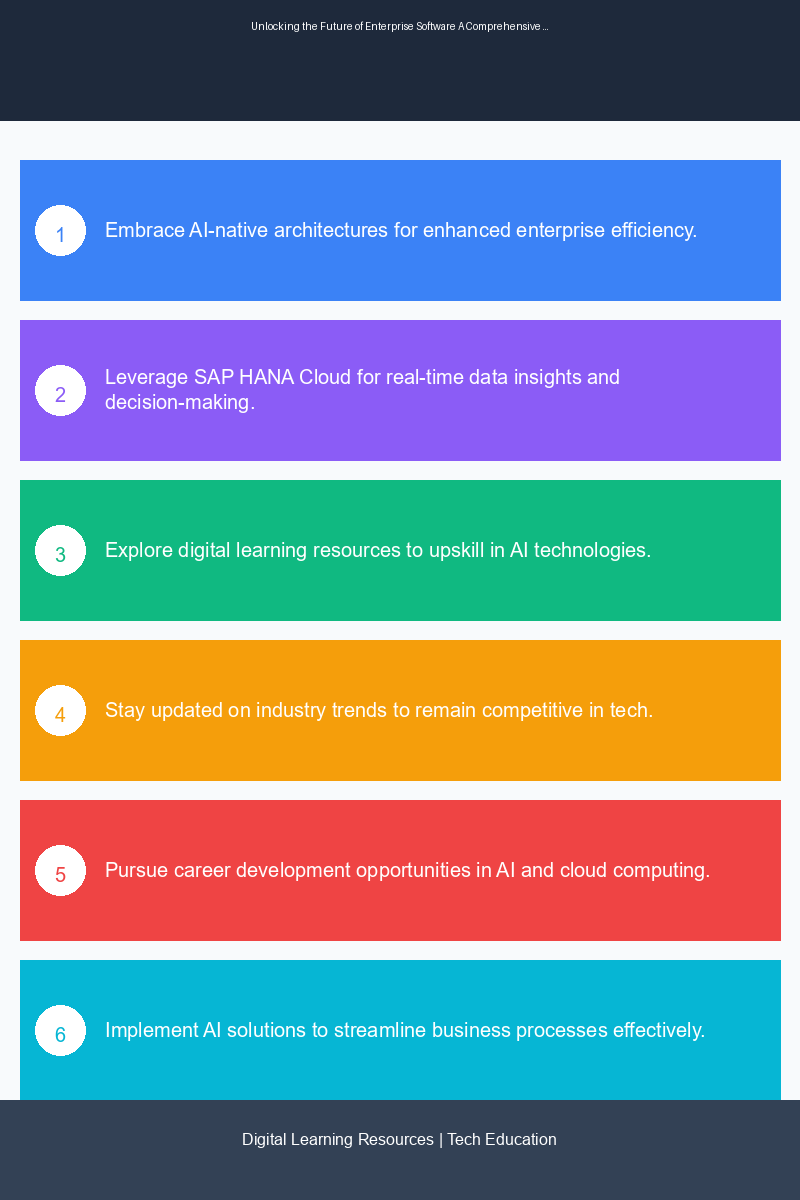
Visual summary of key concepts and actionable insights
Leonardo.Ai API Mastery: Python Automation Guide (PDF + Code + HTML
Leonardo.Ai API Mastery: Python Automation Guide (PDF + Code + HTML
100 Python Projects eBook: Learn Coding (PDF Download)
JavaScript for Web Development eBook | Learn to Build Interactive Websites
HSPT Vocabulary Flashcards: 1300+ Printable Study Cards + ANKI (PDF)
HSPT Vocabulary Flashcards: 1300+ Printable Study Cards + ANKI (PDF)
- AI-native Architecture: This design approach optimizes enterprise applications for AI integration, enabling seamless data processing and real-time analytics.
- Model Context Protocol (MCP): A feature of SAP HANA Cloud that enhances the contextual understanding of AI models, facilitating better decision-making within applications.
- Knowledge Graph Engine: This engine automatically generates knowledge graphs from metadata, allowing for enhanced data relationships and insights.
- Agentic Memory: A concept in AI that enables agents to have long-term memory capabilities, allowing for continuous learning and improved interaction over time.
Practical Applications and Use Cases
The integration of AI-native architectures with technologies like SAP HANA Cloud offers numerous practical applications:
- Real-Time Analytics: Businesses can leverage AI to conduct real-time data analysis, providing immediate insights that drive strategic decisions.
- Predictive Maintenance: AI can analyze historical data to predict equipment failures, reducing downtime and maintenance costs.
- Enhanced Customer Insights: By integrating AI with SAP Business Data Cloud and Snowflake, companies can gain deeper understanding of customer behavior and preferences.
- Automated Reporting: Knowledge graphs generated from metadata can streamline reporting processes, saving time and reducing errors.
Learning Path Recommendations
For tech professionals looking to enhance their skills in AI-native architectures and SAP technologies, consider the following educational opportunities:
- Training on SAP HANA Cloud: Familiarize yourself with the foundational aspects of SAP HANA Cloud, focusing on its AI capabilities and how to effectively utilize it in enterprise applications.
- Integrating SAP Business Data Cloud with Snowflake: Learn the intricacies of data integration and management to maximize the potential of both platforms.
- AI-Driven Enterprise Software Development: Courses that focus on AI model development, including practical applications and integration within existing enterprise systems.
Industry Impact and Career Implications
The increasing integration of AI into enterprise software not only enhances operational efficiencies but also creates new career opportunities. As companies adopt AI-native architectures, the demand for skilled professionals in AI model development, data management, and cloud technologies is on the rise. Skills in SAP frameworks and tools are becoming essential for those looking to advance their careers in tech.
Implementation Tips and Best Practices
When embarking on the journey to implement AI-native architectures in your organization, consider the following best practices:
- Start Small: Begin with a pilot project that focuses on a specific use case, allowing you to evaluate the effectiveness of AI integration before scaling.
- Focus on Data Quality: Ensure the data used for AI training is accurate, relevant, and up-to-date to achieve optimal results.
- Leverage Existing Tools: Utilize SAP HANA Cloud and its associated tools to streamline the integration process and reduce development time.
- Encourage Collaboration: Foster collaboration between IT and business teams to align AI initiatives with organizational goals and user needs.
Future Trends and Skill Requirements
As AI continues to shape the future of enterprise software, several trends are emerging:
- Increased Demand for Real-Time Data Access: The ability to access and analyze data in real-time will become paramount for businesses striving to maintain a competitive edge.
- Growth of AI-Native Architectures: More organizations will adopt AI-native designs to enhance their software solutions, creating further demand for skilled professionals.
- Focus on Interoperability: Seamless integration between various platforms, such as SAP Business Data Cloud and Snowflake, will be critical for maximizing data utility.
To stay relevant, professionals should focus on developing skills in AI model integration, cloud technologies, and data management best practices.
Conclusion with Actionable Next Steps
The transition to AI-native architectures presents a wealth of opportunities for tech professionals. To stay ahead in this evolving landscape, consider taking the following actionable steps:
- Enroll in training programs focusing on SAP HANA Cloud and AI integration.
- Engage with communities and forums to network with industry experts and share insights.
- Stay updated on the latest trends in AI and enterprise software development.
- Experiment with AI tools and technologies to gain hands-on experience and enhance your skill set.
By investing in your education and adapting to industry changes, you will position yourself as a valuable asset in the future of enterprise software development.
Disclaimer: The information in this article has been gathered from various reputed sources in the public domain. While we strive for accuracy, readers are advised to verify information independently and consult with professionals for specific technical implementations.
Ready to advance your tech career? Explore our digital learning resources including programming guides, certification prep materials, and productivity tools designed by industry experts.