
Artificial Intelligence (AI) is reshaping industries at an unprecedented pace. As organizations increasingly adopt AI technologies, understanding how to effectively use these tools for data management, compliance, and performance monitoring is crucial. In this blog post, we’ll explore second-layer AI tools, educational opportunities for upskilling, industry trends, and actionable strategies for tech professionals.
Key Takeaways
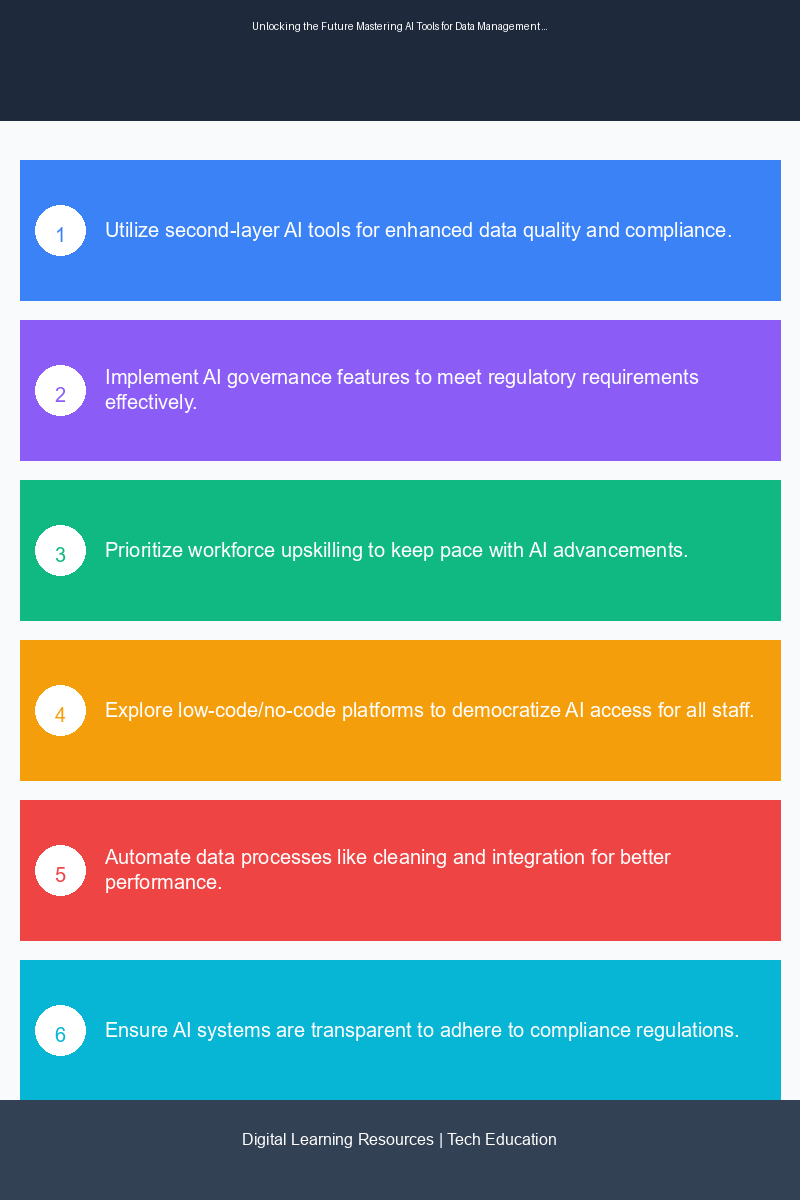
- Second-layer AI tools enhance data quality through automated processes.
- AI governance features are essential for regulatory compliance.
- Upskilling the workforce is vital to keep pace with AI advancements.
- Low-code and no-code platforms are democratizing AI access for non-technical staff.
Technical Background and Context
As organizations integrate AI into their operations, the need for robust data management becomes paramount. Second-layer AI tools focus on tasks such as data cleaning, integration, and performance monitoring of AI models. These tools automate processes like data extraction, anomaly detection, normalization, and standardization, ensuring that the data fed into AI systems is both high-quality and compliant.
Furthermore, with increasing regulatory scrutiny surrounding AI, explainability and governance features in AI tools are critical. Organizations must ensure that their AI systems are transparent and adhere to compliance regulations, which is becoming a central concern in AI deployments.
📚 Recommended Digital Learning Resources
Take your skills to the next level with these curated digital products:
Academic Calculators Bundle: GPA, Scientific, Fraction & More
Academic Calculators Bundle: GPA, Scientific, Fraction & More
ACT Test (American College Testing) Prep Flashcards Bundle: Vocabulary, Math, Grammar, and Science
ACT Test (American College Testing) Prep Flashcards Bundle: Vocabulary, Math, Grammar, and Science
Leonardo.Ai API Mastery: Python Automation Guide (PDF + Code + HTML
Leonardo.Ai API Mastery: Python Automation Guide (PDF + Code + HTML
100 Python Projects eBook: Learn Coding (PDF Download)
100 Python Projects eBook: Learn Coding (PDF Download)
HSPT Vocabulary Flashcards: 1300+ Printable Study Cards + ANKI (PDF)
HSPT Vocabulary Flashcards: 1300+ Printable Study Cards + ANKI (PDF)
Practical Applications and Use Cases
Second-layer AI tools find applications across various domains. Here are some practical examples:
- Data Cleaning: Tools like Trifacta and Talend automate the cleaning of datasets, enabling organizations to spend less time on data preparation and more on analysis.
- Anomaly Detection: AI systems can identify unusual patterns in large datasets, flagging potential issues in real-time. This is especially useful in sectors like finance and healthcare.
- Data Normalization: AI tools can standardize formats across datasets, ensuring consistency and reliability in data reporting.
Organizations can leverage these tools to streamline operations, reduce manual errors, and enhance data-driven decision-making processes. The use of AI for data management not only improves efficiency but also fosters a culture of data analytics within the organization.
Learning Path Recommendations
To effectively engage with AI technologies, tech professionals should consider the following learning paths:
- Upskilling Existing Workforce: Training programs focusing on data management and AI integration can empower employees to leverage these technologies effectively.
- Large Language Models (LLMs): Courses on interacting with LLMs will be invaluable. Understanding how to use tools like OpenAI’s GPT for enhancing business processes can set professionals apart.
- Low-Code/No-Code Platforms: Familiarity with platforms like Microsoft Power Platform or Google AppSheet can enable non-technical staff to create AI solutions without extensive programming knowledge.
Industry Impact and Career Implications
The adoption of AI technologies is on the rise, with 70% of organizations planning to integrate newer AI solutions into their operations. However, with this growth comes challenges, including concerns about data quality and security. Professionals who can navigate these challenges will be in high demand.
The competition for talent in the AI space is fierce, with tech giants and startups vying for skilled professionals. By acquiring expertise in AI data management and compliance, professionals can position themselves as valuable assets in their organizations and the job market.
Implementation Tips and Best Practices
To maximize the benefits of AI tools, consider these best practices:
- Start Small: Begin with pilot projects to test the effectiveness of second-layer AI tools on a smaller scale before wider implementation.
- Focus on Data Quality: Invest in tools that prioritize data cleaning and standardization to ensure that your AI models are trained on reliable data.
- Prioritize Governance: Establish governance frameworks to monitor compliance with regulations and ensure ethical AI practices.
- Encourage Collaboration: Foster a culture of collaboration between technical and non-technical teams to enhance the use of AI tools across the organization.
Future Trends and Skill Requirements
As AI technologies continue to evolve, professionals should stay abreast of emerging trends:
- Agentic AI: Understanding how agentic AI can automate tasks and decision-making will be increasingly important.
- Multimodal AI: Skills related to integrating various data modalities (text, image, video) will be sought after as AI systems become more sophisticated.
- Synthetic Data: Knowledge in generating synthetic data for training AI models can help overcome data scarcity issues.
Moreover, a strong foundation in AI governance and compliance will be critical for professionals looking to lead AI initiatives in their organizations.
Conclusion with Actionable Next Steps
The integration of AI technologies within organizations is not just a trend; it’s a fundamental shift in how we manage data and make decisions. To thrive in this landscape, tech professionals must embrace continuous learning and adapt to new technologies.
Here are some actionable next steps:
- Enroll in data management and AI integration courses to enhance your skill set.
- Explore low-code/no-code platforms to broaden your capabilities in AI application development.
- Stay updated on industry developments and prepare for shifts in demand for AI-related skills.
By investing in your education and embracing emerging technologies, you can position yourself at the forefront of the AI revolution and unlock new career opportunities.
Disclaimer: The information in this article has been gathered from various reputed sources in the public domain. While we strive for accuracy, readers are advised to verify information independently and consult with professionals for specific technical implementations.
Ready to advance your tech career? Explore our digital learning resources including programming guides, certification prep materials, and productivity tools designed by industry experts.