AI Concepts Explained
Understanding AI Guardrails: Why They Matter and How They Work
Discover the importance of AI guardrails in ensuring ethical, safe, and reliable AI systems through structured frameworks and checks.
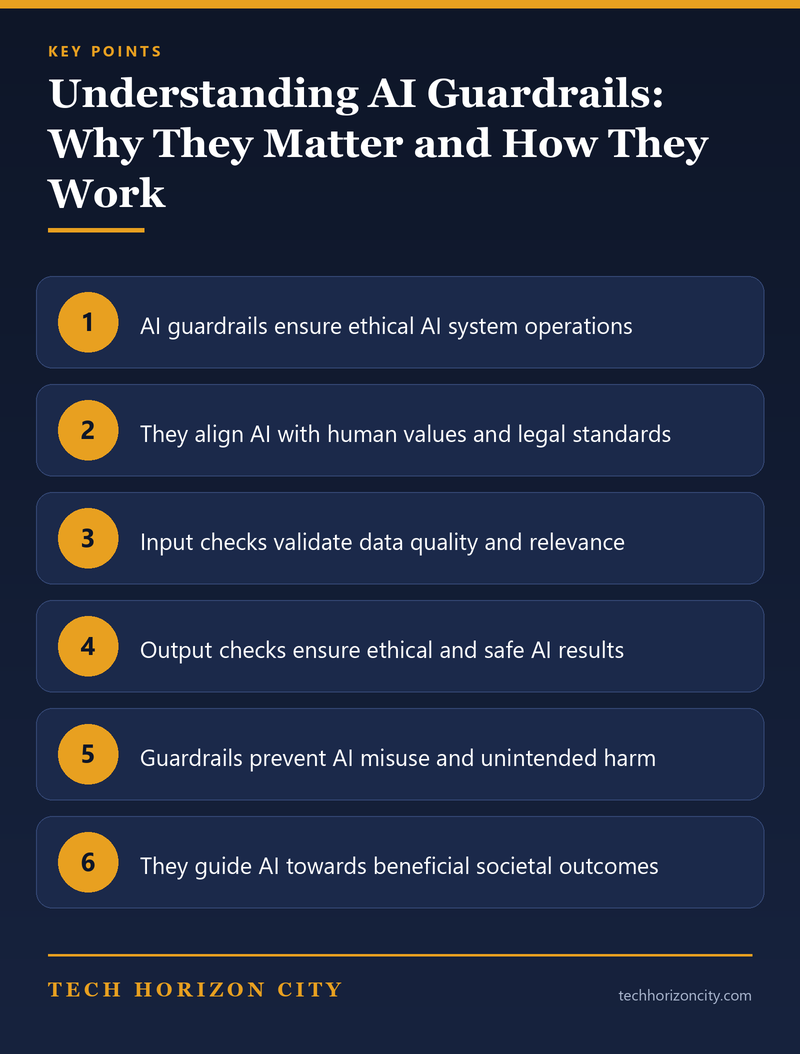
In short AI guardrails are structured frameworks that establish ethical, technical, and operational constraints to govern AI systems within predefined limits. These mechanisms are crucial for ensuring that AI technologies align with human values, legal standards, and business objectives.
Contents
Input and Output Checks: The First Line of DefenseExamples of Guardrails in PracticeThe Limits of GuardrailsThe Strategic Importance of AI GuardrailsFrequently Asked QuestionsBy acting as both a protective shield against misuse and a guide toward beneficial outcomes, AI guardrails are essential in making sure that technology serves humanity’s best interests.
Input and Output Checks: The First Line of Defense
Input and output checks are integral components of AI guardrails. They ensure that the data entering and leaving AI systems adhere to specific standards, minimizing the risk of errors and unintended consequences. Input checks validate the data fed into the AI models, confirming its quality, relevance, and integrity. This step is vital to prevent flawed data from skewing results or leading to harmful decisions.
On the other hand, output checks scrutinize the AI’s results to ensure they meet ethical and operational benchmarks. These checks can include automatic flagging of outputs that deviate from expected norms or those that could potentially lead to harmful actions. By incorporating rigorous input and output checks, organizations can significantly reduce errors and legal disputes, enhancing the overall efficiency and reliability of AI systems.
Examples of Guardrails in Practice
Several organizations have successfully implemented AI guardrails to ensure safe and ethical AI deployment. For example, major tech companies have adopted frameworks that include bias detection algorithms, which monitor AI outputs for discriminatory patterns related to race, gender, or other protected characteristics. These algorithms alert developers when potential biases are detected, allowing for timely intervention and adjustment.
Another example is the use of automated ethical review boards within organizations. These boards evaluate AI projects before deployment, assessing their potential social impact and compliance with ethical guidelines. This approach not only prevents harm but also demonstrates accountability, fostering trust with consumers and stakeholders.
The Limits of Guardrails
While AI guardrails are indispensable, they are not without limitations. One significant challenge is the dynamic nature of ethical standards and societal expectations, which can evolve faster than the technology itself. This discrepancy can make it difficult for guardrails to remain relevant and effective over time.
Moreover, the complexity of AI systems can sometimes lead to unforeseen interactions within the technology, bypassing established guardrails. This situation requires continuous monitoring and adaptation of the guardrails to address new risks as they emerge. Despite these challenges, the benefits of implementing AI guardrails far outweigh the potential downsides, as they help future-proof AI investments and maintain compliance with evolving regulations like the AI Act and the CCPA.
The Strategic Importance of AI Guardrails
Organizations that prioritize AI guardrails can mitigate risks and unlock strategic advantages. By enhancing trust and demonstrating accountability, these frameworks not only ensure compliance with legal standards but also improve the organization’s reputation. Companies that neglect AI guardrails risk facing reputational damage, legal issues, and missed opportunities.
Furthermore, AI guardrails are essential for aligning technology with business objectives, ensuring that AI deployments contribute positively to organizational goals. They help maintain efficiency by reducing errors and legal disputes, ultimately supporting sustainable growth and innovation.
In conclusion, AI guardrails play a vital role in guiding AI systems safely and ethically. By implementing robust input and output checks, learning from practical examples, and understanding their limitations, organizations can harness the full potential of AI while safeguarding against its risks. As technology and societal expectations continue to evolve, AI guardrails will remain critical in ensuring that AI serves the best interests of humanity.
Frequently Asked Questions
What are AI guardrails and why do they matter?
AI guardrails are guidelines and mechanisms designed to ensure artificial intelligence systems operate safely, ethically, and as intended. They matter because they help prevent AI from causing harm, making biased decisions, or operating outside of acceptable boundaries.
How do input and output checks contribute to ethical AI?
Input and output checks ensure that the data fed into AI systems is accurate and that the results generated are reliable and unbiased, promoting ethical AI use by preventing harmful or skewed outcomes.
Why is AI governance important?
AI governance is important because it establishes a framework for managing and overseeing AI technologies, ensuring they align with ethical standards, legal requirements, and societal values.
Can AI guardrails prevent biased decision-making?
Yes, AI guardrails can help prevent biased decision-making by implementing checks and balances that identify and mitigate biases in data and algorithms.
Is there a standard approach to implementing AI guardrails?
There is no single standard approach to implementing AI guardrails, but best practices include setting clear ethical guidelines, continuous monitoring, and involving diverse stakeholders in the development process.
Ready to advance your skills? Explore our digital learning resources.
Keep reading
Details such as prices, limits and version behaviour change often. Check the provider’s own documentation before relying on them.
Looking for paid, flexible work in AI? The Handshake AI Program offers remote, part-time AI projects, and no AI experience is required. It is open to applicants based in the U.S. with valid U.S. work authorization.
Referral link: if you sign up through it, I may receive a referral reward.
📑 About the author: I also build Digital Bizz Card — hosted digital business cards you can share with a QR code, no app required.