The OutputParserException in LangChain is a specialized exception class designed to address parsing errors when working with language models. This exception facilitates effective error handling, allowing developers to identify and rectify issues with model outputs quickly. In this article, we will explore the significance of OutputParserException, how it operates, and its practical applications in software development.
What is OutputParserException?
OutputParserException is a class within the LangChain framework that specifically codifies parsing errors generated during the interaction with language models (LLMs). This exception allows developers to distinguish parsing-related errors from other types of errors, such as runtime exceptions or logical errors. Its primary purpose is to enhance error handling and provide contextual feedback regarding the nature of the error.
When an LLM generates an output that cannot be parsed according to the specified format, OutputParserException is triggered. This allows developers to respond proactively to the error, improving the robustness of their applications. Understanding this exception is crucial for developers who utilize LangChain for building applications that leverage LLMs.
Error Handling with OutputParserException
Effective error handling is essential for developing reliable software. The OutputParserException provides a structured way to manage parsing errors, enabling developers to implement appropriate fixes. When an OutputParserException is raised, developers can catch this specific exception and take corrective actions tailored to the nature of the error.
For instance, if a developer encounters an OutputParserException while attempting to parse a model’s output, they can analyze the error message and the associated observation. This can lead to adjustments in the code or modifications to the input data to ensure that future outputs are correctly formatted for parsing.
By differentiating parsing errors from other types of exceptions, developers can streamline their debugging process, allowing for quicker resolutions and improved application stability.
📊 Key Learning Points Infographic
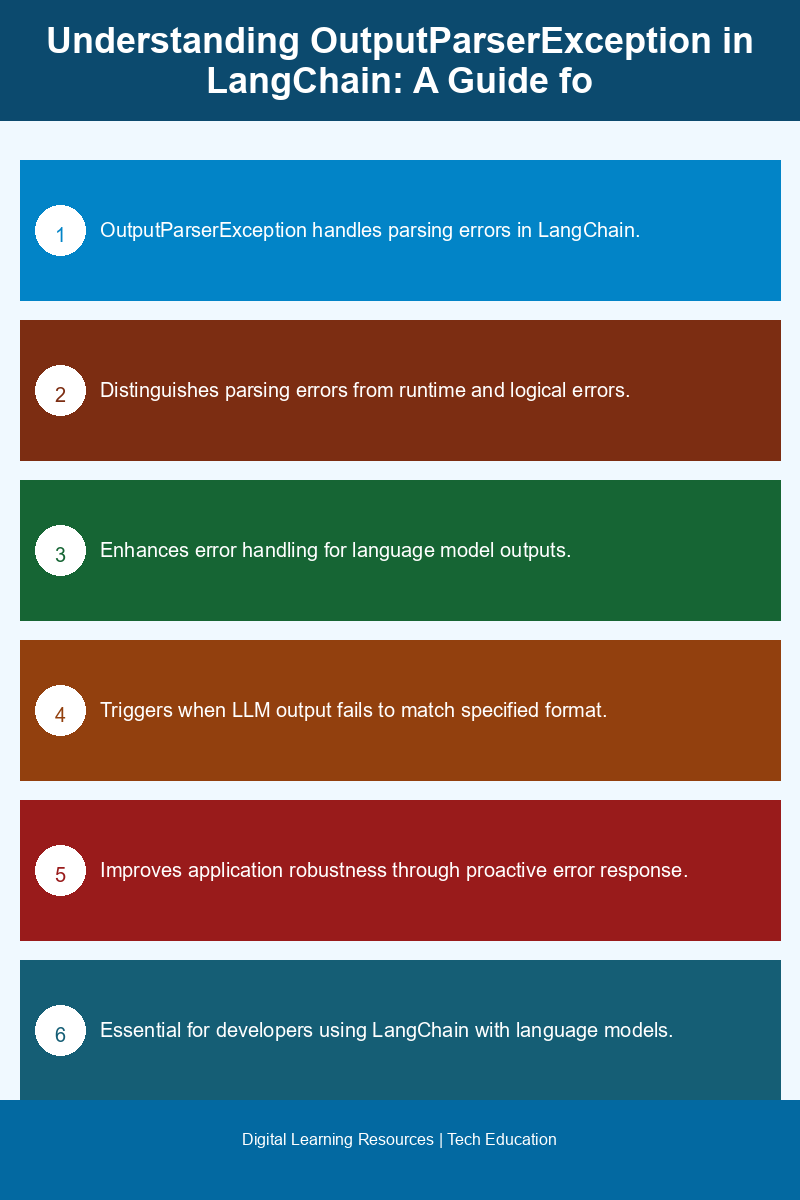
Visual summary of key concepts
Attributes of OutputParserException
OutputParserException has several key attributes that provide valuable information when handling errors:
- error (Type: Any): This attribute represents the error message or the original error being re-raised. It offers insight into what went wrong during parsing.
- observation (Type: str or None, default: None): This optional attribute provides a string explanation of the error. Developers can use this information to inform the language model about the specific issue encountered.
- llm_output (Type: str or None, default: None): This attribute contains the output from the language model that triggered the exception. Analyzing this output can help identify formatting issues or other discrepancies.
- send_to_llm (Type: bool, default: False): This boolean flag indicates whether to send the observation and llm_output back to the language model for further analysis or remediation.
These attributes provide a comprehensive context for debugging, making it easier to implement fixes in the application. By leveraging these details, developers can enhance the reliability of their LLM-driven applications.
Practical Applications of OutputParserException
OutputParserException is particularly useful in several scenarios when working with LangChain and LLMs:
- Data Validation: When processing user inputs or external data sources, it’s crucial to ensure that the LLM outputs conform to expected formats. Using OutputParserException, developers can catch errors early in the process, facilitating data validation and maintaining data integrity.
- Feedback Loop Creation: The ability to send observations and llm_output back to the language model creates a feedback loop that can improve future outputs. This is particularly useful in scenarios where the model is continuously learning from interactions with users.
- Enhanced User Experience: By managing parsing errors effectively, developers can provide users with meaningful feedback when something goes wrong. This can significantly enhance user experience, as users receive clearer information about the nature of errors and potential resolutions.
- Debugging and Testing: During the development phase, developers can use OutputParserException to streamline debugging efforts. By catching specific parsing errors, developers can identify issues faster and implement corrective measures before deploying their applications.
Overall, OutputParserException serves as a powerful tool for developers working with LLMs, enabling them to handle parsing errors more effectively and improve the overall quality of their applications.
Conclusion
OutputParserException is an essential component in the LangChain framework, designed to handle parsing errors in a structured manner. By providing specific context and feedback regarding errors, this exception allows developers to improve error handling, enhance user experience, and streamline debugging processes. Understanding and utilizing OutputParserException effectively can lead to the development of more robust and reliable applications that leverage the capabilities of language models.
Frequently Asked Questions
What is OutputParserException in the LangChain framework?
OutputParserException is an error that occurs in the LangChain framework when the output from a language model cannot be parsed correctly, indicating issues with the format or content of the generated data.
How can I handle parsing errors in LangChain?
To handle parsing errors in LangChain, you can implement error handling mechanisms such as try-except blocks in your code, allowing you to catch OutputParserException and respond appropriately, such as logging the error or providing a fallback.
Why do I encounter OutputParserException when using LangChain?
You may encounter OutputParserException when the output generated by the language model does not match the expected structure or format defined in your parsing logic, often due to unexpected input or model behavior.
Can I customize error handling for OutputParserException in LangChain?
Yes, you can customize error handling for OutputParserException in LangChain by defining specific exceptions in your code, allowing you to tailor responses based on the nature of the parsing error encountered.
Is there documentation available for troubleshooting OutputParserException in LangChain?
Yes, the LangChain framework provides comprehensive documentation that includes troubleshooting tips for OutputParserException, offering guidance on common parsing errors and best practices for error handling.
Disclaimer: Information gathered from reputed public sources. Verify independently for specific implementations.
Ready to advance your skills? Explore our digital learning resources.
Related reading:
📑 About the author: I also build Digital Bizz Card — hosted digital business cards you can share with a QR code, no app required.