Key Takeaways: Understanding API security practices is essential for developers and IT professionals. Learn about effective methods for protecting APIs, the importance of continuous discovery, and how to manage risks associated with shadow APIs. Equip yourself with the skills required for API management and compliance in today’s tech landscape.
Introduction
As the backbone of modern web applications, APIs (Application Programming Interfaces) facilitate communication between software components. However, their increasing prevalence also introduces significant security challenges. In 2024, only 27% of organizations maintained a comprehensive API inventory, highlighting a crucial gap in API management and security. This blog post delves into essential API security practices, potential learning paths, and actionable best practices that will empower tech professionals to enhance their skills and secure their applications.
Technical Background and Context
API security encompasses various practices aimed at protecting APIs from malicious attacks and unauthorized access. Key concepts include:
📚 Recommended Digital Learning Resources
Take your skills to the next level with these curated digital products:
Academic Calculators Bundle: GPA, Scientific, Fraction & More
Academic Calculators Bundle: GPA, Scientific, Fraction & More
ACT Test (American College Testing) Prep Flashcards Bundle: Vocabulary, Math, Grammar, and Science
Java Essentials: 100 Powerful Topics for Fast-Track Learning | PDF Download
Leonardo.Ai API Mastery: Python Automation Guide (PDF + Code + HTML
Leonardo.Ai API Mastery: Python Automation Guide (PDF + Code + HTML
100 Python Projects eBook: Learn Coding (PDF Download)
JavaScript for Web Development eBook | Learn to Build Interactive Websites
HSPT Vocabulary Flashcards: 1300+ Printable Study Cards + ANKI (PDF)
HSPT Vocabulary Flashcards: 1300+ Printable Study Cards + ANKI (PDF)
- Authentication: Ensuring that users are who they claim to be through methods like OAuth and API keys.
- Encryption: Using HTTPS and TLS to protect data in transit, safeguarding sensitive information from eavesdroppers.
- Monitoring Controls: Implementing tools that provide real-time insights into API usage and traffic patterns.
- Shadow APIs: Unmonitored APIs that pose security risks due to a lack of documentation and oversight.
- Principle of Least Privilege: Granting users the minimal level of access necessary to perform their tasks.
- Rate Limiting and Throttling: Managing API usage to prevent abuse and ensure fair access for all users.
- Centralized Security Controls: Using API gateways to enhance security measures across all APIs.
- API Key Management: Diligently managing API keys to prevent unauthorized access.
Practical Applications and Use Cases
Understanding and applying API security practices has numerous practical applications:
- Secure Data Handling: Implementing encryption protocols ensures sensitive data, such as user credentials and personal information, is protected during transmission.
- Real-Time API Discovery: Utilizing automated tools like Wiz Code and Wiz’s Dynamic Scanner helps organizations continuously discover and catalog APIs, ensuring oversight and compliance.
- Audit Preparedness: Regular audits not only help in maintaining compliance but also enhance the security posture by identifying vulnerabilities.
- Improved User Experience: By managing API rates and limits, you can prevent service degradation, leading to a smoother experience for users.
Learning Path Recommendations
For those looking to build their expertise in API security, consider the following learning paths:
- Automated Tools for API Discovery: Familiarize yourself with tools like Wiz Code and Wiz’s Dynamic Scanner to automate API management tasks.
- Encryption Protocols Training: Gain a solid understanding of HTTPS and TLS through specialized courses or certifications.
- API Documentation Best Practices: Explore resources that emphasize the significance of proper API documentation for compliance and security.
- Security Management Skills: Enroll in courses focused on API security practices, including risk assessment and mitigation strategies.
Industry Impact and Career Implications
The reliance on APIs is projected to grow, accounting for over 80% of internet traffic. As such, API security expertise is becoming increasingly valuable in the tech job market. Professionals equipped with skills in API management, security practices, and compliance will be well-positioned for career advancement. Certifications in API security, cloud computing, and cybersecurity can further enhance your resume and open doors to new opportunities.
Implementation Tips and Best Practices
To effectively implement API security measures, consider the following best practices:
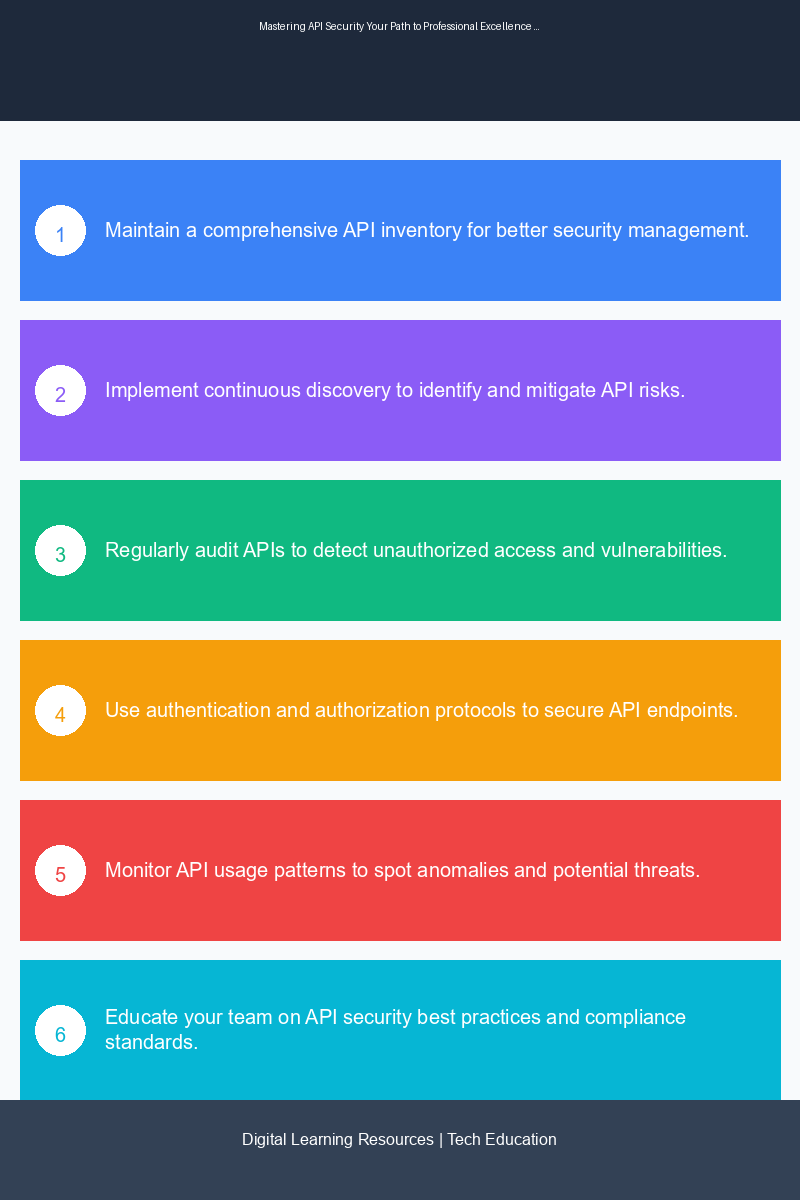
- Conduct Regular Security Audits: Regularly review your API security protocols and practices to identify areas for improvement.
- Utilize Strong Authentication Methods: Implement multi-factor authentication (MFA) for users accessing APIs.
- Document All APIs: Keep comprehensive documentation of all APIs to mitigate risks associated with shadow APIs.
- Monitor API Traffic: Use monitoring tools to track API usage and detect unusual patterns that may indicate security breaches.
- Educate Your Team: Ensure that your team is trained in best practices for API security to foster a culture of awareness and diligence.
Future Trends and Skill Requirements
As the tech landscape evolves, staying updated on trends in API security is critical. Expect to see:
- Increased Automation: The rise of automated tools for API security management will streamline processes and reduce human error.
- Focus on Zero Trust Security Models: Adopting a zero trust approach will become essential, emphasizing that no entity, both inside and outside the network, should be trusted by default.
- Integration of AI and Machine Learning: These technologies will play a significant role in enhancing API security through predictive analytics and anomaly detection.
Conclusion with Actionable Next Steps
API security is no longer optional; it’s a necessity in today’s interconnected world. By enhancing your knowledge and skills in API security practices, you can significantly contribute to your organization’s success and your professional growth. Here are actionable next steps:
- Enroll in courses focused on API security and management.
- Implement automated tools to streamline your API discovery and security processes.
- Regularly review and update your API documentation and security protocols.
- Engage with the tech community to stay informed about the latest trends and best practices.
By taking these steps, you can ensure that you are not only securing your APIs but also positioning yourself as a valuable asset in the tech industry.
Disclaimer: The information in this article has been gathered from various reputed sources in the public domain. While we strive for accuracy, readers are advised to verify information independently and consult with professionals for specific technical implementations.
Ready to advance your tech career? Explore our digital learning resources including programming guides, certification prep materials, and productivity tools designed by industry experts.